Yukata, Jinbei, and Kariyushi: Casual Japanese Summer Wear
Embracing the Heat: Japanese Summer Casual Wear
Summer in Japan is notoriously hot and humid, with temperatures frequently exceeding 30°C (86°F) and humidity levels soaring. To combat the sweltering weather while maintaining a connection to cultural heritage, Japanese people have long relied on specialized traditional garments designed specifically for breathability, comfort, and casual everyday wear. While the formal silk kimono is reserved for ceremonies, weddings, and tea ceremonies, the realm of everyday casual traditional wear is dominated by three distinct garments: the yukata, the jinbei, and the Ryukyuan kariyushi shirt. These garments represent the perfect intersection of historical craftsmanship and modern practicality, allowing wearers to navigate summer festivals (matsuri), casual neighborhood strolls, and relaxed home life in style.
According to the Victoria and Albert Museum, the evolution of Japanese clothing has always been deeply tied to the changing seasons and the social class of the wearer. The garments we recognize today as casual summer wear originated as bathing robes, samurai undergarments, and regional workwear before transforming into the beloved fashion staples they are today. This guide will provide actionable advice on how to select, size, wear, and care for these essential pieces of Japanese summer wardrobes.
Comparing the Big Three: Yukata, Jinbei, and Kariyushi
Before purchasing your first piece of casual Japanese summer wear, it is crucial to understand the functional differences between the primary options. Below is a comparison chart to help you decide which garment best suits your daily activities.
| Feature | Yukata | Jinbei | Kariyushi Shirt |
|---|---|---|---|
| Formality | Semi-casual to Casual | Strictly Casual / Loungewear | Business Casual to Smart Casual |
| Pieces | One-piece robe with Obi | Two-piece (Top and Shorts) | One-piece button-up shirt |
| Primary Fabric | Cotton, Hemp, Polyester | Cotton, Waffle-knit, Linen | Cotton, Silk, Bashofu (banana fiber) |
| Best Occasion | Festivals, Fireworks, Dates | Lounging, Bon Odori, Errands | Office wear, Dining, Summer Events |
| Avg. Cost (USD) | $40 - $150 | $25 - $80 | $60 - $250 |
The Yukata: Elegance Meets Everyday Comfort
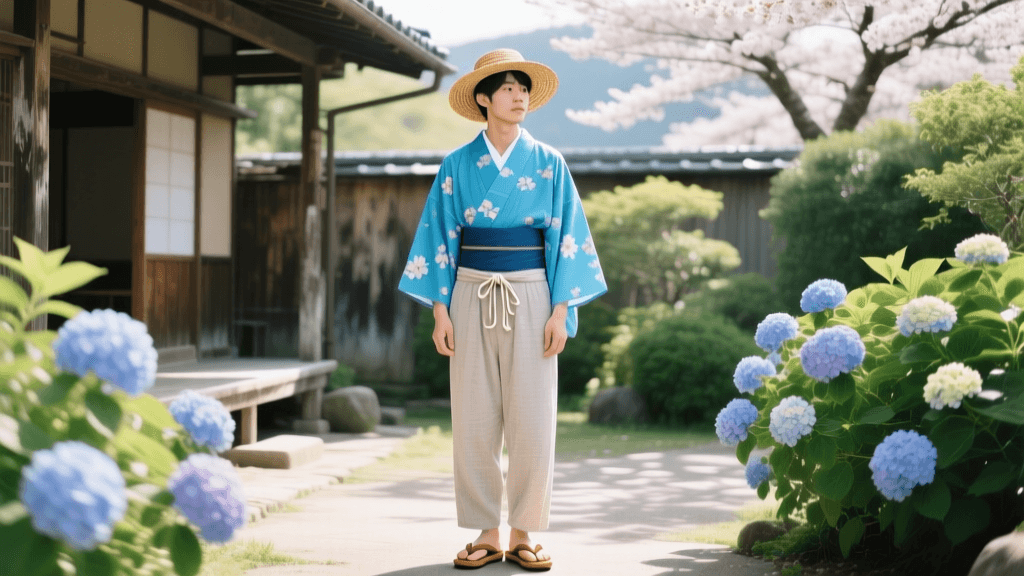
The yukata is arguably the most recognizable piece of Japanese casual wear. Originally worn by the aristocracy as a bathing robe (yu-katabira) during the Heian period, it eventually became the standard everyday summer garment for all social classes during the Edo period. Today, it is the go-to outfit for summer fireworks displays (hanabi), bon odori dances, and casual evening strolls.
Sizing and Fabric Selection
Unlike Western clothing, yukata sizing is primarily based on height and shoulder width rather than chest or waist measurements. The most critical measurement is the yuki (arm span from the center of the back of the neck to the wrist) and the mitake (total length of the garment). For a standard modern fit, the hem of the yukata should fall right at the ankle bone.
- Standard Women's Sizing: Fits heights of 155cm to 165cm (5'1" to 5'5"). Yuki length is typically around 64cm.
- Standard Men's Sizing: Fits heights of 170cm to 180cm (5'7" to 5'11"). Yuki length is typically around 70cm.
When selecting fabric, opt for 100% cotton or cotton-linen blends for maximum breathability. Traditional weaving techniques like shijira-ori (a textured cotton weave from Tokushima) or bingo-kasuri (a splash-patterned cotton) create microscopic air pockets that keep the fabric from clinging to sweaty skin. Avoid cheap, unlined polyester if you plan to wear the garment outdoors in high heat, as it traps moisture.
How to Wear a Yukata: A Step-by-Step Guide
Wearing a yukata correctly requires attention to a few fundamental rules. As detailed by cultural experts at Tofugu, the most critical rule of Japanese garment wrapping is migi-mae (right side first, left side over right). Wrapping it the opposite way is strictly reserved for dressing the deceased for funerals.
- Undergarments: Start with a hadajuban (cotton camisole) and susoyoke (half-slip) to protect the yukata from sweat and ensure modesty.
- Wrapping: Hold the yukata open, slide your arms into the sleeves, and bring the right edge to your left hip. Then, pull the left edge tightly over to your right hip, ensuring the hem is level around your ankles.
- Tying the Koshihimo: Use a thin cotton tie (koshihimo) to secure the waist tightly just above the hip bones. Tuck any excess fabric up to create a smooth, cylindrical silhouette.
- The Obi: For women, the standard casual knot is the bunko (butterfly bow), tied at the back. For men, a simple kai no kuchi (clamshell knot) is tied at the front or slightly off-center, using a stiffer, narrower obi.
Jinbei: The Ultimate Loungewear and Festival Staple
If the yukata is for going out, the jinbei is for staying in—or at least staying local. The jinbei is a two-piece garment consisting of a short-sleeved, wrap-style top and matching loose-fitting shorts. It evolved from the jinbaori, a sleeveless surcoat worn by samurai over their armor during the Sengoku period. Over time, it was adapted by artisans and commoners into lightweight cotton summer loungewear.
The genius of the jinbei lies in its construction. The side seams of both the top and the shorts are left slightly open or tied with small strings, allowing for maximum airflow and unrestricted movement. This makes it the preferred garment for bon odori (traditional summer folk dances) and casual neighborhood errands. Modern iterations often feature waffle-knit cotton or indigo-dyed linen, priced between $30 and $60. When buying a jinbei, prioritize the waist measurement of the shorts, as they rely on a simple drawstring and side-ties rather than elastic.
Ryukyuan Kariyushi: Okinawa’s Answer to Casual Summer Style
Moving south to the Ryukyu Islands (modern-day Okinawa), the traditional summer wardrobe shifts away from robes and toward the kariyushi shirt. Often mistaken for a standard Hawaiian Aloha shirt, the kariyushi is a distinct garment with deep cultural roots and specific sartorial rules. The word "kariyushi" translates to "harmony" or "good fortune" in the Okinawan dialect.
Unlike Aloha shirts, which often feature all-over, chaotic prints, kariyushi shirts typically feature more subdued, localized motifs such as the shisa (lion-dog), deigo flowers, or traditional bingata dyeing patterns. Crucially, a true kariyushi shirt must be manufactured in Okinawa and is designed to be worn untucked. In Okinawa, the kariyushi is accepted as formal business attire during the summer months (known as "Cool Biz" season), replacing the standard suit and tie. For everyday casual wear, locals opt for short-sleeved cotton or bashofu (banana fiber) versions, which cost anywhere from $60 for everyday cotton to over $300 for hand-woven artisan pieces.
Essential Accessories and Footwear
To complete your casual traditional summer look, specific accessories are required. Travel and culture guides like Japan Experience recommend coordinating your accessories with the color palette of your garment rather than matching it exactly.
- Geta (Wooden Sandals): The traditional footwear for yukata and jinbei. Look for hinoki (Japanese cypress) wood for a pleasant fragrance and lightweight feel. Cost: $25 - $50. Ensure the hanao (thong) is adjustable.
- Kinchaku (Drawstring Bag): Since yukata and jinbei lack pockets, a small cotton or rattan kinchaku is essential for carrying a phone, wallet, and fan. Cost: $10 - $25.
- Uchiwa (Round Fan) / Sensu (Folding Fan): A practical necessity for the Japanese summer. Bamboo-framed uchiwa made with traditional washi paper add an elegant silhouette to the back of the obi. Cost: $15 - $30.
- Obi-dome and Obi-jime: For women looking to elevate a simple yukata, adding a decorative cord (obi-jime) and a small clasp (obi-dome) can instantly make the outfit look more expensive and tailored. Cost: $20 - $60.
Where to Buy and Expected Costs
For those outside of Japan, purchasing authentic casual wear requires knowing where to look. Fast-fashion brands like Uniqlo release highly affordable, machine-washable yukata and jinbei sets every May and June, typically priced around $40 to $50. However, these are often made of polyester blends. For authentic, breathable cotton garments, look to specialized online retailers such as Japan Style, Kimono Yamato, or independent Etsy sellers who source directly from Kyoto and Okayama workshops. Expect to pay between $80 and $150 for a high-quality, 100% cotton yukata set that includes the obi and ties.
Garment Care and Maintenance
Proper care ensures these garments last for decades. While modern polyester yukata can be tossed in the washing machine, traditional cotton and linen require gentler handling. Always hand wash cotton yukata and jinbei in cold water using a neutral pH detergent. If you must use a machine, fold the garment neatly into a tatami-net (a specialized mesh laundry bag) and use the delicate cycle. Never use a tumble dryer, as the heat will shrink the cotton and warp the wooden geta. Instead, reshape the garment while damp and hang it in the shade to air dry. Iron on a low setting with a pressing cloth to maintain the crisp lines of the collar and hem.