Silk Road Fashion: Uyghur Atlas Silk and Tang Hanfu
The Silk Road: A Highway of Sartorial Exchange
When we think of the historical Silk Road, we often envision caravans laden with spices, jade, and raw silk threads traversing the unforgiving Taklamakan Desert. However, as the UNESCO Silk Roads Programme extensively documents, this vast network of trade routes was equally a conduit for cultural, artistic, and sartorial exchange. The cross-pollination of ideas between East and West fundamentally altered the trajectory of traditional Chinese clothing. Nowhere is this vibrant history more visible than in the synthesis of Tang Dynasty Hanfu and the enduring legacy of Uyghur Atlas silk.
For modern enthusiasts of Asian traditions and historical garments, understanding these cross-cultural influences is essential. It transforms the way we collect, wear, and appreciate traditional textiles. This guide explores the profound impact of Silk Road trade on Chinese fashion and provides actionable advice for sourcing, tailoring, and caring for these magnificent heritage fabrics today.
Tang Dynasty Hanfu: Sogdian Motifs and Persian Cuts
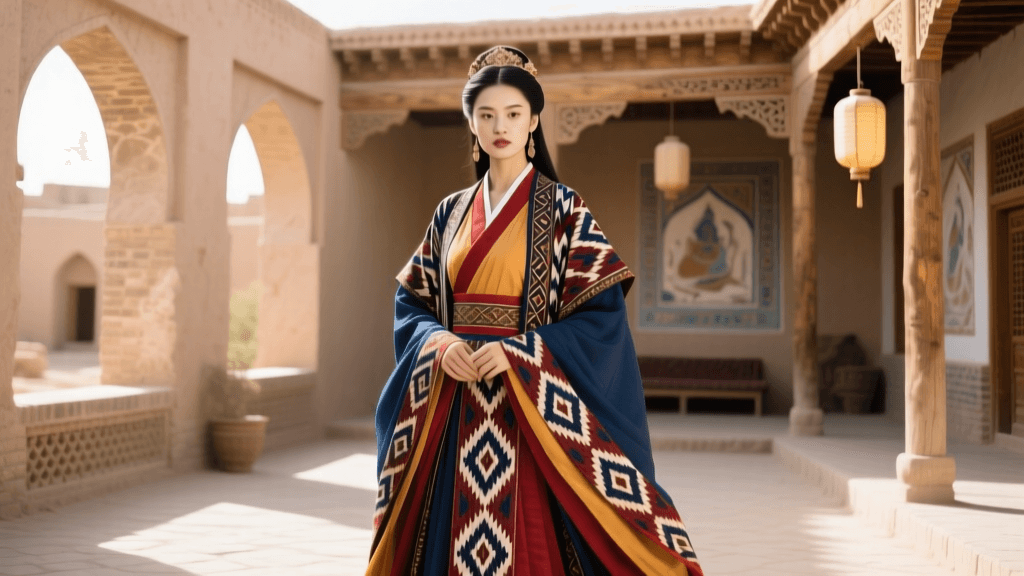
The Tang Dynasty (618–907 CE) is widely considered the golden age of Chinese cosmopolitanism. The capital, Chang'an (modern-day Xi'an), was a bustling metropolis of over a million people, including thousands of foreign merchants, diplomats, and artisans. Sogdian merchants from Central Asia were the primary middlemen of the Silk Road, and they brought with them not only goods but also distinct aesthetic preferences that heavily influenced Tang court fashion.
One of the most significant cross-cultural adoptions was the Yuanlingpao (round-collar robe). While indigenous Han clothing traditionally favored cross-collars (jiaoling) and deep sleeves, the round-collar robe was adapted from Persian and Sogdian riding garments. It featured a circular neckline, side slits for horseback riding, and was often fastened with leather belts and metal plaques. According to The Metropolitan Museum of Art's Heilbrunn Timeline of Art History, the integration of Central Asian riding gear into daily Tang court wear highlights a society deeply enamored with the exoticism and practicality of nomadic and semi-nomadic cultures.
Furthermore, the Banbi (half-sleeve jacket) became a staple for Tang women. Often worn over long-sleeved blouses, the Banbi featured striking textile patterns imported from the West. Motifs such as pearl roundels, confronting lions, winged horses, and boar heads—classic Sasanian and Sogdian designs—were woven into Chinese silks using newly imported weft-faced compound twill techniques. This fusion created a unique 'Silk Road aesthetic' that defined 8th-century Chinese fashion.
Uyghur Atlas Silk: The Ikat Mastery of the Tarim Basin
While the Tang court absorbed Western motifs into its silk weaves, the oasis cities of the Tarim Basin in Xinjiang developed a textile tradition that remains a cornerstone of Uyghur cultural identity: Atlas silk. Atlas (meaning 'flag' or 'banner' in Uyghur) is a vibrant, hand-woven ikat fabric characterized by its bold, blurred geometric and floral patterns.
The creation of Atlas silk is a painstaking resist-dyeing process. Unlike standard printing, the warp threads are tightly bound with cotton or plastic strips in specific patterns before they are submerged in dye vats. The bound sections resist the dye, creating the signature soft, feathered edges of the motifs once the fabric is woven. Traditional master dyers in cities like Khotan, Kashgar, and Shache utilize natural dyes derived from local flora: pomegranate rinds for brilliant yellows, indigo for deep blues, walnut husks for rich browns, and madder root for striking reds.
'The blurred edges of the Atlas pattern are not a flaw of the weaver's hand, but the very soul of the ikat technique—a visual representation of the shifting desert sands and the flowing waters of the Tarim oasis.' — Master Weaver Proverb, Kashgar.
Historically, Atlas silk was traded along the southern branch of the Silk Road, reaching as far as the Middle East and Eastern Europe. Today, it remains a vital living tradition, worn during festivals, weddings, and daily life by Uyghur women, serving as a vibrant testament to the region's indigenous craftsmanship.
Buyer’s Guide: Sourcing Authentic Silk Road Textiles
For collectors, historical reenactors, and fashion designers looking to incorporate authentic Silk Road textiles into their wardrobe, distinguishing between genuine heritage crafts and mass-produced tourist souvenirs is crucial. Below is a practical guide to sourcing authentic Uyghur Atlas silk.
Authenticity Comparison Chart
| Feature | Authentic Hand-Woven Atlas | Machine-Printed Imitation |
|---|---|---|
| Edge Definition | Soft, blurred 'watercolor' edges | Sharp, pixelated, or uniform edges |
| Reverse Side | Pattern visible, slightly muted | Blank or solid white background |
| Material | 100% silk or silk-cotton blend | Polyester or synthetic rayon |
| Bolt Width | Traditional 40cm - 45cm narrow loom | Standard 110cm - 150cm wide loom |
| Cost per Meter | $45 - $90 USD | $5 - $12 USD |
Where and When to Buy
- Location: The Sunday Grand Bazaar in Kashgar and the Sunday Market in Khotan are the premier destinations for sourcing directly from weavers. For international buyers, specialized Central Asian textile importers online (such as those based in Istanbul or specialized Etsy artisans with verified Xinjiang supply chains) are reliable alternatives.
- Timing: If traveling to Xinjiang, visit in September or October. The weather is mild, the harvest festivals are in full swing, and the markets are stocked with fresh autumn dye batches and newly woven silk bolts.
- Pricing: Expect to pay between $45 and $90 USD per meter for genuine, narrow-loom, hand-dyed Atlas Adras (silk-cotton blend) or pure Atlas silk. Always negotiate politely in local markets, starting at 20% below the asking price.
Tailoring Your Silk Road Garment: Measurements and Cuts
Purchasing the fabric is only the first step. To truly honor the Silk Road heritage, the fabric must be cut and tailored according to historical or culturally appropriate patterns. Because traditional Atlas silk is woven on narrow looms (typically 40-45 cm wide), pattern cutting requires strategic piecing, a hallmark of traditional Central Asian and historical Chinese tailoring.
Measurement Guide for a Tang-Style Yuanlingpao
If you are commissioning a Tang-style round-collar robe using Silk Road motif brocades or Atlas silk, provide your tailor with the following precise measurements to ensure historical accuracy and comfort:
- Chest Circumference: Measure around the fullest part of the chest. Add 15-20 cm for historical ease and layering.
- Shoulder Width: Measure from the edge of one shoulder bone to the other. Drop the shoulder seam by 5 cm to mimic the relaxed, sloping shoulder of Tang tailoring.
- Sleeve Length: Measure from the base of the neck to the wrist, then add 10 cm to allow the sleeves to drape elegantly over the hands, a common stylistic choice in Tang portraiture.
- Robe Length: Measure from the base of the neck to the ankle bone. The Yuanlingpao should graze the top of the footwear.
- Collar Band: The round collar should sit snugly at the base of the neck, typically requiring a circumference of 40-45 cm, fastened with a fabric knot button on the right shoulder.
Working with Narrow-Loom Atlas Silk
When tailoring a traditional Uyghur dress (Uyghurche köylek) from narrow-loom Atlas, instruct your tailor to use vertical seams to join the fabric panels. Do not cut the fabric horizontally to save material, as this disrupts the vertical flow of the ikat warp patterns. Side gores (triangular inserts) should be added at the waist to create the characteristic flared skirt of the traditional dress, preserving the integrity of the warp threads.
Care and Maintenance for Heritage Silk
Textiles dyed with natural, plant-based pigments and woven on handlooms require specialized care to ensure they survive for generations. The dyes used in authentic Atlas silk, while beautiful, are not as chemically fixed as modern synthetic dyes and can bleed or fade if mistreated.
- Washing: Never machine wash or dry clean authentic ikat silk. Hand wash in cold water (below 20°C) using a pH-neutral, silk-specific detergent. Avoid soaking the fabric for more than 3 minutes to prevent dye migration.
- Drying: Never wring out the silk. Roll the garment in a clean, dry cotton towel to press out excess moisture. Dry flat in the shade. Direct sunlight will rapidly degrade natural indigo and madder dyes.
- Ironing: Use a low-heat setting and always iron on the reverse side of the fabric, placing a cotton pressing cloth between the iron and the silk to prevent scorching and shine marks.
- Storage: Store silk garments in breathable cotton garment bags. Avoid plastic covers, which trap moisture and promote mildew. Include natural cedar blocks or dried lavender sachets to deter moths, avoiding direct contact between the botanicals and the silk.
Conclusion: Wearing History
The garments born from the Silk Road are more than mere clothing; they are woven archives of human connection. Whether you are draping yourself in the Sogdian-inspired roundels of a Tang Dynasty Hanfu reproduction or wearing a vibrant, hand-dyed Uyghur Atlas silk dress, you are participating in a millennia-old tradition of cross-cultural exchange. By understanding the history, respecting the craftsmanship, and employing proper sourcing and care techniques, modern enthusiasts can help keep the vibrant legacy of the Silk Road alive for centuries to come.