Decoding Japanese Kimono Motifs: Colors & Symbolism
The Wearable Canvas: Introduction to Kimono Symbolism
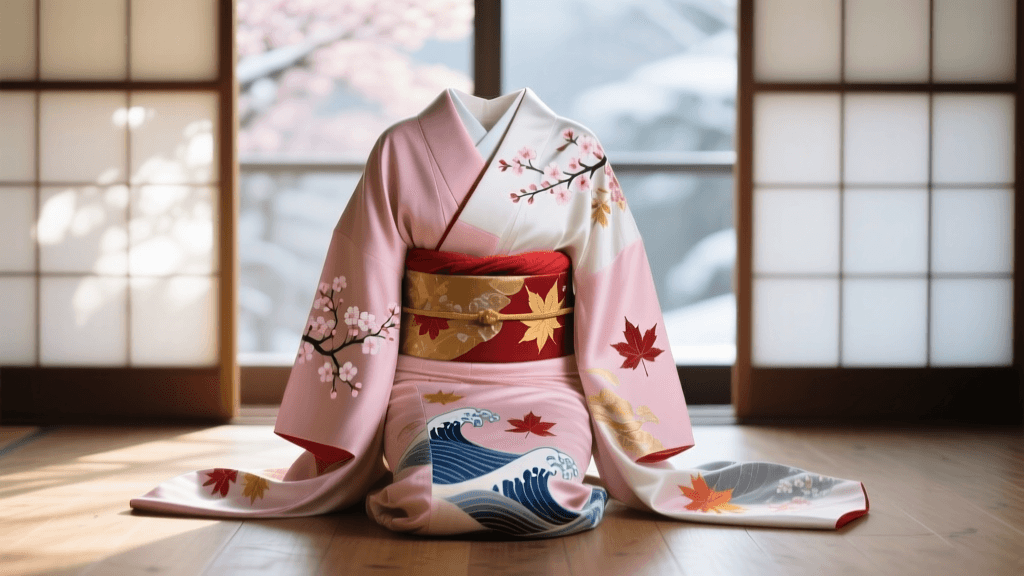
The Japanese kimono is far more than a mere garment; it is a profound cultural artifact that reflects a deep-seated reverence for nature, the passage of time, and social harmony. Unlike contemporary Western fashion, which often operates on arbitrary trend cycles, traditional Japanese clothing is governed by a strict, poetic calendar dictated by kisetsukan (seasonal awareness). According to the Metropolitan Museum of Art, the evolution of the kimono from the utilitarian kosode of the Muromachi period to the highly decorated garments of the Edo period was deeply intertwined with the development of sophisticated dyeing techniques like yuzen. This resist-dyeing method allowed artisans to paint intricate, nature-inspired motifs directly onto silk, transforming the garment into a narrative canvas.
Understanding the language of kimono motifs and colors is essential for anyone looking to appreciate, rent, or purchase traditional Japanese garments. Wearing the wrong motif at the wrong time of year is considered a major sartorial faux pas, akin to wearing a heavy wool Christmas sweater in the middle of July. This guide will decode the seasonal rules, color symbolism, and provide actionable advice for acquiring your own seasonal kimono.
The Rule of Seasons: Timing Your Motifs
The golden rule of kimono motifs is anticipation. You do not wear a motif when the natural phenomenon is at its absolute peak or beginning to fade; you wear it just before it happens to express longing and appreciation for the coming season. Once the season arrives and passes, the motif must be retired.
Spring (Haru): February to April
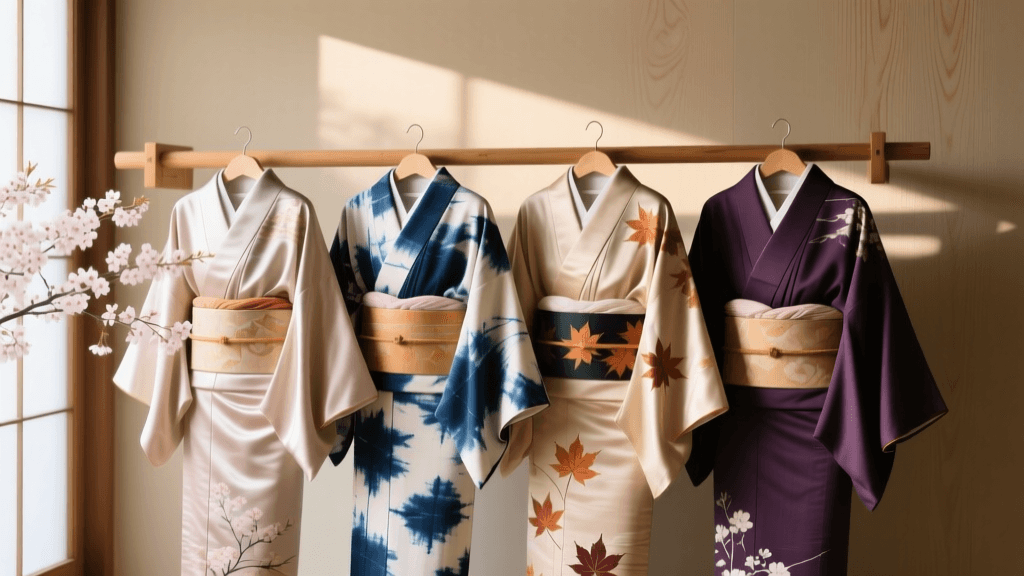
Spring motifs are perhaps the most famous globally. The cherry blossom (sakura) is the undisputed queen of spring motifs. However, following the rule of anticipation, sakura motifs should be worn in late February and early March. By the time the actual flowers are blooming in late March and April, wearing sakura is considered slightly late; instead, one might transition to wisteria (fuji) or peonies (botan). Spring color palettes favor soft pastels: pale pinks, light greens (matcha tones), and gentle yellows.
Summer (Natsu): May to August
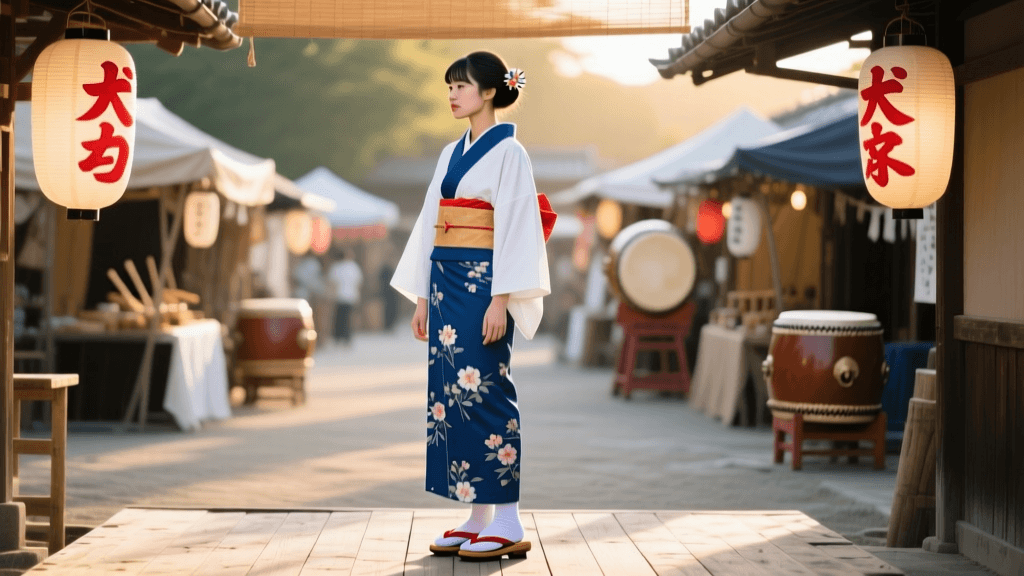
Summer in Japan is intensely hot and humid, and the garments reflect a desire for visual cooling. Motifs include morning glories (asagao), hydrangeas (ajisai), goldfish (kingyo), and flowing water or ocean waves (seigaiha). The fabrics change as well; while spring uses lined silk (awase), summer utilizes unlined sheer silk (ro or sha) or breathable hemp (katabira). Colors are visually cooling: deep indigos, crisp whites, and translucent blues.
Autumn (Aki): September to November
Autumn motifs celebrate the harvest and the turning of the leaves. The most prominent is the maple leaf (momiji), often depicted scattering in the wind or floating down a stream. Other motifs include chrysanthemums (kiku), bellflowers (kikyo), and pampas grass (susuki). The color palette shifts dramatically to warm, rich earth tones: burnt oranges, deep reds, mustard yellows, and rich browns.
Winter (Fuyu): December to January
Winter motifs focus on resilience and the promise of returning life. Camellias (tsubaki), which bloom in the snow, are highly prized. Snowflakes (yukiwa) and pine trees (matsu) are also common. Winter kimono are heavily lined and often feature a thick, padded inner layer (wata-ire) for warmth. Colors are stark and elegant: deep blacks, rich purples, and crisp whites.
Color Symbolism and Social Hierarchy
Historically, color in Japanese dress was strictly regulated by sumptuary laws, particularly during the Edo period (1603–1867). The ruling samurai class restricted commoners (merchants and artisans) from wearing ostentatious colors like bright crimsons or vivid purples. This led to the development of the iki aesthetic among commoners—a sophisticated preference for subdued, understated colors like indigo, slate gray, and brown, collectively known as shibui or shijū-hatcha (the 48 Browns). Today, while legal restrictions are gone, color still communicates age, marital status, and formality.
- Red (Crimson/Vermilion): Traditionally associated with youth, vitality, and unmarried women. The vibrant furisode (long-sleeved kimono) worn by young women at Coming of Age Day is almost always dominated by red.
- Purple: Historically the color of the imperial court and highest nobility. Today, it signifies high formality and is often worn by older, married women at weddings.
- Indigo (Ai): The color of the commoner, but also highly practical as the indigo dye repels insects and strengthens cotton fibers. It remains the quintessential color for casual summer yukata.
- White: Represents purity and sacredness. It is the color of Shinto bridal wear (shiromuku) but also traditionally associated with mourning and the transition to the afterlife.
Seasonal Motifs & Colors Quick Reference Chart
| Season | Primary Motifs | Traditional Color Palette | Garment Type / Fabric |
|---|---|---|---|
| Spring | Plum, Cherry Blossom, Wisteria, Butterfly | Pale Pink, Matcha Green, Soft Yellow | Lined Silk (Awase) |
| Summer | Morning Glory, Goldfish, Waves, Dewdrops | Indigo, Ice Blue, Crisp White | Sheer Silk (Ro/Sha), Hemp |
| Autumn | Maple, Chrysanthemum, Pampas Grass, Moon | Burnt Orange, Deep Red, Mustard | Lined Silk (Awase) |
| Winter | Camellia, Snowflakes, Pine, Plum Blossom | Stark White, Deep Black, Rich Purple | Padded Silk (Wata-ire) |
Actionable Guide: Renting vs. Buying Seasonal Kimonos
Whether you are attending a tea ceremony, a wedding, or simply exploring Kyoto, acquiring the right kimono requires planning. Here is a practical guide to measurements, costs, and timing.
1. Understanding Kimono Measurements
Unlike Western clothing, kimono are not sized by chest or waist. They are sized primarily by length and arm span. When buying vintage or ordering custom, you need two key measurements:
- Mitake (Garment Length): The ideal kimono length is calculated by taking your total height in centimeters and subtracting 20 to 25 cm. For example, if you are 165 cm tall, your ideal mitake is roughly 140 cm. The extra fabric is folded at the waist (ohashori) to adjust the hemline.
- Yuki (Sleeve/Arm Length): Measured from the center back of your neck, over the shoulder, down to your wrist bone. An average woman's yuki is around 64-66 cm. If the yuki is too short, the garment will look visibly ill-fitting.
2. Cost Breakdown: Vintage vs. Custom vs. Rental
The price of a kimono varies wildly based on its origin, material, and the complexity of its motifs.
- Vintage / Recycle Shops: Stores like Tansu-ya in Tokyo or Kyoto offer authentic, second-hand silk kimono. A standard lined silk kimono with seasonal yuzen motifs costs between 3,000 JPY and 15,000 JPY ($20 - $100 USD). This is the most sustainable and cost-effective way to build a seasonal wardrobe.
- Custom-Made Silk: Ordering a brand-new, hand-painted homongi (visiting wear) from a traditional dyer in Kyoto or Kanazawa is a luxury investment. Expect to pay between 300,000 JPY and 1,000,000+ JPY ($2,000 - $7,000+ USD), with a lead time of 3 to 6 months.
- Rentals: For tourists and one-off events, renting is ideal. A standard daily rental package (including kimono, obi, undergarments, zori sandals, and dressing service) costs between 4,000 JPY and 8,000 JPY ($25 - $55 USD). Formal wear (like furisode or tomesode) rentals range from 15,000 JPY to 30,000 JPY ($100 - $200 USD).
3. Timing Your Rental for Peak Seasons
If you plan to rent a kimono during peak tourist seasons—specifically the Cherry Blossom (hanami) season in late March or the Autumn Foliage (koyo) season in late November—you must plan ahead. According to insights from cultural travel guides like Japan Experience, popular rental shops in Kyoto's Higashiyama district book out completely. Actionable advice: Reserve your kimono rental exactly 45 to 60 days in advance. Walk-ins during late March will often be left with synthetic, out-of-season polyester garments, or no garments at all.
Auspicious Motifs: Breaking the Seasonal Rules
While the seasonal calendar is strict, there are exceptions for joyous, life-altering events like weddings and the New Year. The most famous of these is the Shochikubai motif, which translates to the 'Three Friends of Winter': Pine (sho), Bamboo (chiku), and Plum (bai).
'The combination of pine, bamboo, and plum is deeply rooted in East Asian philosophy. Pine represents longevity and steadfastness, bamboo symbolizes flexibility and resilience, and plum stands for perseverance and hope, as it is the first flower to bloom through the late winter snow.' — Victoria and Albert Museum
Because of their profound auspicious meanings, Shochikubai motifs, along with cranes (tsuru) and tortoises (kame), transcend the strict seasonal calendar. A bride or a wedding guest may wear these motifs at any time of the year to invoke good fortune, longevity, and happiness.
Conclusion
Decoding the motifs and colors of the Japanese kimono transforms the act of getting dressed into a mindful practice of connecting with the natural world. By respecting the rule of anticipation, understanding the historical weight of color palettes, and accurately measuring for your garment, you honor the centuries of artisan craftsmanship woven into every thread. Whether you are investing in a vintage silk awase for autumn or renting a sheer ro for a summer festival, wearing the correct motif is the ultimate expression of Japanese aesthetic harmony.