Xin Zhongshi Wardrobe 2026: Styling Mamianqun for the Office
The 2026 Evolution of Xin Zhongshi in Professional Spaces
The Xin Zhongshi (新中式), or 'New Chinese Style' movement, has undergone a remarkable transformation as we navigate through 2026. What began as a niche streetwear trend heavily reliant on oversized silhouettes and bold, theatrical motifs has matured into a sophisticated, highly functional sartorial language. Today, Xin Zhongshi is a dominant force in professional and corporate wardrobes, seamlessly blending centuries-old garment engineering with the pragmatic demands of the modern workplace. The movement no longer treats traditional Chinese clothing as mere costume or ceremonial wear; instead, it reinterprets heritage textiles and structural elements for daily, active lifestyles.
For the modern professional, integrating Xin Zhongshi into an office wardrobe requires a nuanced understanding of proportion, textile behavior, and historical context. The goal in 2026 is subtle elegance—signaling cultural appreciation and refined taste without compromising on mobility or corporate dress codes. This deep dive explores how to curate, style, and maintain a professional Xin Zhongshi wardrobe, focusing on the iconic Mamianqun (horse-face skirt) and structured Pan-button tops.
Core Garments: Adapting Heritage for the Desk
The Modern Midi Mamianqun
The Mamianqun, historically characterized by its flat front and back panels (known as qunmen or 'skirt doors') and intricate side pleats, is the cornerstone of the Xin Zhongshi wardrobe. While traditional Ming Dynasty iterations were floor-length and heavy, the 2026 office-appropriate Mamianqun has been re-engineered for agility. Modern professional versions typically feature a midi length—falling precisely at the mid-calf (roughly 75cm to 85cm from the waist)—allowing for comfortable movement and preventing the hem from catching on office chair casters.
Contemporary designers have also introduced heat-set pleating technologies and anti-static linings to the garment. This ensures that the side pleats remain razor-sharp even after hours of sitting at a desk, while the lining prevents the skirt from clinging to tights or leggings during winter commutes. The qunmen panels in 2026 often feature subtle, tonal jacquard weaves—such as bamboo, orchid, or geometric cloud motifs—rather than the loud, contrasting gold dragons of festival wear, making them entirely appropriate for boardroom settings.
Structured Pan-Button Tops and Blazers
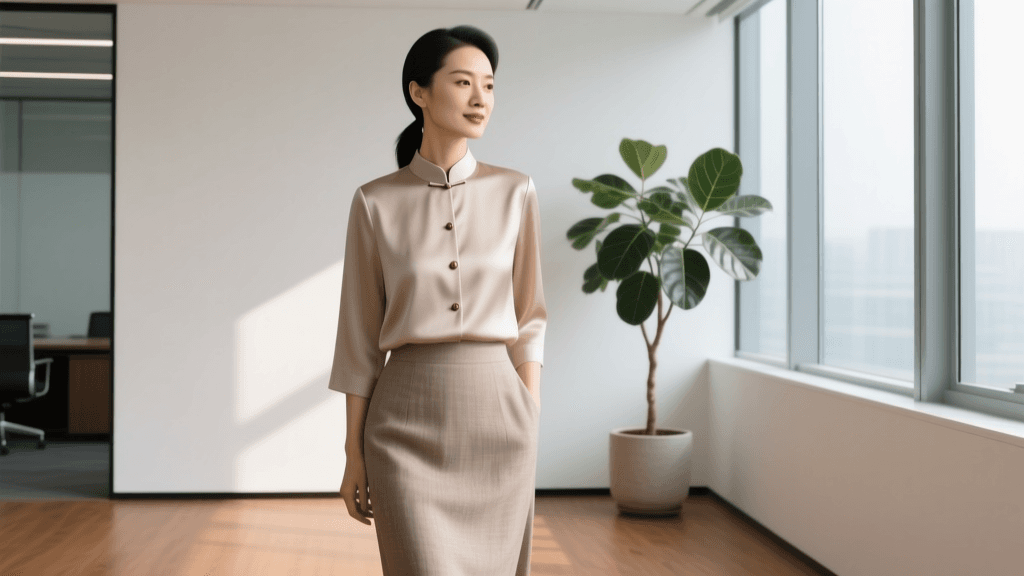
The Pan-kou (frog button) is the most recognizable fastening element in Chinese traditional dress. In 2026, the professional Xin Zhongshi top utilizes the Pan-kou not just as a functional closure, but as a minimalist architectural detail. Modern office blouses often feature a crisp cotton-poplin or matte acetate base with a subtle standing collar (Mandarin collar) and a single, beautifully crafted Pan-kou at the nape of the neck or the clavicle.
To accommodate the fast-paced nature of modern mornings, many 2026 designs incorporate hidden micro-zippers or magnetic snap closures beneath the decorative Pan-kou, allowing the wearer to slip the garment on and off effortlessly while maintaining the illusion of traditional hand-tied knots. Furthermore, structured blazers featuring subtle Song brocade lapels or interior silk linings have become a staple for executives looking to project authority while honoring Asian textile traditions.
Textile Analysis: Choosing the Right Fabrics for Daily Wear
Selecting the appropriate fabric is critical when transitioning Xin Zhongshi from weekend wear to the corporate environment. Understanding the historical weight and production of these textiles, as documented by the Metropolitan Museum of Art's extensive research on silk production, helps modern consumers appreciate the luxury and care required for authentic materials. However, the modern office demands durability. Below is a comparative guide to the most prominent fabrics used in 2026 Xin Zhongshi office collections.
| Fabric Type | Drape & Structure | Office Practicality | 2026 Avg. Price Range (USD) |
|---|---|---|---|
| Mulberry Silk (19mm+) | Fluid, delicate, luminous sheen | Low (wrinkles easily, requires dry cleaning) | $120 - $280 |
| Acetate-Silk Blend | Heavy, luxurious, excellent drape | High (wrinkle-resistant, breathable) | $85 - $160 |
| Poly-Jacquard | Structured, stiff, holds pleats perfectly | Very High (durable, machine washable) | $45 - $95 |
| Cotton-Linen Blend | Matte, breathable, relaxed structure | Medium (prone to creasing, best for casual Fridays) | $55 - $115 |
For the Mamianqun, a high-quality Poly-Jacquard or an Acetate-Silk blend is highly recommended for 2026. These materials provide the necessary weight to keep the pleats anchored and swinging beautifully as you walk, while resisting the creasing that occurs during long hours of seated work. For tops, a Cotton-Linen blend offers excellent breathability for climate-controlled offices, provided you are comfortable with a slightly more relaxed, organic aesthetic.
2026 Office Styling Formulas
Styling Xin Zhongshi for the workplace relies on the principle of 'balance.' Because the garments themselves carry significant historical and visual weight, the accompanying pieces should be grounded, modern, and minimalist.
- The Executive Monochrome: Pair an ink-black Acetate-Silk Mamianqun with a matching black, high-neck ribbed knit sweater. The contrast between the fluid, light-catching skirt and the matte, structured sweater creates a sleek, commanding silhouette. Finish with pointed-toe leather loafers.
- The Celadon Soft-Power Look: A celadon green (pale jade) Poly-Jacquard skirt paired with a crisp, white asymmetrical blouse. The white blouse grounds the outfit, preventing the celadon from looking too ethereal or ceremonial. Nude or taupe block-heel pumps elongate the leg line.
- The Heritage Blazer: For high-stakes meetings, a tailored charcoal wool blazer worn over a simple silk camisole, paired with a navy blue Mamianqun featuring subtle silver geometric weaving. This bridges Western corporate tailoring with Eastern textile artistry seamlessly.
'The true mastery of Xin Zhongshi in 2026 lies in its restraint. We are no longer wearing history on our sleeves; we are weaving it into the very seams of our daily lives, allowing the garments to serve the wearer rather than the other way around.' — Contemporary Asian Textile Review, Spring 2026 Issue.
Garment Care and Archival Storage
Investing in Xin Zhongshi requires a commitment to proper garment care. Traditional techniques, many of which are preserved and studied by institutions like the Victoria and Albert Museum's Asia collections, emphasize the importance of environmental control and gentle handling to preserve textile integrity.
Washing and Drying
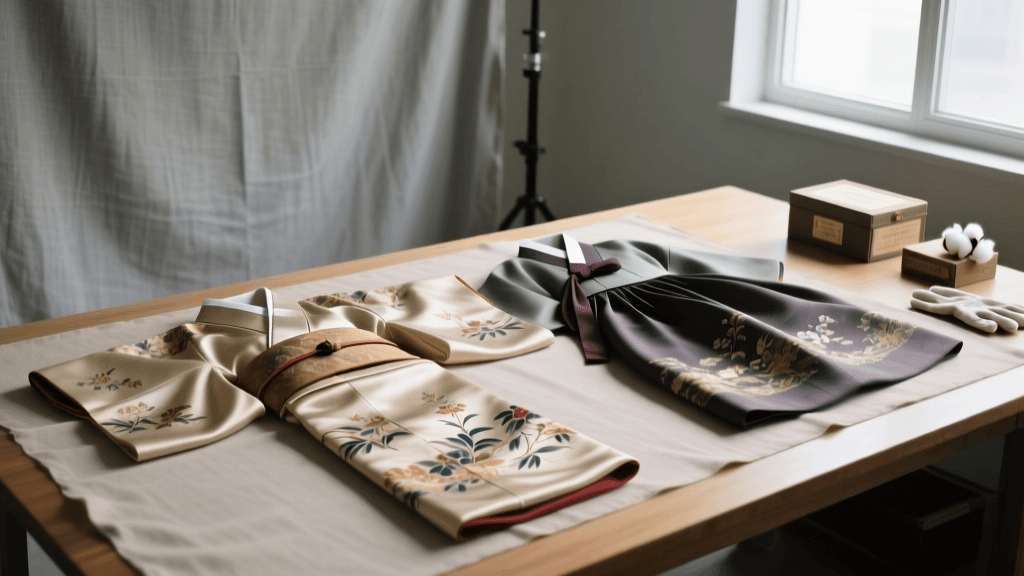
While modern Poly-Jacquards can often withstand a gentle machine wash in a mesh laundry bag, authentic silk and acetate blends require meticulous care. Always use a pH-neutral silk detergent in cold water. Never wring or twist a Mamianqun, as this will permanently distort the heat-set pleats. Instead, gently press the water out by rolling the garment in a clean, dry microfiber towel. Hang the skirt on a clip-hanger with padded clips to avoid leaving indentations on the waistband, and allow it to air dry away from direct sunlight, which can cause the rich dyes to fade.
Storage and Preservation
When storing your Xin Zhongshi pieces for the season, avoid wire hangers entirely. The Pan-kou buttons and delicate standing collars require wide, velvet-padded hangers to maintain their structural shape and prevent shoulder dimples. For the Mamianqun, folding is generally discouraged as it creates stubborn creases across the qunmen panels. If closet space is limited, roll the skirt loosely from the hem to the waistband and store it in a breathable cotton garment bag with cedar blocks to deter moths and absorb excess humidity. Never use plastic dry-cleaning bags for long-term storage, as they trap moisture and can lead to mildew on natural fibers.
Conclusion
The Xin Zhongshi movement of 2026 represents a beautiful synthesis of reverence and innovation. By carefully selecting office-appropriate lengths, prioritizing modern textile blends, and adhering to mindful styling and care practices, professionals can build a wardrobe that is not only deeply rooted in Asian cultural heritage but also entirely suited for the demands of the contemporary corporate world. The Mamianqun and the Pan-button top are no longer relics of the past; they are the dynamic, living garments of the present.