Japanese Wedding Kimono Guide: Shiromuku, Uchikake and Costs
Introduction to Japanese Bridal Fashion
Japanese weddings are a breathtaking synthesis of ancient Shinto rituals and contemporary celebrations. At the heart of these ceremonies is the bridal kimono, a garment that transcends mere clothing to become a profound symbol of purity, transition, and cultural heritage. Unlike Western bridal fashion, which typically centers on a single white gown, a traditional Japanese bride may change outfits multiple times throughout her wedding day—a practice known as iro-naoshi. Understanding the nuances of these garments is essential for anyone planning a traditional Japanese wedding or studying Asian sartorial traditions.
According to the Metropolitan Museum of Art, the evolution of the kimono from everyday wear to highly specialized ceremonial garments reflects centuries of shifting social structures and aesthetic philosophies in Japan. For modern brides, navigating the choices between a shiromuku, an iro-uchikake, and a hiki-furisode requires an understanding of both historical context and practical logistics, including budgeting, timing, and the intricate art of kitsuke (kimono dressing).
The Shiromuku: The Epitome of Shinto Purity
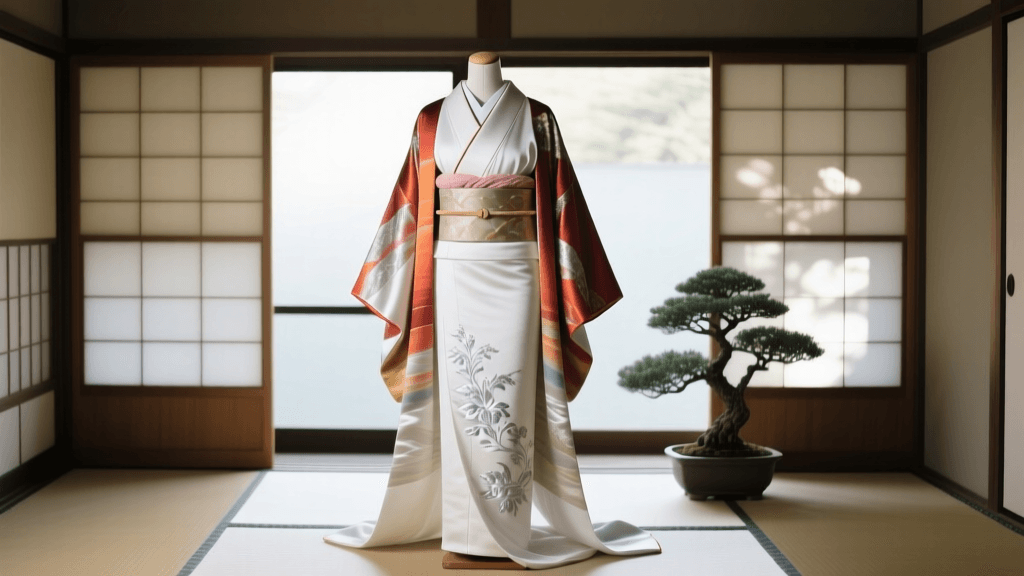
The shiromuku is the most formal and traditional bridal kimono, worn exclusively during the Shinto wedding ceremony (shinzen shiki). Translating literally to 'pure white,' the shiromuku is an entirely white ensemble, from the outer robe to the inner layers and accessories. Historically, white in Japanese culture symbolizes both purity and the 'death' of the bride's former life, indicating her willingness to be 'dyed' in the colors of her new husband's family.
Key Components of the Shiromuku
- Uchikake: The heavily padded, unbelted outer coat worn over the base kimono. It features intricate woven or embroidered patterns in white-on-white, often depicting cranes, pine trees, or plum blossoms.
- Kakeshita: The formal kimono worn beneath the uchikake, also pristine white and featuring a trailing hem.
- Wataboshi: A large, white silk hood worn over the head, functioning similarly to a Western bridal veil. It is designed to shield the bride's face from evil spirits and hide her 'horns' of jealousy or ego.
- Tsunokakushi: An alternative to the wataboshi, this is a smaller, rectangular white cloth that covers the top of the head, specifically meant to 'hide the horns' and symbolize the bride's resolve to become a gentle and obedient wife.
Practically speaking, the shiromuku is incredibly heavy, often weighing between 15 to 20 kilograms (33 to 44 lbs) due to the multiple silk layers and thick padding. Brides must prepare for limited mobility and the physical stamina required to wear it for the two to three hours of the shrine ceremony and subsequent photography sessions.
The Iro-Uchikake: Vibrant Hues for the Reception
Following the solemn Shinto ceremony, the bride typically changes into an iro-uchikake (colored uchikake) for the wedding reception (hiroen). While red remains the most popular and auspicious color—believed to ward off evil spirits and symbolize joy and vitality—modern brides frequently opt for gold, black, deep purple, or even pastel hues to match their personal style and the season.
The iro-uchikake is a masterpiece of Japanese textile artistry. As noted by the Victoria and Albert Museum, the lavish embellishments on formal uchikake, such as nishijin-ori (Kyoto brocade weaving) and kaga-yuzen (resist dyeing), represent the pinnacle of Japanese craftsmanship. The hem is heavily padded with cotton or silk floss, allowing the garment to trail elegantly on the floor, creating a majestic silhouette as the bride walks through the reception hall.
The Hiki-Furisode: A Modern, Elegant Alternative
For brides seeking a slightly less formal but equally stunning option, the hiki-furisode is an increasingly popular choice. A furisode is characterized by its long, swinging sleeves, which historically signaled that a woman was young and unmarried. The 'hiki' prefix indicates that the hem is designed to trail on the floor, unlike standard furisode which are worn at ankle length.
The hiki-furisode is often chosen for the second or third outfit change during the reception, or for couples opting for a Western-style venue where a massive uchikake might be impractical. It is worn with a highly decorative, oversized obi (sash) tied in an elaborate bow at the back, offering a vibrant, youthful, and highly photogenic aesthetic.
Bridal Kimono Comparison Chart
To help brides and planners make informed decisions, the following table compares the three primary bridal garments across key practical metrics.
| Garment | Primary Usage | Est. Weight | Avg. Rental Cost (USD) | Dressing Time |
|---|---|---|---|---|
| Shiromuku | Shinto Shrine Ceremony | 15 - 20 kg | $1,500 - $2,500 | 1.5 - 2 hours |
| Iro-Uchikake | Reception Entrance & Toasts | 12 - 18 kg | $1,200 - $2,200 | 1 - 1.5 hours |
| Hiki-Furisode | Reception / Outfit Change | 8 - 12 kg | $800 - $1,500 | 45 - 60 mins |
Note: Costs are approximate and based on standard rental packages in major metropolitan areas like Tokyo and Kyoto, inclusive of basic accessories and dressing services.
Practical Advice: Renting, Buying, and Budgeting
For the vast majority of modern Japanese brides, renting is the most practical and economical choice. Purchasing a brand-new, high-quality bridal kimono ensemble can easily exceed 1,000,000 JPY (approximately $6,500 USD), and requires specialized climate-controlled storage and professional maintenance.
Timeline for Booking
Securing your desired kimono requires careful planning. You should begin visiting bridal kimono salons 6 to 9 months before your wedding date. Popular salons in Kyoto and Tokyo book up quickly, especially for auspicious wedding dates (such as Taian days on the traditional calendar). Your first fitting should occur 2 months prior to the wedding to finalize measurements and select accompanying accessories.
Cost Breakdown and Packages
Most salons offer comprehensive 'Bridal Packages' that include:
- The kimono, obi, and all necessary undergarments.
- Professional kitsuke (dressing) by a certified stylist.
- Bridal hair styling and traditional makeup (shironuri or modern Western styles).
- Delivery to and from the wedding venue.
When budgeting, expect to spend between 250,000 and 500,000 JPY ($1,600 to $3,300 USD) for a premium two-outfit rental package (Shiromuku and Iro-Uchikake). Always ask if the salon charges extra for 'out-of-salon' dressing, as having the stylist travel to your hotel or venue usually incurs a travel fee of 20,000 to 50,000 JPY.
The Dressing Process (Kitsuke) and Measurements
Unlike Western dresses that are tailored to hug the body's natural curves, the kimono requires the body to be reshaped into a smooth, cylindrical form. This is achieved through the strategic application of padding. Brides should expect the kitsuke process to involve wrapping towels and specialized sponge pads around the waist, hips, and bust to eliminate natural indentations.
The base layers consist of a hadajuban (a thin, breathable under-kimono) and a susoyoke (a wrap skirt). Because the kimono is secured entirely by the tension of the obi and silk ties (koshihimo), the dressing process is notoriously tight. Brides are advised to eat a light, easily digestible meal before dressing, as the pressure around the ribcage can make deep breathing and eating large meals difficult throughout the day.
Standard kimono lengths are designed to accommodate heights between 150 cm and 165 cm (4'11' to 5'5'). If you are significantly taller or shorter, you must inform your salon well in advance so they can source custom-length garments or employ advanced folding techniques (ohashori) to adjust the hemline.
Essential Bridal Accessories
No bridal kimono is complete without its traditional accessories. When planning your ensemble, ensure your rental package includes the following:
- Zori and Tabi: Flat, woven sandals (zori) worn with white, split-toe socks (tabi). Ensure the zori are broken in slightly or padded with moleskin to prevent blisters.
- Sensu: A decorative folding fan, often tucked into the obi. It symbolizes a prosperous future that opens up like the fan's ribs.
- Kaiken: A small, ornamental dagger traditionally carried by samurai women, now worn tucked into the obi as a symbol of self-reliance and protection.
- Hakoseko: A small, decorative mirror case worn tucked into the front of the kimono collar, historically used to hold cosmetics and tissues.
Conclusion
Choosing a Japanese wedding kimono is a deeply personal journey that connects modern brides to centuries of Asian tradition. Whether you opt for the blinding purity of the shiromuku, the vibrant artistry of the iro-uchikake, or the youthful elegance of the hiki-furisode, understanding the practicalities of weight, cost, and the kitsuke process is vital. As resources like Japan Guide emphasize for those planning weddings in Japan, meticulous preparation and early booking are the keys to ensuring your bridal garments are as flawless and stress-free as the ceremony itself.