Xin Zhongshi Workwear 2026: Styling Mamianqun & Mao Jackets
The Evolution of Xin Zhongshi in 2026
The Xin Zhongshi (新中式), or 'New Chinese Style' movement, has officially transcended its origins as a niche subculture and Lunar New Year novelty. By 2026, it has firmly established itself as a dominant force in global corporate and creative workwear. No longer confined to costume-like replicas of ancient dynastic dress, modern Xin Zhongshi represents a sophisticated synthesis of heritage silhouettes, traditional textile craftsmanship, and the rigorous demands of contemporary office life. For the modern professional, integrating these garments into a daily rotation is no longer about making a loud cultural statement; it is about embracing quiet luxury, structural elegance, and sustainable sartorial practices.
This deep dive explores how to build, style, and maintain a Xin Zhongshi workwear capsule wardrobe in 2026, focusing on the two most versatile pillars of the movement: the Mamianqun (horse-face skirt) and the modern Mao (Mandarin collar) jacket.
Core Silhouettes: Mamianqun and the Modern Mao Jacket
The Mamianqun is arguably the crowning achievement of the Xin Zhongshi revival. Characterized by its flat front and back panels with deeply pleated sides, the skirt allows for unparalleled ease of movement while maintaining a striking, structured silhouette. Historically dating back to the Ming Dynasty, the garment was designed for equestrian mobility, a functional origin that translates beautifully to the dynamic movements of modern commuting and office navigation. As noted in The Metropolitan Museum of Art's Ming Dynasty overview, the structural ingenuity of Ming-era weaving and pleating laid the groundwork for garments that balanced modesty with kinetic freedom.
In 2026, the office-appropriate Mamianqun features several modern adaptations:
- Concealed Zippers: Replacing traditional tie-waists with hidden side zippers for a flush, professional waistline.
- Adjusted Pleat Depth: Shallower side pleats that prevent the skirt from flaring excessively when sitting at a desk or in boardroom chairs.
- Midi-to-Calf Lengths: Hemlines that sit precisely at the mid-calf, ensuring modesty while pairing seamlessly with modern footwear.
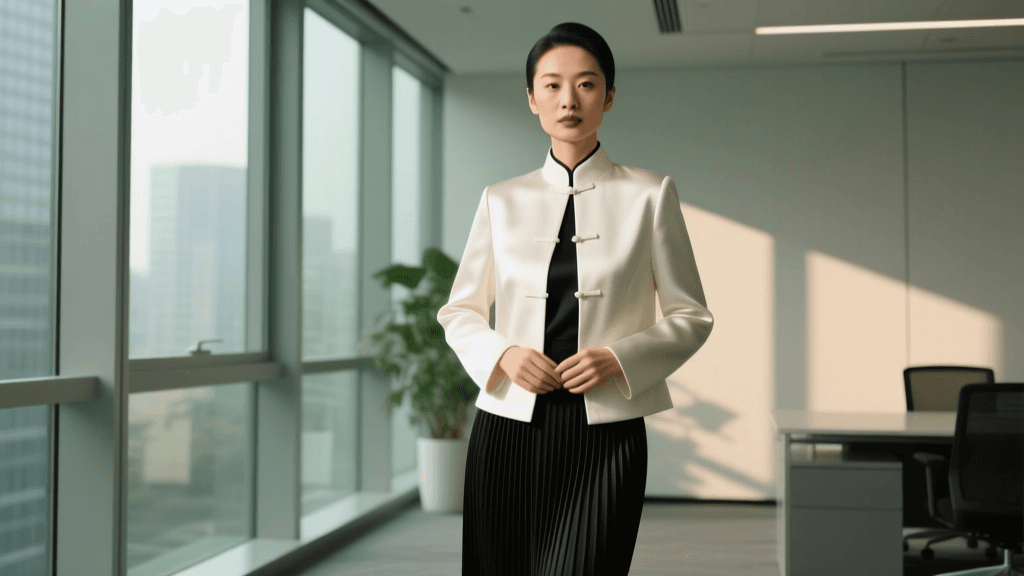
Complementing the skirt is the Modern Mao Jacket (often referred to interchangeably with the Mandarin collar or Zhongshan suit jacket). The 2026 iteration ditches the stiff, boxy cuts of the mid-20th century in favor of relaxed, unstructured shoulders and nipped waists. The defining feature remains the stand-up collar and the pankou (frog buttons), which serve as both functional fasteners and intricate textile jewelry.
2026 Brand & Price Comparison Matrix
Sourcing authentic, high-quality Xin Zhongshi workwear requires navigating a diverse market. Below is a curated comparison of the primary market tiers available to consumers in 2026.
| Brand Category | 2026 Price Range (USD) | Signature Xin Zhongshi Piece | Ideal Office Environment |
|---|---|---|---|
| Luxury Designer (e.g., Ms MIN, Shang Xia) | $850 - $3,200 | Hand-embroidered Silk Mao Jacket | Executive Boardroom / C-Suite |
| Premium Contemporary (e.g., MUKZIN, SAMUEL GUÌ YANG) | $300 - $750 | Structured Wool-Blend Mamianqun | Creative Agency / Architecture |
| High-Street Capsule (e.g., Zara CNY, Uniqlo) | $70 - $180 | Mandarin Collar Cotton-Linen Blouse | Business Casual / Tech Sector |
| Independent Artisan (Taobao/Etsy Specialists) | $150 - $400 | Custom-fit Xiangyunsha Wrap Skirt | Freelance / Remote / Academia |
Next-Generation Textiles: Smart Brocades and Peace Silk
The most significant leap in Xin Zhongshi workwear for 2026 lies in textile engineering. Traditional brocades (like Song and Shu brocade) were historically notoriously difficult to clean, heavy, and prone to snagging—making them impractical for daily office wear. Today, the integration of heritage craftsmanship with modern material science has revolutionized the category.
The foundation of these luxury textiles relies on centuries-old techniques. According to UNESCO's Intangible Cultural Heritage list on Chinese sericulture and silk craftsmanship, the meticulous processes of silk reeling and jacquard weaving are vital cultural assets. In 2026, ethical fashion houses are preserving these techniques by utilizing Vegan Peace Silk (Ahimsa Silk), where the silk moth is allowed to emerge from the cocoon before the threads are harvested. This appeals to the eco-conscious corporate demographic without sacrificing the lustrous drape characteristic of traditional Chinese garments.
Furthermore, Smart Brocades have entered the market. These jacquard weaves are treated with eco-friendly, nano-level hydrophobic coatings. A spilled espresso on a 2026 Xiangyunsha (gambiered Guangdong silk) blouse simply beads up and rolls off, solving the primary pain point of wearing delicate heritage fabrics in high-stakes office environments.
3 Office-Ready Xin Zhongshi Outfit Formulas
Styling Xin Zhongshi for the workplace requires balancing traditional volume with modern tailoring. Here are three actionable outfit formulas for 2026:
Look 1: The Executive Authority
- Top: A tailored, charcoal-grey Mao jacket in a wool-silk blend, featuring subtle tone-on-tone bamboo jacquard patterns and minimalist knotted pankou buttons.
- Bottom: A solid, deep cinnabar red (Zhu sha) Mamianqun with a flat front panel and structured side pleats.
- Footwear: Pointed-toe leather derbies with a modest 2-inch block heel.
- Styling Note: Keep jewelry minimal. A single nephrite jade pendant on a fine 18k gold chain provides a sophisticated focal point without overwhelming the collar.
Look 2: The Creative Director
- Top: An oversized, celadon green (Qingbai) Song-style cardigan with wide, flowing sleeves, worn over a crisp, high-necked white cotton turtleneck.
- Bottom: Wide-leg, pleated Hanfu-inspired trousers in a heavy matte crepe fabric that mimics the drape of a skirt but offers the practicality of pants.
- Footwear: Minimalist leather mules or square-toe loafers.
- Styling Note: Cinch the cardigan slightly with a thin, braided silk belt to define the waist and prevent the silhouette from looking overly voluminous in a studio or agency setting.
Look 3: The Minimalist Analyst
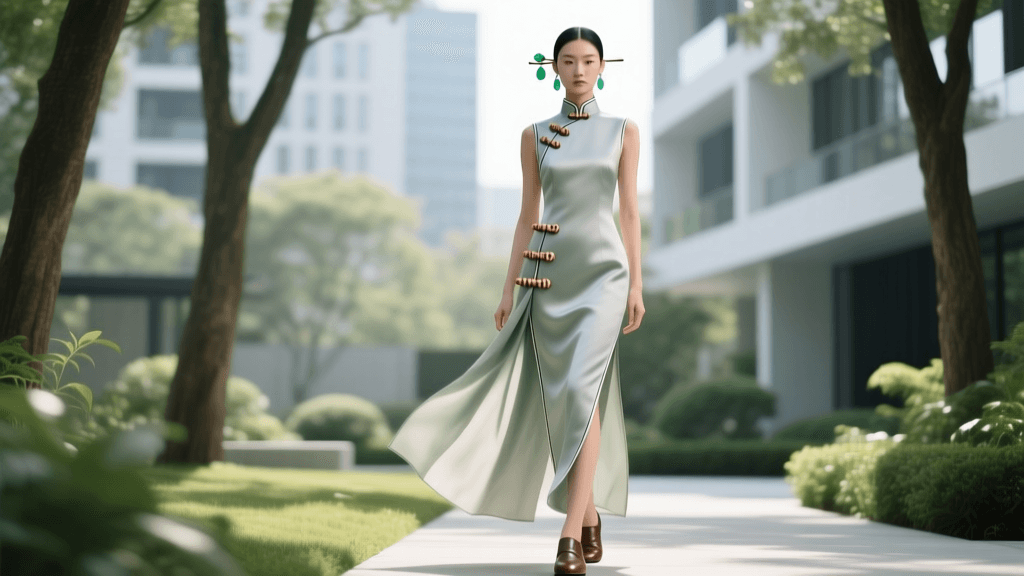
- Top: A sleeveless, Mandarin-collar blouse in washable peace silk, featuring a subtle ink-wash (Shui mo) print at the hem.
- Bottom: A high-waisted, A-line wrap skirt that borrows the asymmetrical closure of traditional Hanfu but is tailored to hit just below the knee.
- Footwear: Sleek, ankle-high suede boots.
- Styling Note: Layer with a modern, oversized blazer in a neutral tone (like oat or slate) for climate-controlled offices, allowing only the distinctive Mandarin collar to peek through.
Archival Storage and Garment Care
Investing in Xin Zhongshi workwear requires a commitment to proper garment care. The structural integrity of pieces like the Mamianqun and the delicate nature of silk brocades demand specific maintenance routines. Understanding the historical construction of these garments is key to preserving them; the Victoria and Albert Museum's Asian collections archive provides extensive documentation on how traditional flat-cutting and pleating techniques require specialized handling to prevent permanent creasing.
Essential Care Rules for 2026:
- Hanging the Mamianqun: Never fold a Mamianqun for long-term storage, as this will destroy the sharp knife pleats. Use a clip hanger with padded grips to hang the skirt by its waistband. Allow the weight of the fabric to naturally pull out any minor wrinkles.
- Cleaning Pankou (Frog Buttons): Do not machine wash jackets with intricate knotted buttons. The agitation will fray the silk threads. Always dry clean, or hand-wash using a pH-neutral silk detergent, ensuring the buttons are carefully lathered and rinsed without twisting.
- Climate Control: Xiangyunsha and traditional brocades are highly susceptible to humidity fluctuations. Store your Xin Zhongshi capsule in a cedar-lined wardrobe section with silica gel packets to prevent moisture buildup and protect the natural protein fibers from degradation.
- Ironing Protocol: Never apply direct heat to Smart Brocades or peace silk. Use a professional garment steamer held at least two inches away from the fabric to relax wrinkles without flattening the jacquard weave or scorching the hydrophobic coating.
Conclusion
The Xin Zhongshi movement in 2026 is a testament to the enduring relevance of Asian sartorial heritage. By thoughtfully integrating Mamianqun skirts and Mao jackets into your professional wardrobe, you participate in a living tradition—one that honors the meticulous craftsmanship of the past while embracing the technological and stylistic innovations of the future. Whether you are stepping into a corporate boardroom or a creative studio, New Chinese Style offers a powerful, elegant, and deeply rooted aesthetic for the modern professional.