Kunqu Opera Xifu & Hanfu Costumes 2026: Sourcing Guide
The Theatrical Evolution: From Ming Hanfu to Kunqu Xifu
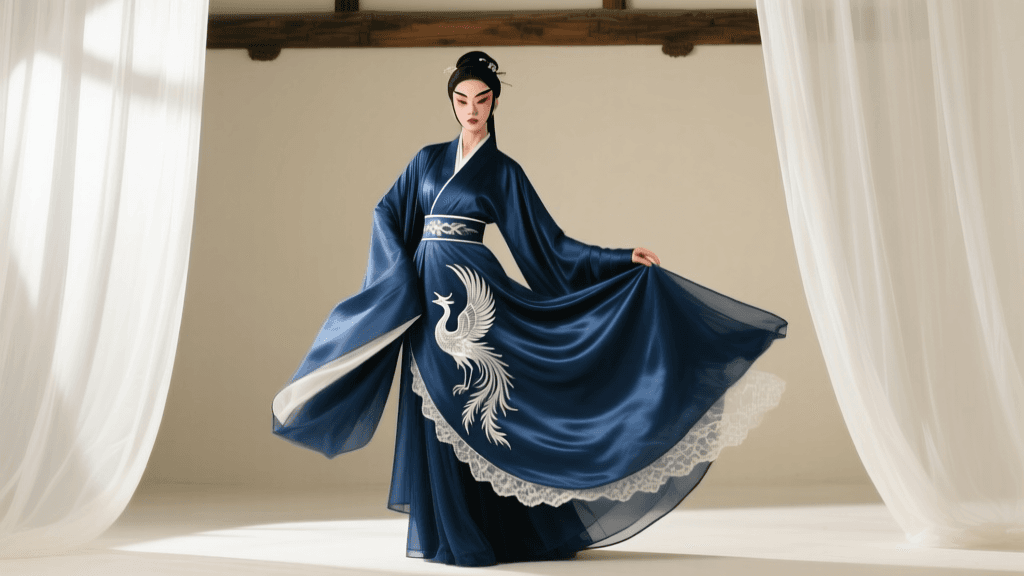
To appreciate Kunqu costumes, one must first understand their historical foundation. According to the UNESCO Intangible Cultural Heritage registry, Kunqu opera is a masterpiece of the oral and intangible heritage of humanity, with its aesthetic codified during the Ming and Qing dynasties. The costumes worn by Kunqu actors—collectively termed Xifu (theatrical dress)—are not strict historical replicas. Instead, they are an idealized, theatrical evolution of Ming Dynasty Hanfu. In 2026, the distinction between 'everyday Hanfu' and 'theatrical Xifu' is more important than ever for buyers. A historical Ming Dynasty Yuanlingpao (round-collar robe) is designed for structured, grounded movement and modesty. A Kunqu Mang (python robe), while sharing the same basic silhouette, features elongated water sleeves (shuixiu), rigid jade belts exaggerated for visibility from the back row, and vibrant, high-contrast Suzhou embroidery (Su Xiu) that catches the stage lights. As noted by theater historians at Encyclopædia Britannica, the symbolism in these garments dictates the character's rank, personality, and moral alignment, making the accuracy of the theatrical motifs just as crucial as the historical cut of the fabric.Core Kunqu Garments and Their Hanfu Counterparts
For collectors and performers navigating the 2026 market, it is essential to know exactly what you are purchasing. Below is a comparative breakdown of core Kunqu garments, their historical Hanfu roots, and current market pricing for authentic, performance-grade pieces.| Garment Type | Hanfu Origin (Ming Dynasty) | Kunqu Theatrical Adaptation (Xifu) | 2026 Bespoke Price (USD) |
|---|---|---|---|
| Mang (Python Robe) | Yuanlingpao (Round Collar Robe) | Features Shuixiu (water sleeves), exaggerated python embroidery, and stiffened hem for stage presence. | $3,500 - $6,000 |
| Pei (Informal Robe) | Pifeng (Cloak/Outerwear) | Worn by scholars and ladies; features flowing sleeves, intricate floral Su Xiu, and softer silk draping. | $1,200 - $2,500 |
| Kao (Armor) | Ming Military Armor | Highly stylized with flags (Kaoqi) on the back, padded for acrobatic martial arts (Wuxi), and heavily beaded. | $4,000 - $8,000 |
| Xuezi (Student Robe) | Daopao / Zhishen | Simple, elegant lines with subtle embroidery at the cuffs and collar; relies on the actor's movement to create flow. | $600 - $1,200 |
Sourcing Authentic Kunqu Xifu in 2026
The market for theatrical Hanfu and Xifu has matured significantly by 2026. While mainstream Hanfu brands occasionally release 'opera-inspired' capsule collections, true performance-grade Kunqu garments require bespoke commissioning from specialized ateliers.The Suzhou and Hangzhou Ateliers
The undisputed epicenter for Kunqu costuming remains Suzhou, the birthplace of the art form. In 2026, heritage workshops near the Pingjiang Road historic district offer bespoke tailoring that utilizes authentic Song brocade and hand-spun mulberry silk. When commissioning a Mang robe, expect a lead time of six to eight months. The embroidery alone—often featuring the 'panjin' (coiled gold) technique—requires hundreds of hours of meticulous handwork.
Modern Textile Innovations
For touring troupes and modern performers, traditional heavy silks can be a hindrance during vigorous summer performances. In response, 2026 has seen the rise of 'stage-tech silks'—blends of natural mulberry silk and high-tensile microfibers. These fabrics retain the lustrous drape and acoustic rustle of traditional silk but offer 40% more breathability and resistance to sweat stains, a crucial innovation for performers executing demanding acrobatic routines.
Mastering the Movement: Shuixiu and Yunshou
Owning a Kunqu garment is only half the equation; knowing how to move within it is where the true artistry lies. The most iconic element of Kunqu Xifu is the Shuixiu (water sleeve)—an extension of white silk attached to the cuff.- The Flick (Touxiu): Using a sharp, controlled snap of the wrist, the performer sends the silk ribbon extending outward to convey sudden anger or decisive action. In 2026, tailors reinforce the seam where the water sleeve meets the main cuff with hidden tensile threading to prevent tearing during aggressive flicks.
- Cloud Hands (Yunshou): A continuous, flowing figure-eight motion of the hands and arms. The heavy silk of the Pei robe must glide through the air, requiring the performer to engage their core and shoulders, not just their wrists.
- Trembling Sleeve (Doushu): Used to express fear, cold, or extreme grief. The performer vibrates their forearm, causing the silk to ripple like water. This requires a garment with precisely weighted cuffs; if the atelier uses silk that is too light, the ripple effect will fail to translate to the audience.
Preservation and Care for Theatrical Silks
The investment in a bespoke Kunqu robe is substantial, and proper care is non-negotiable. The heavy metallic threads and dense Suzhou embroidery used in 2026's top-tier Xifu require specialized storage.Pro-Tip for 2026 Collectors: Never hang a fully embroidered Mang or Kao robe on a standard wire or wooden hanger. The sheer weight of the metallic embroidery will warp the silk warp-and-weft over time, leading to irreversible tearing at the shoulders.
Instead, use custom-molded, padded archival hangers wrapped in unbleached cotton. For long-term storage, fold the garment loosely with acid-free tissue paper inserted between the embroidered folds to prevent the metallic threads from oxidizing or snagging on the silk. Dry cleaning is generally discouraged for authentic Su Xiu; instead, utilize specialized UV-light sanitization cabinets, which have become standard in high-end Hanfu and theatrical wardrobe maintenance in 2026.