Screen to Street: Recreating Iconic Chinese Drama Hanfu
The C-Drama Catalyst: From Niche Hobby to Mainstream Movement
The global explosion of Chinese historical dramas—often referred to as C-dramas—has done far more than entertain international audiences; it has single-handedly ignited a sartorial revolution. Blockbuster series like The Longest Day in Chang'an, Nirvana in Fire, and Story of Yanxi Palace have transformed traditional Chinese clothing, or Hanfu, from a niche subculture into a booming mainstream fashion movement. According to Reuters, the Hanfu market has expanded exponentially, driven largely by Gen Z consumers who wish to emulate the breathtaking aesthetics of their favorite on-screen protagonists.
However, translating the magical, wind-swept elegance of a television costume into a wearable, everyday outfit requires a deep understanding of garment construction, fabric behavior, and historical accuracy versus theatrical license. Screen costumes are designed for the camera: they utilize heavy brocades, stiff organzas, and exaggerated silhouettes that look magnificent under studio lighting but can be incredibly cumbersome on a modern city street. This comprehensive guide will show you how to recreate iconic C-drama Hanfu looks, adapting them for real-world wear without losing their cinematic magic.
Recreating Iconic Dynasty Aesthetics
Chinese historical dramas generally focus on specific dynastic eras, each with its own distinct silhouette, color palette, and garment structure. To recreate these looks, you must first understand the foundational pieces of the era you are emulating.
Tang Dynasty Elegance: The Chang'an Silhouette
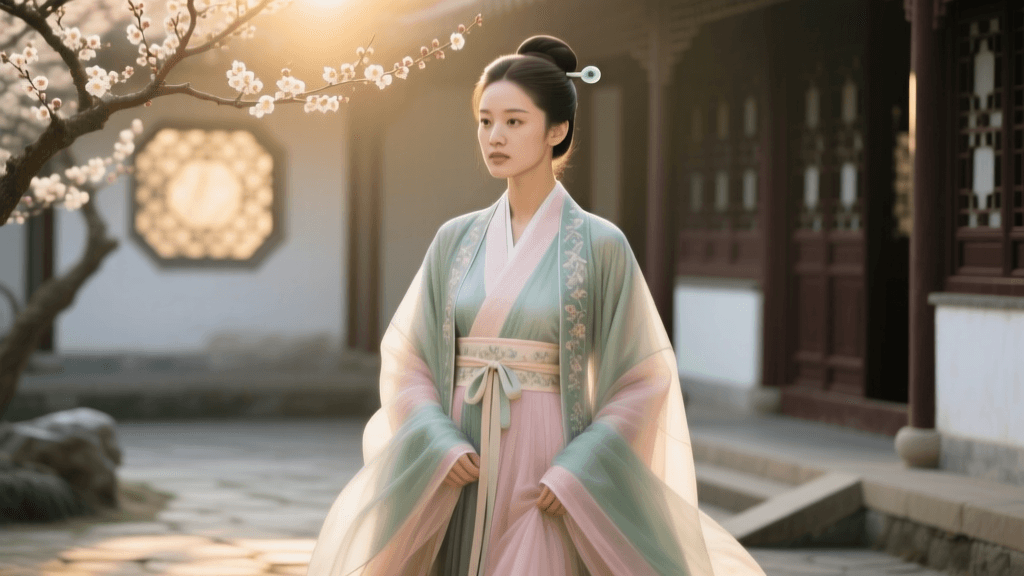
Dramas set in the Tang Dynasty (618–907 AD) are renowned for their opulent, cosmopolitan flair. The defining look popularized by shows like The Longest Day in Chang'an is the Qixiong Ruqun (chest-high skirt) paired with a Pibo (draped silk cape) and a Banbi (half-sleeve jacket).
- The Screen Look: Television costumers often use skirts with a massive 6-meter hem circumference to create dramatic, blooming swirls when the actress spins or walks against a wind machine. The fabrics are usually heavy, metallic-threaded jacquards.
- The Street Adaptation: For daily wear, a 6-meter skirt is a tripping hazard and too heavy for summer heat. Opt for a 3-meter to 4.5-meter hem circumference. This provides enough volume for beautiful photography and a graceful drape, but allows you to navigate subway turnstiles and crowded cafes safely. Replace heavy brocades with lightweight chiffon, soft tulle, or breathable cotton-linen blends for the inner layers.
- Styling Tip: The biggest challenge with the chest-high skirt is gravity. To prevent the skirt from slipping down (a common issue not seen on TV due to hidden costume clips), tie the ribbons tightly using a double-knot technique, and wear a modern strapless bra or a textured cotton inner shirt (Zhongyi) to provide friction against the silk waistband.
Ming Dynasty Refinement: The Structured Silhouette
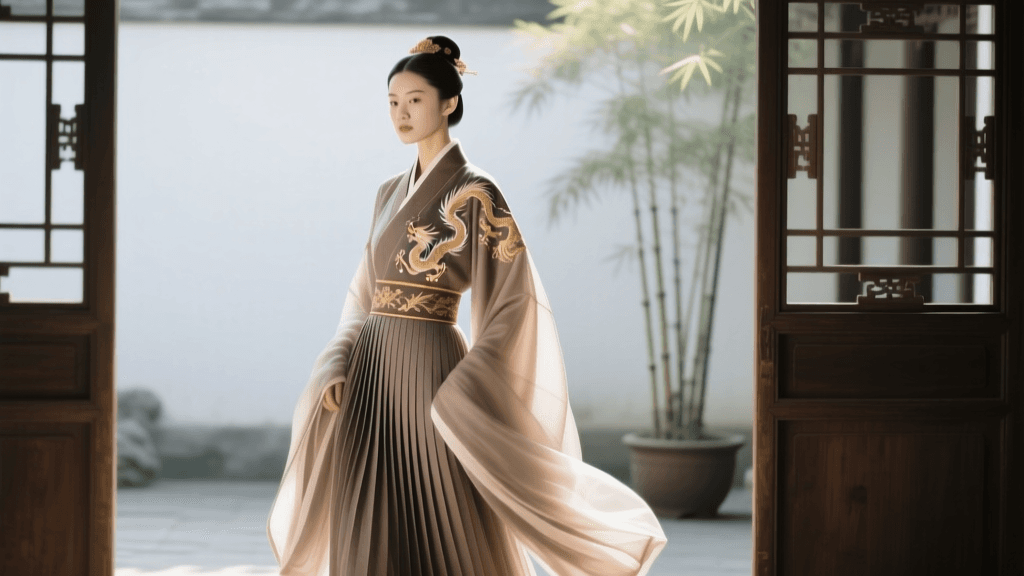
Ming Dynasty (1368–1644 AD) dramas, such as The Sleuth of the Ming Dynasty, showcase a more structured, modest, and highly refined aesthetic. The cornerstone of this era is the Mamianqun (horse-face skirt) paired with an Ao (a lined, long-sleeved jacket with a stand collar or cross collar).
- The Screen Look: TV costumes often feature heavily embroidered, stiff silk Mamianqun that hold their shape like a bell. The jackets are heavily padded to give the actors a rigid, imposing posture.
- The Street Adaptation: A historically accurate Mamianqun consists of flat front and back panels with deeply pleated sides. For a dramatic, screen-accurate drape that works in real life, look for skirts with 5 to 7 cm wide pleats made from medium-weight suit fabric, wool blends, or high-quality polyester jacquard. These materials hold the pleats sharply without requiring constant ironing. Ensure the waistband is made of pure cotton rather than slippery silk; this provides essential grip against your clothing and keeps the heavy skirt anchored at your natural waist.
- Styling Tip: The Ming jacket (Ao) often features exquisite Ziping (gold and silver thread embroidery) on the collar and cuffs. To adapt this for the modern 'Xin Zhongshi' (New Chinese Style) workplace aesthetic, pair a solid-colored, subtly embroidered Ming jacket with a neutral-toned Mamianqun and modern leather loafers instead of traditional cloth shoes.
Fabric Translation: Screen vs. Street
Understanding fabric is the most critical step in adapting drama costumes. Theatrical wardrobe departments prioritize visual texture and light reflection over the wearer's comfort. As noted by cultural analysts at Sixth Tone, the modern Hanfu movement has forced textile manufacturers to innovate, creating fabrics that mimic historical luxury while offering modern washability and breathability.
| Material Type | Screen Use & Effect | Daily Wear Alternative | Est. Cost (per meter) | Maintenance & Care |
|---|---|---|---|---|
| Heavy Silk Brocade | Creates rigid, opulent shapes; reflects studio lighting beautifully. | Polyester-Jacquard Blends | $5 - $12 USD | Machine wash cold, hang dry. Resists wrinkling. |
| Stiff Silk Organza | Used for dramatic Pibo (capes) and outer layers; holds volume. | Soft Tulle or Chiffon | $3 - $8 USD | Hand wash gently. Drapes naturally over the shoulders. |
| Velvet / Heavy Wool | Used for winter palace scenes; provides a rich, matte texture. | Cotton-Linen Blends / Corduroy | $8 - $18 USD | Dry clean or delicate cycle. Breathable for transitional weather. |
| Metallic Thread Silk | Embroidery that catches the light during dramatic close-ups. | Subtle Tonal Thread Embroidery | $15 - $30+ USD | Spot clean only. Prevents skin scratching from stiff metallic threads. |
A Practical Buyer’s Guide to Drama-Inspired Hanfu
When shopping for Hanfu inspired by your favorite C-dramas, the market is generally divided into three tiers. Platforms like Taobao and Tmall are the primary hubs for purchasing these garments, though international buyers can utilize proxy shopping services or dedicated global Hanfu retailers. For a comprehensive look at the brands driving this market, the South China Morning Post frequently highlights the intersection of traditional tailoring and modern e-commerce.
1. Entry-Level & 'Tongkuan' (Same Style) Replicas ($30 - $60 USD)
Many Taobao vendors sell 'Tongkuan'—direct, mass-produced replicas of the exact costumes worn in specific TV shows. While these are highly accurate in color and pattern, they often cut corners on fabric quality and historical tailoring (e.g., using zippers instead of traditional ties, or skimping on the fabric yardage for pleats). These are excellent for Halloween, cosplay conventions, or a one-time themed photoshoot, but they lack the durability for regular wear.
2. Mid-Tier Branded Hanfu ($80 - $150 USD)
For those who want the aesthetic of a C-drama but the quality of a real garment, mid-tier brands are the best choice. Brands like Shisanyu (十三余) and Zhongling (钟灵记) often collaborate directly with drama production studios to release 'officially inspired' collections. These garments use historically accurate construction methods (no zippers, proper seam allowances) but utilize modern, easy-care fabrics. A high-quality Mamianqun from these brands will cost around $60-$90 USD, while a complete Tang dynasty set will range from $100-$150 USD.
3. High-End & Museum-Grade Replicas ($250 - $1,000+ USD)
If your favorite drama is renowned for its historical accuracy (such as the Ming Dynasty costumes in The Sleuth of the Ming Dynasty), you may want to invest in museum-grade replicas. Brands like Minghuatang (明华堂) weave their own fabrics using traditional looms and real gold-leaf threads. These are not merely costumes; they are investment pieces and wearable art. Expect to pay upwards of $400 USD for a single skirt, with wait times often exceeding six months due to the bespoke weaving process.
Accessorizing the C-Drama Look
A Hanfu outfit is incomplete without the proper accessories, which are often the focal points of dramatic close-ups in television series.
- Hair and Headpieces: Tang Dynasty dramas feature elaborate updos adorned with large peony flowers and gold Buyao (dangling hairpins). For daily wear, opt for a simplified half-up hairstyle secured with a single, high-quality resin or jade hair stick. Avoid cheap, heavy metal alloys that can pull your hair and cause headaches.
- Footwear: While screen actors often wear platform 'flower basin' shoes (Qing dynasty) or embroidered cloud shoes, modern Hanfu enthusiasts frequently pair their outfits with clean, minimalist white sneakers or modern leather Mary Janes. This 'fusion' styling grounds the historical garment in the modern world and makes walking significantly more comfortable.
- Props: To capture the essence of a Wuxia (martial arts) drama, a folding fan with calligraphy or a simple bamboo parasol can instantly elevate your photography, providing your hands with natural, elegant positioning.
Conclusion: Wearing Your Story
The transition of Hanfu from the television screen to the city street is a testament to the enduring power of cultural storytelling. By understanding the mechanics of traditional tailoring, selecting appropriate modern fabrics, and investing in quality construction, you can channel the elegance of your favorite C-drama protagonists without sacrificing modern comfort. Whether you are twirling in a 4-meter Tang Dynasty skirt or walking into the office in a structured Ming Dynasty jacket, you are participating in a living, breathing fashion renaissance that honors the past while boldly stepping into the future.