Ming Dynasty Mamianqun: The Evolution of Court Fashion
The Origins of the Mamianqun in Song and Ming Courts
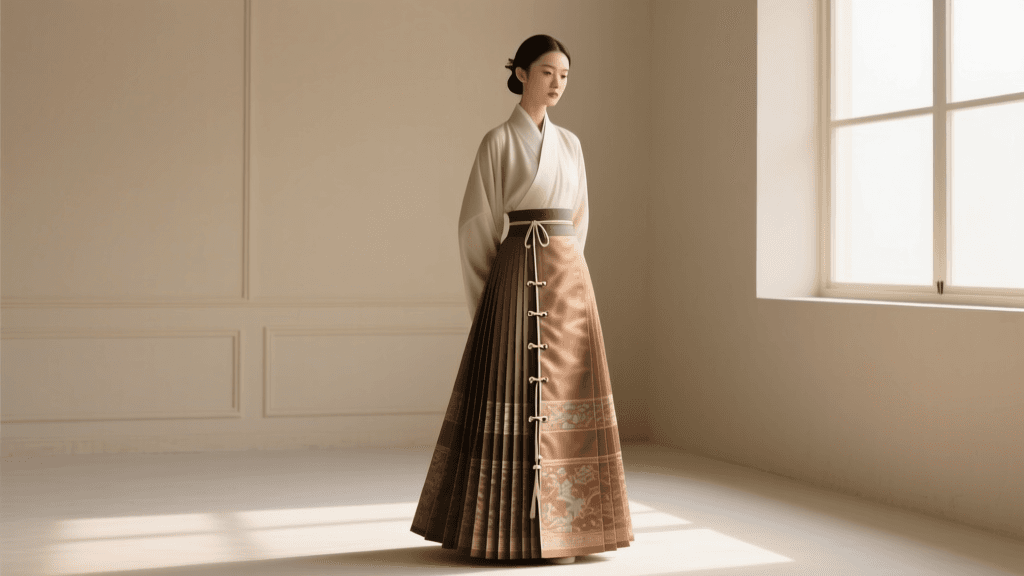
The Mamianqun, literally translating to 'horse-face skirt,' stands as one of the most iconic and enduring garments in the history of Chinese fashion. While its roots can be traced back to the practical, wrap-around skirts of the Song Dynasty (960–1279), it was during the Ming Dynasty (1368–1644) that the Mamianqun was codified into a symbol of elegance, courtly status, and Han cultural identity. The peculiar name 'horse-face' does not refer to the animal, but rather to the architectural term for the flat, trapezoidal rammed-earth defense structures built into ancient Chinese city walls. The skirt's flat, unpleated front and back panels visually mimic these imposing architectural features, while the deeply pleated sides allow for remarkable ease of movement.
According to The Metropolitan Museum of Art's Heilbrunn Timeline of Art History, the Ming era was characterized by a deliberate revival and refinement of traditional Han Chinese aesthetics following the Mongol-led Yuan Dynasty. Court fashion became highly regulated by sumptuary laws. The Mamianqun, crafted from luxurious Zhuanghua (brocade) weaves and adorned with auspicious motifs like the Mang (python) or flying fish, was a staple for noblewomen and court officials' wives. The structural brilliance of the skirt—comprising two overlapping pieces of fabric that form flat panels at the front and back with pleated sides—represented a triumph of traditional Chinese textile engineering.
Anatomy of the Skirt: Structure and Symbolism
To truly appreciate the Mamianqun from a court fashion perspective, one must understand its intricate anatomy. A traditional Ming-style skirt is constructed from two identical panels of fabric. When wrapped around the body, the overlapping nature of the panels ensures modesty and security, even when walking or riding horseback. The side pleats, known as 'knife pleats,' are sharply pressed and historically secured with intricate ties rather than modern zippers or buttons.
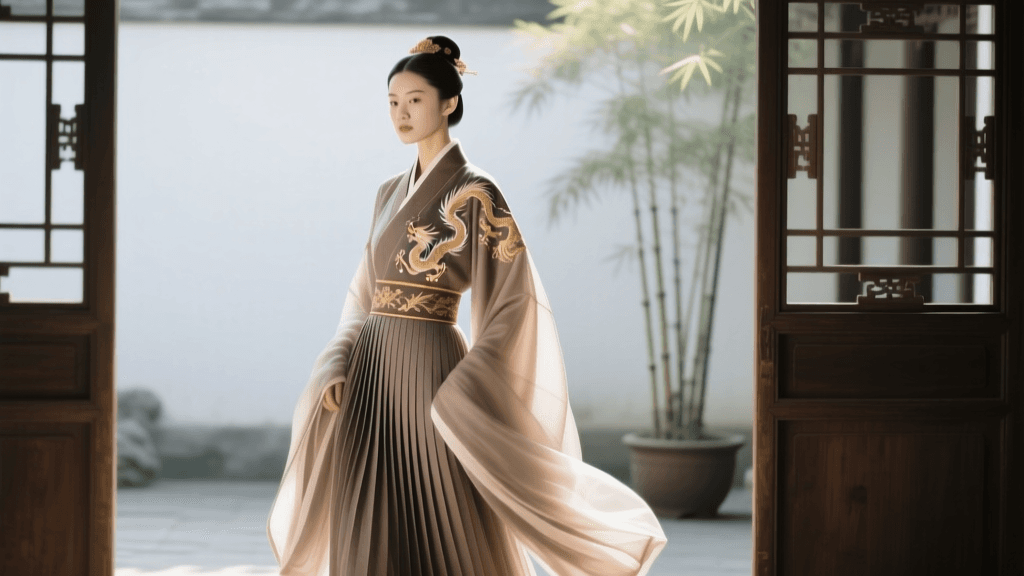
The flat 'horse-face' panels served as the primary canvas for courtly symbolism. In the imperial court, the motifs woven into these panels were strictly regulated. Dragon and phoenix motifs were reserved for the empress and highest-ranking consorts, while noblewomen utilized motifs of peonies (representing wealth and honor), lotuses (purity), and auspicious clouds. The waistband, often made of a different, less expensive fabric like white cotton or plain silk, was designed to be hidden beneath a fitted top or jacket, ensuring the luxurious brocade of the skirt remained the focal point of the ensemble.
Dynasty Evolution: Ming vs. Qing Court Adaptations
The transition from the Ming to the Qing Dynasty (1644–1912) brought immense political and cultural upheaval. The Manchu rulers issued the 'Tifa Yifu' (shave hair, change clothes) edict, forcing Han men to adopt Manchu queues and clothing. However, a cultural compromise known as the 'Ten From, Ten Not From' policy allowed Han women to continue wearing traditional Ming-style clothing. Consequently, the Mamianqun survived, but it evolved significantly to reflect the changing tastes of the Qing court and the broader society.
As highlighted by cultural historians and documented in The World of Chinese, the structural integrity of the Mamianqun remained, but its aesthetic execution shifted dramatically. Below is a comparative analysis of how the garment evolved between these two pivotal dynasties:
| Feature | Ming Dynasty (1368–1644) | Qing Dynasty (1644–1912) |
|---|---|---|
| Pleat Structure | Broad, structured knife pleats; fewer in number. | Narrower, denser pleats; sometimes featuring crossed 'fish-scale' pleats. |
| Waistband | Plain white cotton or silk; designed to be hidden. | Often decorative, made of contrasting silk, and meant to be visible. |
| Embellishment | Woven brocade (Zhuanghua); subtle, integrated motifs. | Heavy surface embroidery, appliqué, and intricate border trims (Lancai). |
| Length and Drape | Ankle-grazing, flowing, and voluminous. | Slightly shorter, often revealing decorative trousers or bound feet. |
Actionable Guide: Buying and Measuring for a Modern Mamianqun
The modern Hanfu revival movement has brought the Mamianqun back into the global fashion spotlight. As noted by Sixth Tone, the garment has transcended historical cosplay to become a versatile wardrobe staple for contemporary women. Whether you are attending a traditional tea ceremony, a wedding, or simply integrating court-inspired fashion into your daily life, purchasing an authentic, well-fitted Mamianqun requires specific knowledge.
1. Precise Measurements
Unlike Western skirts that zip up at the side, the Mamianqun wraps around the waist and is secured with ties. Therefore, accurate measurements are critical to prevent the skirt from slipping or gaping.
- Waist Measurement: Measure your natural waist (the narrowest part of your torso). Add 2 to 3 centimeters for ease and overlap. If your waist is 70cm, look for a skirt with a waistband length of 72-75cm. The ties will wrap around and secure the excess.
- Length Measurement: Measure from your natural waist down to the floor while wearing the shoes you intend to pair with the skirt. Subtract 2 to 3 centimeters so the hem grazes the top of your foot without dragging. Standard market lengths are typically 95cm (for heights around 155-160cm), 100cm (160-168cm), and 105cm (168cm+).
2. Fabric Selection and Cost Breakdown
The cost of a Mamianqun varies wildly based on the textile used. Here is what you can expect when shopping from reputable Hanfu merchants (such as Shisanyu, Zhongling, or independent Taobao artisans):
- Entry-Level ($30 - $60 USD): Made from polyester jacquard or synthetic blends. These are durable, machine-washable, and hold pleats exceptionally well. Ideal for daily wear and beginners.
- Mid-Tier ($70 - $150 USD): Cotton-linen blends, viscose, or rayon. These offer a more natural drape, better breathability for summer months, and a softer, more historical aesthetic.
- Luxury / Museum-Grade ($200 - $600+ USD): Authentic silk brocade, Zhangzhou velvet, or genuine gold-thread weaving (Zhijin). These are investment pieces meant for formal events, weddings, or collectors. They require professional dry cleaning and careful storage.
3. Timing Your Purchase
If you are ordering a custom or high-end silk Mamianqun for a specific event like the Lunar New Year, Mid-Autumn Festival, or a traditional wedding, you must account for production backlogs. Top-tier Hanfu workshops often operate on a pre-order model. Place your orders 4 to 8 weeks in advance to ensure your garment is woven, pleated, and shipped in time.
How to Style the Mamianqun Today
While historically paired with a traditional Ao (a lined, cross-collared jacket) or a Shan (a lightweight, wide-sleeved top), the Mamianqun is remarkably adaptable to modern styling. For a look that bridges Ming court elegance with contemporary chic, pair a solid-colored, woven silk Mamianqun with a crisp, tailored button-down blouse or a fine-knit turtleneck. Tuck the top securely into the waistband to showcase the flat 'horse-face' panel. Finish the look with a pair of leather Mary Janes or traditional embroidered cloth shoes (Xiu Xie).
When sitting, it is customary and practical to gently sweep the pleats to one side or smooth the back panel to avoid crushing the sharp knife pleats. By understanding the rich dynasty evolution and structural genius of the Mamianqun, modern wearers do more than just don a beautiful skirt; they participate in the living, breathing continuation of Asian sartorial heritage.