Xin Zhongshi Style 2026: Build Your Modern Chinese Capsule Wardrobe
The Evolution of Xin Zhongshi in 2026
Xin Zhongshi (新中式), or 'New Chinese Style,' has decisively moved beyond a fleeting trend to become a permanent pillar of global fashion in 2026. No longer confined to costume-like replicas or overly ornate festival wear, today's Xin Zhongshi movement is defined by quiet luxury, architectural silhouettes, and the seamless integration of heritage textiles into contemporary, everyday wardrobes. The modern consumer demands garments that honor the rich lineage of Asian traditions while accommodating the dynamic pace of urban life. By deconstructing historical motifs—such as the Ming Dynasty Mamian skirt or the intricate Pankou (frog buttons)—and rebuilding them with 2026's advanced fabric technologies and relaxed tailoring, designers have created a versatile sartorial language that speaks to both heritage and modernity.
Building a Xin Zhongshi capsule wardrobe this year requires an understanding of proportion, textile behavior, and the subtle art of contrast. Below, we deep-dive into the three essential garments that define the 2026 New Chinese Style, complete with precise measurements, styling frameworks, and maintenance protocols.
Core Garment 1: The Architectural Mamian Skirt
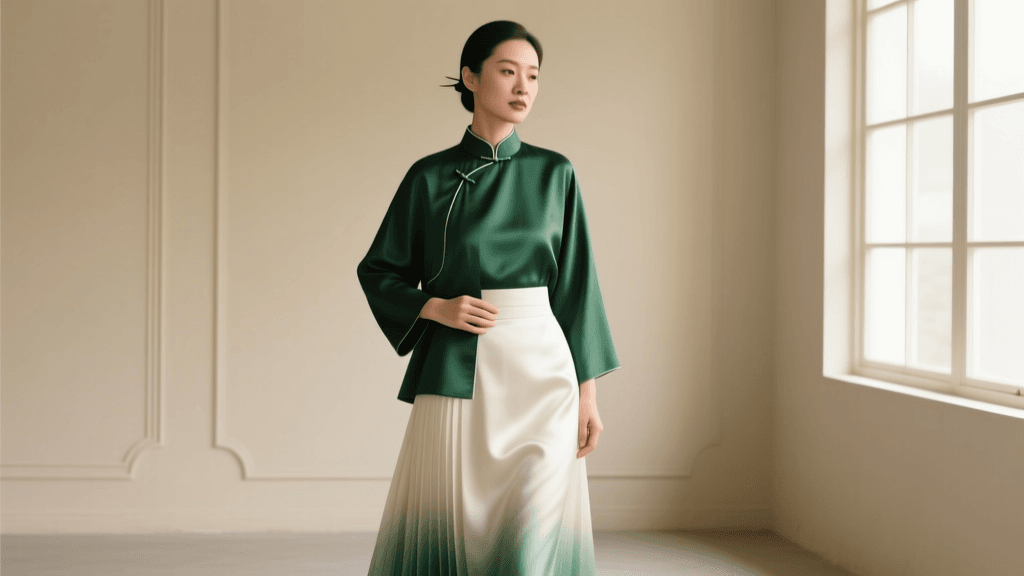
The Mamian skirt, historically known as the 'horse-face' skirt, is the undisputed centerpiece of the modern Xin Zhongshi wardrobe. Characterized by its flat front and back panels flanked by intricate, overlapping pleats, the Mamian skirt offers a striking silhouette that moves beautifully. In 2026, the market has shifted away from heavy, stiff traditional brocades toward fluid, matte jacquards, copper-infused yarns, and high-grade acetate blends that offer a luxurious drape without the excessive volume of historical replicas.
Actionable Sizing and Fit for 2026
- Pleat Structure: Look for skirts featuring 12 to 16 knife pleats per side. This provides the signature 'swing' without adding bulk to the waistline.
- Hem Circumference: For a modern, everyday drape that works with flat shoes and sneakers, seek a total hem width between 4.5 meters and 5 meters. Avoid the 6-meter+ historical widths unless you are styling for formal editorial shoots.
- Length Calibration: For a wearer who is 5'6' (167cm), the ideal 2026 skirt length is 92cm to 95cm. This ensures the hem rests precisely two inches above the ankle bone, preventing the fabric from dragging while showcasing your footwear.
Premium Mamian skirts often incorporate motifs woven using techniques recognized for their historical significance, such as the intricate brocade methods documented by the UNESCO Intangible Cultural Heritage list for Nanjing Yunjin weaving. While authentic Yunjin is reserved for haute couture, modern jacquard looms in 2026 have successfully democratized these cloud-like patterns for everyday luxury.
Core Garment 2: Xiangyunsha (Gambiered Canton Gauze) Outerwear
Xiangyunsha, often referred to as 'soft gold,' is a legendary silk textile dyed using the juice of the Dioscorea cirrhosa (shoulang) tuber and sealed with iron-rich river mud, then baked in the sun. Historically used for lightweight summer robes, 2026's Xin Zhongshi designers have reimagined this heritage fabric into structured outerwear, including drop-shoulder blazers, bomber jackets, and long-line dusters.
The beauty of Xiangyunsha lies in its organic, slightly crackled texture and its deep, earthy color palette—ranging from oxidized bronze to deep obsidian. It is naturally antibacterial, water-resistant, and becomes softer with wear. When sourcing a Xiangyunsha jacket this year, prioritize relaxed, unlined cuts that allow the fabric's natural stiffness to create an architectural, boxy silhouette that perfectly balances the fluidity of the Mamian skirt.
Core Garment 3: The Deconstructed Mandarin Collar Shirt
The traditional Tang suit or stiff silk brocade top has been entirely deconstructed for the 2026 capsule. The modern Mandarin collar shirt abandons restrictive cuts in favor of washed linen-cotton blends, matte crepes, and subtle, asymmetrical plackets. The most significant evolution in 2026 is the treatment of the Pankou (frog buttons). Instead of loud, ornate floral knots, contemporary designers utilize 'invisible' or geometric Pankou—minimalist metal toggles or hidden magnetic closures that mimic the aesthetic of traditional knots while offering the ease of modern hardware.
Collar Measurements for Comfort
A common mistake when buying off-the-rack Mandarin collar shirts is selecting a collar that is too high, which restricts neck movement. For 2026 everyday wear, ensure the collar height measures exactly 3cm to 3.5cm. This provides the elegant, upright posture associated with Asian traditions while allowing you to comfortably look down at your phone or desk throughout the day.
2026 Xin Zhongshi Capsule Comparison Chart
| Garment Type | Traditional Base | 2026 Xin Zhongshi Evolution | Ideal Styling Pairing | Avg. Market Price (USD) |
|---|---|---|---|---|
| Mamian Skirt | Ming Dynasty Brocade | Matte Jacquard / Acetate Blend | Oversized Knitwear, Chunky Loafers | $120 - $380 |
| Xiangyunsha Jacket | Qing Era Summer Robes | Drop-Shoulder Bomber / Blazer | Wide-Leg Trousers, Minimalist Sneakers | $450 - $950 |
| Mandarin Shirt | Stiff Silk Brocade | Washed Linen, Hidden Magnetic Pankou | Tailored Trousers, Leather Mules | $85 - $240 |
Styling Framework: The Rule of Contrast
The secret to mastering Xin Zhongshi in 2026 is avoiding the 'costume' trap. You must balance heritage pieces with stark, contemporary contrasts. Fashion historians and curators, such as those analyzing Asian textile movements at the Victoria and Albert Museum's Asian collections, frequently note that traditional garments were designed for entirely different physical postures and social environments. To translate them for today, apply the Rule of Contrast:
- Texture Contrast: Pair the high-sheen, intricate patterns of a Mamian skirt with a matte, heavily textured oversized mohair sweater or a crisp, minimalist white poplin shirt.
- Silhouette Contrast: If your Xiangyunsha jacket is boxy and voluminous, anchor it with straight-leg, tailored denim or slim-fitting merino wool trousers.
- Footwear Anchoring: Never pair these garments with traditional cloth shoes for everyday wear. Ground the outfit with modern footwear: chunky lug-sole loafers, sleek leather mules, or technical running sneakers. This immediately signals that the garment is part of a modern wardrobe.
Advanced Care for Heritage Textiles
Maintaining Xin Zhongshi garments requires specific protocols, particularly for naturally dyed textiles like Xiangyunsha and delicate modern jacquards. The global shift toward sustainable luxury means consumers are expected to preserve these investment pieces for decades.
Xiangyunsha Maintenance
- Washing: Never use alkaline detergents or standard laundry soaps. The mud-dye process is highly sensitive to pH levels. Use only a specialized, pH-neutral silk wash.
- Drying: Do not wring the fabric. Gently press the water out between two clean cotton towels and dry flat in the shade. Direct sunlight will cause the natural dyes to oxidize and fade unevenly.
- Storage: Xiangyunsha needs to 'breathe.' Store it in a cotton garment bag. Avoid plastic covers, which trap moisture and can cause the natural resinous coating to become tacky.
Jacquard and Acetate Mamian Skirts
Modern jacquard skirts are prone to snagging due to their floating weft threads. When traveling, roll the skirt rather than folding it to prevent hard creases from forming across the pleats. If ironing is necessary, use a low-heat steam setting and always place a pressing cloth between the iron and the fabric to avoid 'shine' marks on the synthetic-silk blends.
Sourcing Authentic Pieces in the 2026 Market
As the commercial viability of Guochao and Xin Zhongshi has exploded, the market is flooded with fast-fashion imitations that use cheap polyester prints to mimic heritage weaves. To build a genuine capsule, look for brands that transparently disclose their textile origins and weaving techniques. Industry analysts tracking the Asian luxury sector via platforms like The Business of Fashion's China hub consistently highlight that the true value of Xin Zhongshi lies in its supply chain transparency—knowing whether the silk was sourced from Zhejiang, or if the jacquard was woven on specialized modern looms that preserve the integrity of the historical motifs.
By investing in these three core garments and adhering to modern styling contrasts, you can cultivate a Xin Zhongshi wardrobe that is deeply respectful of Asian traditions while remaining effortlessly relevant in 2026 and beyond.