Best Xin Zhongshi Hanfu for Tai Chi & Qigong Practice in 2026
The Renaissance of Mindful Movement and Traditional Dress in 2026
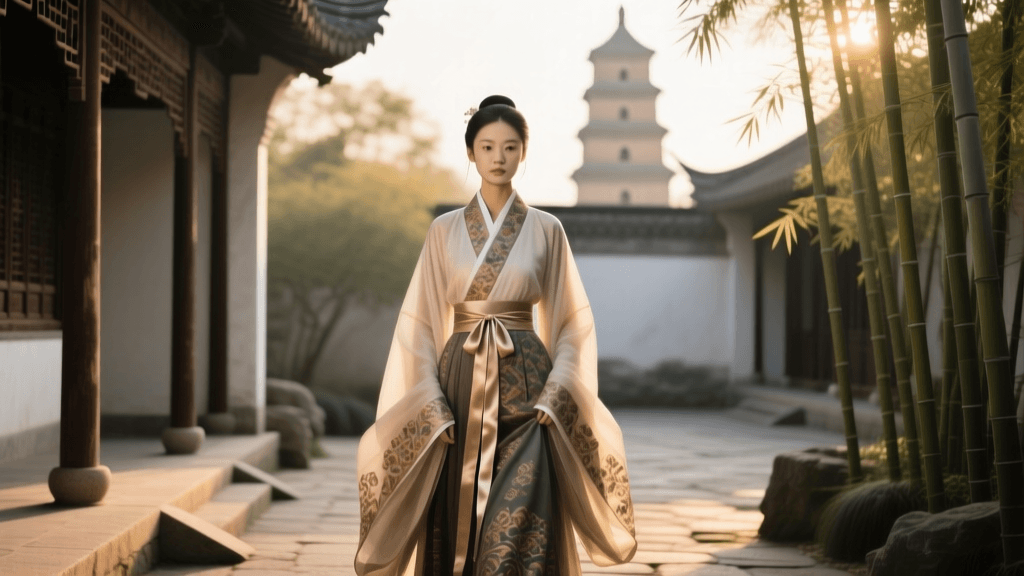
As we navigate the global wellness landscape of 2026, the intersection of traditional Chinese clothing and internal martial arts has reached a profound new zenith. The Xin Zhongshi (New Chinese Style) movement, which initially gained traction as a streetwear phenomenon, has matured into a highly specialized category of wellness and performance apparel. Today, serious practitioners of Tai Chi and Qigong are moving away from generic, mass-produced polyester martial arts uniforms. Instead, they are embracing authentic, breathable, and historically grounded Xin Zhongshi Hanfu garments designed specifically to support the biomechanics and energetic requirements of internal arts.
The benefits of these practices are well-documented by modern science. According to the National Center for Complementary and Integrative Health, Tai Chi continues to see massive global adoption due to its proven ability to improve balance, reduce stress, and enhance cardiovascular health. Similarly, Qigong is widely recognized for its role in chronic pain management and mental clarity. However, what is often overlooked in Western wellness circles is the critical role that proper attire plays in facilitating these benefits. In 2026, the modern Hanfu market has responded with innovative textiles and tailored cuts that honor ancient traditions while meeting the rigorous demands of daily practice.
The Biomechanics of the Cross-Collar and Wide Sleeve
To understand why Xin Zhongshi Hanfu is the superior choice for Tai Chi and Qigong, one must first understand the physical mechanics of the practices. Internal martial arts rely heavily on Chan Si Jin, or 'silk reeling' energy. This requires continuous, spiraling movements that originate in the feet, are directed by the waist, and are expressed through the hands. Restrictive clothing, such as modern athletic wear with tight armholes or rigid waistbands, physically impedes this kinetic chain and disrupts the practitioner's focus.
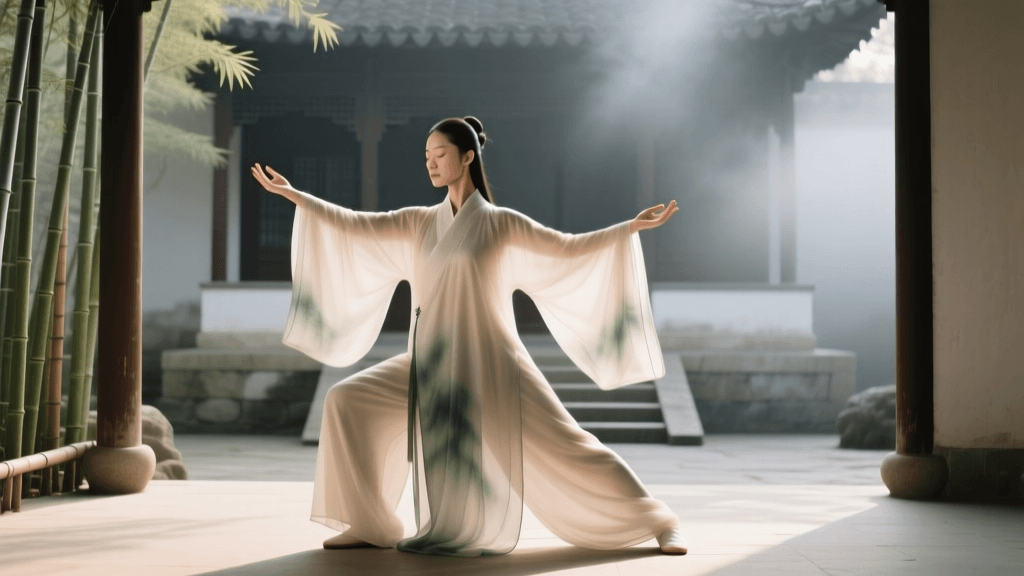
The traditional Hanfu silhouette is inherently designed for unrestricted movement. The iconic cross-collar (Jiao Ling You Ren) naturally frames the neck and shoulders without the need for tight collars or zippers, allowing the cervical spine to remain relaxed and aligned during the 'suspension of the crown' posture. Furthermore, the wide, flowing sleeves (Guang Xiu) serve a dual purpose. Physically, they allow for complete extension of the elbow and wrist joints during forms like 'White Crane Spreads Its Wings.' Energetically, the drape of the fabric provides visual feedback to the practitioner; the way the silk or ramie settles after a movement helps the student gauge the smoothness and continuity of their internal energy, or Qi.
Top Fabric Choices for Internal Arts in 2026
The year 2026 has brought remarkable advancements in natural textile processing, making traditional fabrics more durable and comfortable than ever before. When selecting a Xin Zhongshi garment for Qigong or Tai Chi, the fabric must possess three key qualities: high breathability to regulate body temperature during slow, sweating forms; structural drape to maintain the garment's shape without clinging; and tactile softness to prevent sensory distraction during meditation.
| Fabric Type | Drape Weight | Breathability | Best Practice Environment | 2026 Avg. Price (USD) |
|---|---|---|---|---|
| Enzyme-Washed Ramie | Medium-Heavy | Excellent | Outdoor summer practice, high humidity | $85 - $120 |
| Mulberry Silk-Cotton Blend | Light-Medium | Very Good | Indoor studios, morning Qigong | $130 - $180 |
| Bamboo-Linen Weave | Light | Superior | Hot yoga studios, intense sweating | $70 - $95 |
| Heavyweight Hemp Canvas | Heavy | Moderate | Outdoor winter practice, grounding | $110 - $150 |
Enzyme-washed ramie has emerged as the undisputed champion for outdoor practitioners in 2026. Historically, raw ramie could be stiff and abrasive, but modern bio-enzyme treatments have yielded a fabric that possesses the cooling, moisture-wicking properties of traditional summer hemp with the soft hand-feel of aged cotton. For those practicing in climate-controlled indoor studios, a 70/30 mulberry silk-cotton blend offers the luxurious, weighted drape of pure silk without the fragility or exorbitant maintenance costs.
Xin Zhongshi Innovations: Hidden Gussets and Weighted Hems
While historical accuracy is vital to the Hanfu community, the Xin Zhongshi movement prioritizes functional evolution. In 2026, top-tier wellness Hanfu brands have introduced subtle, hidden structural innovations that cater specifically to the deep stances of Chen and Yang style Tai Chi. The most notable of these is the integration of hidden diamond gussets in the crotch and underarm seams. These gussets are entirely invisible from the exterior, preserving the clean, flowing lines of the traditional trousers and tops, but they provide an extra four to six inches of stretch fabric that prevents tearing during deep Pu Bu (drop stance) or high Deng Tui (kick) movements.
Another brilliant 2026 innovation is the use of micro-weighted hems. By embedding tiny, flexible copper or stainless steel beads into the hem of the sleeves and the bottom of the trousers, designers have created a garment that naturally encourages 'sinking the Qi.' The slight downward pull of the weighted hems provides proprioceptive feedback, reminding the practitioner to drop their elbows and root their feet into the earth, a fundamental principle of internal martial arts.
Sizing Your Hanfu for Deep Stances and Meridian Flow
According to Harvard Health Publishing, the deep, weight-bearing stances in Tai Chi are crucial for building lower body strength and preventing falls in older adults. To execute these stances safely and comfortably, your Xin Zhongshi garments must be sized correctly. Standard fashion sizing does not apply to wellness Hanfu; you must measure for movement.
- The Rise and Inseam: When ordering wide-leg Qigong trousers, add at least two inches to your standard inseam. The trousers should pool slightly at the instep when standing straight, ensuring that when you drop into a deep Ma Bu (horse stance), the fabric does not ride up and expose the ankles, which Traditional Chinese Medicine warns can allow 'wind-cold' to enter the joints.
- The Waistband: Opt for trousers with a wide, flat, elastic-free drawstring waist. The waistband should sit at the natural waist or slightly below the navel (the Dan Tian area). Tight elastic bands constrict the abdominal breathing required for advanced Qigong and block the flow of Qi through the Dai Mai (Belt Meridian).
- Sleeve Length: For standard practice tops, the sleeve should extend to the middle of the thumb when the arms are relaxed at the sides. This ensures that when the arms are raised in 'Commencement of Tai Chi,' the wrists remain covered, protecting the vital acupressure points at the wrist from environmental drafts.
Caring for Your Wellness Wardrobe
Investing in high-quality Xin Zhongshi Hanfu requires a commitment to proper garment care, especially when the fabrics are regularly exposed to sweat and outdoor elements. Ramie and hemp garments should be hand-washed in cool water with a pH-neutral detergent. Avoid wringing the fabric; instead, press the water out gently and lay the garment flat to dry in the shade. Direct sunlight can degrade the natural lignins in plant-based fibers, leading to premature brittleness.
Silk-cotton blends require even more delicate handling. Wash them in a mesh laundry bag on a delicate cycle with cold water, and never use a mechanical dryer. The heat will shrink the cotton and ruin the luster of the mulberry silk. To maintain the structural integrity of the cross-collar, fold your garments along their natural seam lines and store them in breathable cotton bags, avoiding wire hangers that can distort the shoulder seams and ruin the drape.
Conclusion: Dressing the Part for Internal Harmony
The integration of Xin Zhongshi Hanfu into Tai Chi and Qigong practice is more than a mere aesthetic choice; it is a return to the holistic roots of Chinese wellness traditions. By selecting garments crafted from breathable, natural fibers and tailored with an understanding of internal biomechanics, practitioners in 2026 are better equipped to explore the profound depths of mindful movement. When your clothing moves as fluidly as your breath, the boundary between the body, the garment, and the surrounding environment dissolves, allowing for a truly transcendent practice.