Japanese Kimono Seasonal Wardrobe and Fabric Care Guide
The Art of Koromogae: Seasonal Transitions in Japanese Dress
In Japan, the changing of the seasons is not merely a meteorological event; it is a deeply ingrained cultural rhythm that dictates aesthetics, cuisine, and, most notably, clothing. The traditional practice of koromogae (the seasonal changing of the wardrobe) dates back to the Heian period (794–1185). Historically, the imperial court mandated specific dates for transitioning between winter and summer garments to ensure courtiers were dressed appropriately for the shifting humidity and temperature. Today, while modern life has relaxed these strict mandates, the foundational principles of koromogae remain essential for anyone wearing, collecting, or preserving traditional Japanese garments like the kimono and yukata.
Understanding textile weight seasonality is crucial. Wearing a heavy, lined silk kimono in the sweltering, humid Japanese summer is not only physically unbearable but also considered a breach of traditional etiquette. Conversely, wearing a sheer, unlined gauze kimono in the crisp autumn wind signals a disconnect from the natural world. According to the Victoria and Albert Museum's exploration of the Kimono, the garment is inherently designed to reflect the wearer's harmony with nature, making the precise rotation of fabric weights a cornerstone of Japanese dress.
Understanding Kimono Fabric Weights and Seasonality
The Japanese kimono wardrobe is broadly divided into three main categories based on fabric weight, weave, and lining. These categories dictate exactly when a garment should be worn.
1. Awase (Lined Kimono)
Awase refers to lined garments, typically featuring an outer layer of silk crepe (chirimen) or satin (shusu), and an inner lining of plain weave silk (habutae). These are the heaviest standard kimonos, designed to trap body heat and provide a smooth drape over the undergarments (nagajuban). Awase kimonos are worn during the colder months, from October through May.
2. Hitoe (Unlined Kimono)
Hitoe translates to 'single layer.' These kimonos are constructed without an inner lining, making them lighter and more breathable. They serve as the transitional garments of the kimono wardrobe, worn exclusively during the mild, in-between months of June and September. The fabric is often slightly stiffer or thicker than summer sheers to maintain the garment's structure without the support of a lining.
3. Usuyuki, Sha, and Ro (Summer Sheers)
For the peak of summer (July and August), the wardrobe shifts to ultra-lightweight, sheer fabrics. Ro (leno weave) and Sha (gauze) are specialized silk weaves that feature deliberate gaps in the threads, allowing air to circulate directly against the skin. Another popular summer textile is Ojiya-chijimi, a highly prized, crisp crepe hemp that feels cool to the touch. Traditional weaving centers like the Nishijin Textile Center in Kyoto have spent centuries perfecting these complex, breathable weaves to combat Japan's intense summer humidity.
Seasonal Fabric Weight Calendar
| Season | Months | Garment Type | Fabric & Weave | Lining Status |
|---|---|---|---|---|
| Winter / Spring | Oct - May | Awase | Chirimen (crepe), Tsumugi (pongee) | Fully Lined |
| Early Summer / Early Autumn | June, Sept | Hitoe | Stiffer Chirimen, Silk blends | Unlined |
| Peak Summer | July - Aug | Natsugi (Summer wear) | Ro, Sha (gauze), Ojiya-chijimi (hemp) | Unlined / Sheer |
Material Matters: Silk, Hemp, and Cotton Care
The care required for a kimono is entirely dependent on its base material. The Metropolitan Museum of Art's Asian Art Department notes that the preservation of historical Japanese textiles requires a nuanced understanding of organic fiber degradation. Modern collectors and wearers must apply these same principles to maintain their wardrobes.
Silk (Kinu)
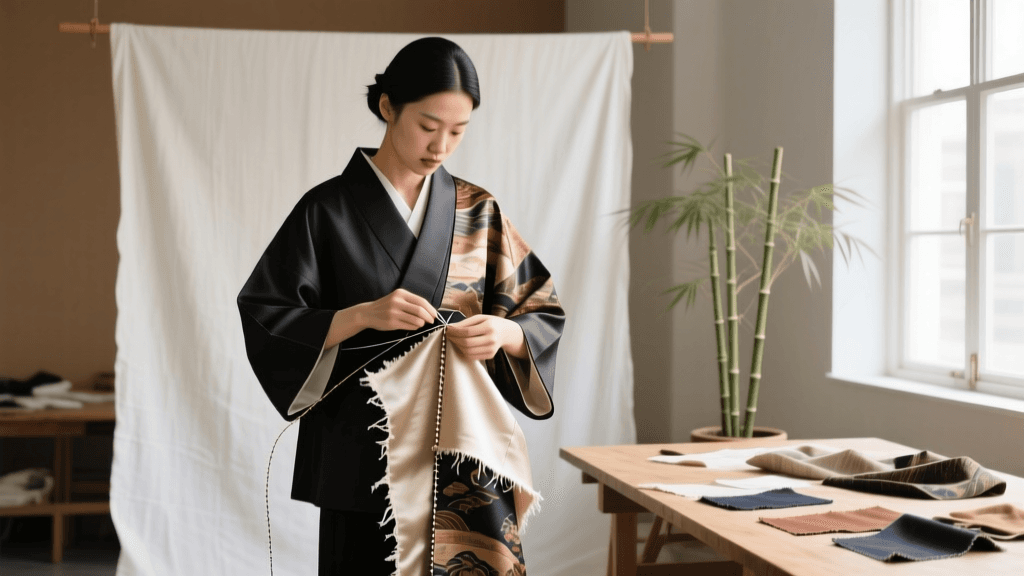
Silk is the premier fiber for formal kimonos. Its weight is traditionally measured in monme (1 monme = 3.75 grams). A standard, high-quality kimono bolt (tanmono) weighs between 15 and 20 monme. Silk is highly susceptible to water spotting, UV fading, and protein-eating pests. Never wash a silk kimono at home. When a silk kimono requires deep cleaning, it undergoes araihari, a traditional process where the garment is completely unpicked into its original rectangular panels, washed, stretched on wooden boards (shinshi) to dry and realign the fibers, and then meticulously resewn. Professional araihari services typically cost between $150 and $300 USD, depending on the complexity and condition of the garment.
Hemp (Asa) and Ramie
Used primarily for high-end summer kimonos, hemp and ramie are bast fibers known for their exceptional breathability and crisp drape. Unlike silk, these plant-based fibers can be gently hand-washed in cool water with a mild, neutral detergent. However, they must never be wrung out, as this breaks the fibers and causes permanent creasing. They should be rolled in a towel to press out moisture and dried flat in the shade.
Cotton (Momen)
Cotton is the standard material for the yukata, the casual summer garment worn at festivals and hot springs. Modern cotton yukatas are highly durable and can generally be machine-washed on a gentle cycle using a mesh laundry bag. To preserve the indigo dyes often used in yukatas, wash them separately in cold water and avoid direct sunlight when drying.
The Year-Round Kimono Care Calendar
Proactive maintenance is the secret to a kimono's longevity. Because kimonos are rarely dry-cleaned after every wear, a strict calendar of airing and inspection is required to prevent mold, mildew, and insect damage.
Spring (March - April): The Post-Winter Airing
As the weather warms, it is time to transition from awase to hitoe. Before storing your lined winter kimonos, they must be aired out. Hang the garments on specialized kimono hangers (emono-kake) in a well-ventilated, shaded room for 3 to 4 hours. Use a soft, natural-bristle garment brush to gently sweep away dust and skin cells from the silk crepe, which can attract pests during storage.
Summer (June - July): Mushiboshi (Insect Airing)
Japan's rainy season (tsuyu) brings extreme humidity, creating the perfect environment for mold and silverfish. Mushiboshi is the critical mid-summer airing process. Choose a dry, breezy day after the rains have cleared. Air your entire silk collection in the shade. This is also the time to replace the desiccants and natural insect repellents (like camphor or cedar blocks) inside your storage drawers. Warning: Never use chemical mothballs directly near silk, as the fumes can cause chemical burns and yellowing on the fabric.
Autumn (September - October): Stain Inspection
As you prepare to bring your awase kimonos back into rotation, carefully inspect your summer sheers and hitoe before storing them. Summer sweat is highly acidic and can oxidize over the winter, turning into stubborn yellow stains that are nearly impossible to remove from silk. If you notice any perspiration marks along the lower back or underarm gussets (waki), send the garment for professional spot-cleaning (shiminuki) immediately before putting it away.
Winter (November - February): Rotation and Rest
During the winter, your heavy awase kimonos are in active rotation. To prevent permanent creasing and fabric fatigue, do not wear the same kimono two days in a row. After wearing, hang the kimono and its undergarments in a well-ventilated room overnight to allow body moisture to evaporate before folding it back into its paper wrapper.
Storage Solutions and Pest Prevention
How a kimono is stored is just as important as how it is cleaned. The traditional Japanese storage system is a masterclass in passive climate control.
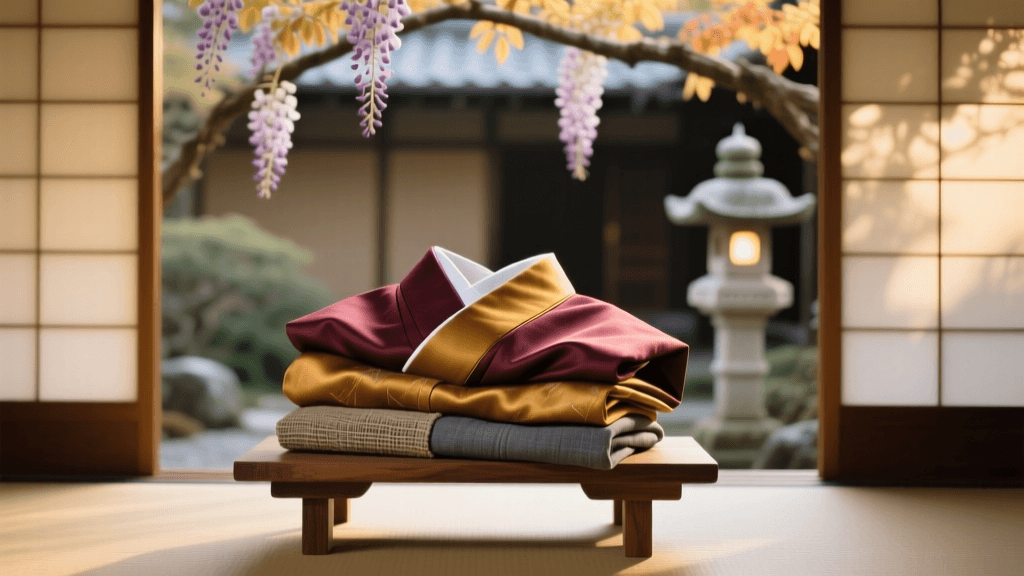
- Tatoushi (Paper Wrappers): Kimonos should never be stored in plastic bags, which trap moisture and off-gas chemicals that degrade silk. Instead, they are folded along their seam lines and wrapped in tatoushi, large sheets of acid-free, breathable Japanese paper (often made from mulberry or kōzo).
- Kiribako (Paulownia Boxes): For long-term storage, wrapped kimonos are placed inside kiribako. Paulownia wood is uniquely suited for textile preservation; its cellular structure expands in high humidity to seal the box against moisture, and contracts in dry weather to allow the wood to breathe. Furthermore, the wood contains natural tannins that repel insects.
- Tansu (Wooden Chests): For larger collections, a dedicated kimono tansu made of cedar or paulownia provides deep, wide drawers that allow the garments to lie flat without being compressed, preventing permanent crease lines in the delicate silk.
'To care for a kimono is to engage in a dialogue with the artisans who wove the silk, the dyers who painted the pattern, and the natural world that inspired it. The garment is not merely worn; it is stewarded for the next generation.'
— Traditional Kyoto Textile Conservator
Conclusion
The maintenance of a traditional Japanese wardrobe is a labor of love that demands patience, observation, and respect for natural materials. By adhering to the seasonal rhythms of koromogae, understanding the specific weights and weaves of your textiles, and following a rigorous, year-round care calendar, you ensure that these magnificent garments remain vibrant, structurally sound, and culturally resonant for decades to come.