DIY Kimono Upcycling: Repurpose Vintage Silk Into Modern Fashion
The Renaissance of Kimono Upcycling
The global shift towards sustainable, circular fashion has sparked a profound renaissance in the world of DIY garment repurposing. Among the most rewarding and culturally rich textiles to upcycle is the traditional Japanese kimono. For decades, millions of vintage silk kimono have languished in cedar closets, thrift stores, and estate sales, largely because the modern consumer rarely possesses the knowledge or occasion to wear them in their original, highly structured form. However, the exquisite craftsmanship, vibrant Yuzen dyeing, and intricate Shibori patterns of these garments offer an unparalleled opportunity for modern makers. By deconstructing and repurposing vintage kimono silk, sewists and designers can breathe new life into historical textiles, transforming them into contemporary fashion pieces while actively participating in the preservation of Japanese textile arts. As highlighted by the Victoria and Albert Museum's landmark exhibition on the kimono, the garment has always been a dynamic piece of fashion, constantly evolving and influencing global style. Upcycling is merely the latest chapter in this ongoing sartorial dialogue.
Sourcing and Selecting Vintage Silk
Sourcing vintage kimono for upcycling is both an affordable and thrilling treasure hunt. In Japan, second-hand chains like Hard-Off and online auction platforms offer silk kimono for as little as $10 to $30. Internationally, estate sales, vintage textile dealers, and specialized online marketplaces are excellent resources. When selecting a kimono for deconstruction, prioritize the condition of the silk. While minor stains can be hidden in seam allowances or cut around, avoid garments with severe dry rot, shattering silk, or pervasive mildew, as these will disintegrate under the stress of a sewing machine needle. Look for heavier silk crepes (chirimen) or smooth rinzu (silk damask), as they provide excellent drape and durability for modern apparel. The cost of acquiring these vintage textiles is a fraction of the price of buying new, high-grade mulberry silk by the yard, making it an economically viable choice for independent designers and hobbyists alike.
The Art of Deconstruction
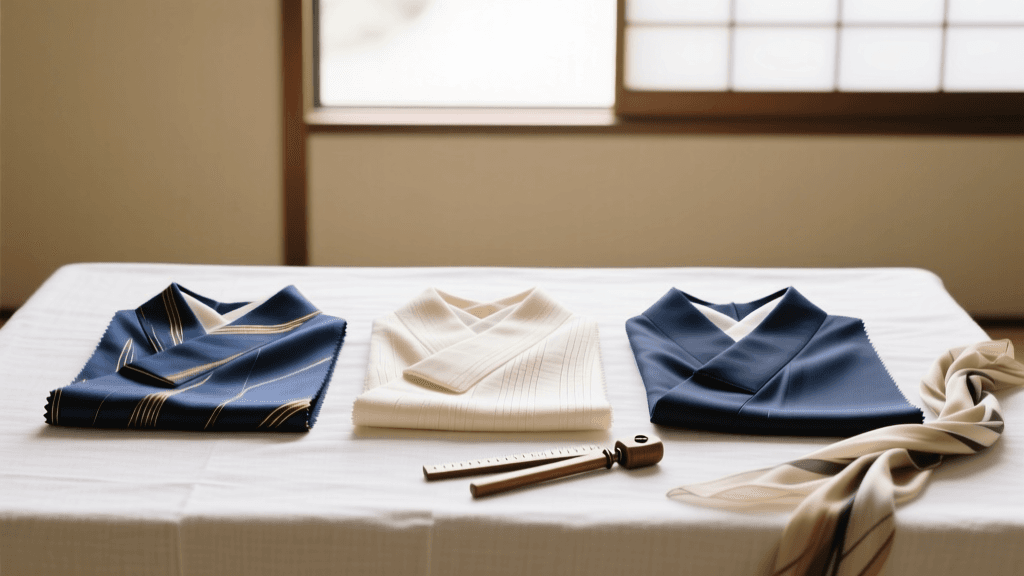
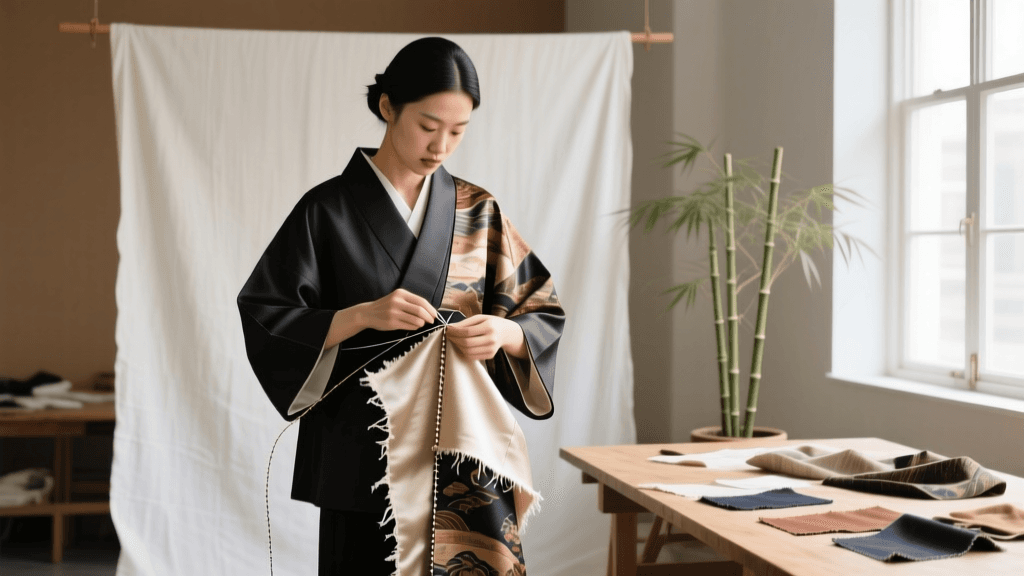
The traditional construction of a kimono, known as shitate, is uniquely suited for upcycling. Unlike Western tailoring, which relies on complex curved seams, darts, and serged edges, a kimono is constructed almost entirely from straight, running hand-stitches. This means that the garment can be completely deconstructed back into its original, flat rectangular panels without damaging the fabric. To begin, use a high-quality seam ripper and a pair of blunt-nosed embroidery scissors. Carefully snip the threads along the side seams, shoulder folds, and sleeve attachments. Take your time; rushing this process can lead to accidental tears in the delicate vintage silk.
Once unpicked, you will be left with several long, narrow panels, typically measuring about 14 inches wide and up to 14 yards long in total. After deconstruction, the fabric must be gently hand-washed using a pH-neutral detergent designed for delicate proteins, such as Eucalan. Rinse thoroughly in cool water, roll the panels in a clean towel to press out excess moisture, and then lay them flat to dry, blocking the edges to ensure the grain remains perfectly straight. Iron on a low silk setting with a pressing cloth to avoid scorching the vintage fibers.
Fabric Yield and Project Matrix
Understanding the yield of different kimono types is crucial for planning your DIY projects. Because the fabric comes in narrow 14-inch strips, pattern placement requires strategic thinking. Below is a comprehensive guide to help you match your sourced garment with the most appropriate upcycling project.
| Garment Type | Usable Yield | Best Upcycled Project | Estimated Time |
|---|---|---|---|
| Furisode (Long Sleeve) | 12-14 yards | Maxi dress, bomber jacket, wide-leg trousers | 12-15 hours |
| Houmongi (Standard) | 10-12 yards | Midi skirts, wrap blouses, duster coats | 8-10 hours |
| Haori (Jacket) | 4-5 yards | Crop tops, tote bags, luxury throw pillows | 4-6 hours |
| Obi (Sash) | 1.5-2 yards | Corsets, statement belts, table runners | 3-5 hours |
Step-by-Step: The Haori Bomber Jacket
One of the most popular upcycling projects is transforming a vintage Haori into a modern bomber jacket. The Haori already possesses a jacket-like silhouette, but its traditional wide sleeves and open front require modification for contemporary streetwear aesthetics.
1. Stabilizing the Silk
Vintage silk can be slippery and prone to fraying. Before cutting your pattern, apply a lightweight fusible interfacing, such as Pellon Shape-Flex, to the wrong side of the silk panels. This adds necessary body to the fabric, allowing it to behave more like a medium-weight cotton or linen, which is ideal for structured jackets.
2. Pattern Modification
Use a standard commercial bomber jacket pattern. Because kimono silk panels are only 14 inches wide, you will need to add vertical seam lines to the pattern pieces to accommodate the narrow fabric width. This actually enhances the design, allowing you to frame specific motifs, such as cranes or cherry blossoms, within the individual panels.
3. Ribbing and Hardware
Contrast the delicate vintage silk with heavy-duty modern hardware. Source ribbed knit cuffs and a waistband in a complementary solid color. Install a heavy brass zipper and add snap buttons to the collar. The juxtaposition of the fragile, historical silk with industrial hardware creates a striking, high-fashion garment that honors the past while firmly existing in the present.
Boro and Sashiko: Embracing the Scraps
Upcycling a kimono inevitably leaves behind scraps, heavily stained sections, or areas of wear. Rather than discarding these, makers can look to the historical Japanese tradition of Boro and Sashiko for inspiration. Boro, meaning 'rags' or 'tattered cloth,' is a patchwork technique born out of necessity in rural Japan, where every scrap of textile was precious. As noted in BBC Culture's exploration of Japanese crafts, these mending techniques have evolved from symbols of poverty into highly sought-after aesthetic practices in modern sustainable fashion.
Gather your silk scraps and arrange them in a visually pleasing patchwork layout. Back the patchwork with a sturdy cotton canvas, and use Sashiko—a traditional running stitch executed with thick, twisted cotton thread—to quilt the layers together. This not only reinforces the fragile silk but also adds a beautiful, tactile texture. Sashiko-stitched kimono silk makes exceptional material for durable tote bags, laptop sleeves, and quilted winter vests.
Essential Tools and Budget Breakdown
To successfully repurpose kimono silk, you need the right tools to handle delicate, shifting fabrics. Below is a breakdown of the essential equipment and estimated costs for a beginner upcycler.
- Microtex Needles (Size 70/10): $8. These needles have an exceptionally sharp point that pierces tightly woven silk without snagging or pulling threads.
- Walking Foot Attachment: $25-$40. Crucial for feeding the slippery silk layers evenly through the machine, preventing puckering.
- Silk Pins (Extra Fine): $6. Thinner than standard pins, they leave no permanent holes in the delicate vintage weave.
- Rotary Cutter and Mat: $30. Ensures clean, straight cuts on narrow, slippery panels where scissors might drag the fabric.
- Fusible Interfacing: $15. Necessary for stabilizing the silk before cutting and sewing.
Total initial tool investment is roughly $85 to $100, a cost that is quickly offset by the high retail value of finished silk garments and the low cost of sourcing the raw vintage materials.
Preserving Cultural Heritage
While upcycling is an act of creative expression, it is vital to approach vintage kimono with cultural respect. Many formal kimono feature Kamon (family crests) or specific motifs tied to seasons, life events, or religious ceremonies. When deconstructing, take care to preserve these elements. A beautifully embroidered crest can be cut out, backed with interfacing, and repurposed as a standalone brooch, an applique for a denim jacket, or framed as textile art. By thoughtfully integrating these historical markers into modern designs, DIY makers do more than just recycle fabric; they act as custodians of Japanese heritage, ensuring that the stories woven into the silk continue to be worn, seen, and appreciated in the modern world.