Hanfu Fabric Drape and Comfort Analysis: 2026 Guide
The Evolution of Hanfu Textiles in the Xin Zhongshi Era
The year 2026 marks a pivotal moment for the Xin Zhongshi (New Chinese Style) movement. Traditional Hanfu has transcended ceremonial boundaries to become a staple of daily, modern wardrobes across Asia and the global diaspora. As enthusiasts transition from occasional photoshoots to everyday wear, the demand for garments that balance historical authenticity with modern ergonomic comfort has skyrocketed. At the heart of this evolution is a rigorous understanding of fabric texture, drape, and breathability. Selecting the right textile is no longer just about aesthetic appeal; it is a precise science of how a garment interacts with the human body in motion.
The Science of Drape: Measuring Hanfu Fabrics
In textile engineering, 'drape' refers to the ability of a fabric to bend and fold under its own weight. For Hanfu, which relies heavily on flowing silhouettes, wide sleeves, and unstructured waistlines, the drape coefficient is the single most critical metric for visual authenticity. Historically, the fluid elegance of Chinese silk was celebrated along the ancient trade routes, with The Metropolitan Museum of Art noting that the unique luster and draping qualities of early sericulture made it a highly coveted luxury good that shaped global textile history.
Understanding the Drape Coefficient
The drape coefficient is measured using a Cusick drape tester, which calculates the percentage of a fabric's area that casts a shadow when draped over a circular disk. A lower percentage indicates a highly fluid, soft fabric (ideal for Ruqun skirts and inner layers), while a higher percentage indicates a stiff, structured fabric (necessary for outerwear like Beizi or structured Mamianqun pleats). In 2026, advanced digital jacquard looms and bio-engineered silk blends have allowed manufacturers to precisely calibrate these coefficients to suit specific Hanfu garments.
2026 Hanfu Fabric Comparison Chart
To help you navigate the current market, we have compiled a comprehensive analysis of the most prominent Hanfu fabrics available this year. The data below reflects standard 2026 textile testing metrics for authentic and high-quality blended materials.
| Fabric Type | Weight (g/m²) | Drape Coefficient (%) | Breathability | Best Garment Application |
|---|---|---|---|---|
| Mulberry Silk Chiffon (16mm) | 68 | 28% | High | Ruqun skirts, inner shirts, summer shawls |
| Xiangyunsha (Gambiered Gauze) | 95 | 52% | Medium-High | Mamianqun, structured Beizi, autumn wear |
| Raw Tussah Silk | 110 | 45% | High | Everyday Beizi, Song dynasty-style trousers |
| Modern Song Brocade (Blend) | 185 | 76% | Low | Winter outerwear, Banbi, formal collars |
Deep Dive: Top 3 Fabrics for 2026
1. Xiangyunsha (Gambiered Canton Gauze)
Xiangyunsha remains the pinnacle of luxury Hanfu textiles. This unique fabric is dyed using the juice of the薯莨 (Dioscorea cirrhosa) tuber and coated with iron-rich mud from the Pearl River Delta. The resulting chemical reaction creates a fabric that is water-resistant, naturally antimicrobial, and possesses a distinct, leathery 'crackle' sound when moved. In 2026, sustainable harvesting initiatives have stabilized the supply of authentic mud-dyed Xiangyunsha, though it remains a premium investment. Its moderate drape coefficient (52%) makes it exceptionally well-suited for Mamianqun (horse-face skirts), as it holds sharp, architectural pleats while remaining surprisingly lightweight against the skin.
2. Modern Mulberry Silk Chiffon (12mm vs. 16mm)
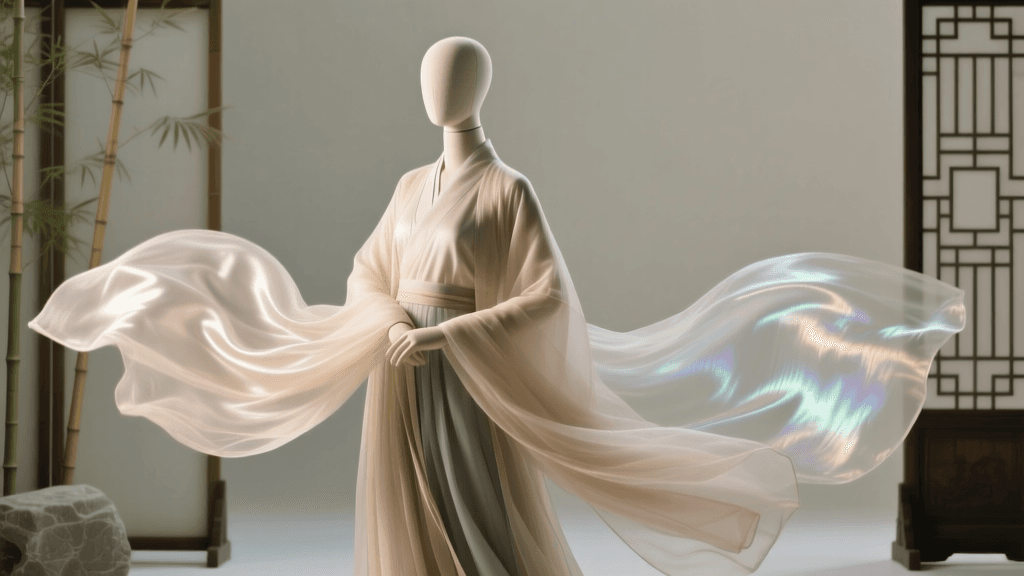
Silk chiffon is the workhorse of the Hanfu wardrobe, prized for its ethereal, cloud-like drape. However, consumers in 2026 are increasingly moving away from the ultra-sheer 12mm (momme) weights in favor of 16mm and 19mm variants. The heavier momme weights provide necessary opacity for daily wear without sacrificing the fluid, liquid-like drape coefficient (under 30%) that defines the romantic silhouette of Wei-Jin and Tang dynasty-inspired garments. According to Encyclopædia Britannica, the triangular prism-like structure of the silk fiber allows it to refract light at different angles, giving even heavier chiffon weaves a luminous, shimmering quality that synthetic alternatives simply cannot replicate.
3. Song Brocade (Songjin) Blends
Traditional Song Brocade is notoriously heavy, stiff, and prone to snagging, making it historically difficult to wear in warm climates. The 2026 market has seen a surge in 'New Songjin'—a blend of mulberry silk warp and high-tenacity regenerated cellulose weft. This innovation reduces the fabric's weight by nearly 30% while maintaining the high drape coefficient (76%) required for structured outer garments. The result is a brocade that holds its shape beautifully in collars and cuffs but no longer feels like wearing a suit of armor.
Comfort and Climate Considerations
The Xin Zhongshi movement is fundamentally about livability. A beautiful Hanfu is useless if it causes thermal discomfort. Silk is a natural protein fiber that excels in thermoregulation. In humid summer climates, lightweight raw silk and 16mm chiffon wick moisture away from the body, allowing for rapid evaporation. Conversely, the dense weave of modern Song Brocade traps a micro-layer of air, providing excellent insulation during winter months. For those living in highly variable climates, layering a 12mm silk inner shirt (Zhongyi) beneath a raw silk Beizi offers the most adaptable, year-round comfort profile.
How to Test Drape and Texture at Home
When evaluating Hanfu fabrics from online boutiques or local tailors in 2026, you can perform a few simple tests to gauge quality and drape:
- The Crush Test: Squeeze a handful of the fabric tightly for ten seconds and release. High-quality mulberry silk will spring back with minimal creasing, while lower-grade blends or pure linens will hold deep wrinkles, disrupting the garment's visual flow.
- The Ring Test: For chiffon and lightweight silks, attempt to pull a small section of the fabric through a standard finger ring. Authentic, high-momme silk will glide through smoothly due to its low friction coefficient, whereas synthetic polyester chiffon will catch and bunch.
- The Light Test: Hold the fabric up to a direct light source. Authentic woven silk will show slight, natural irregularities in the thread slub, whereas mass-produced synthetic alternatives will appear uniformly perfect and overly reflective.
Sourcing and 2026 Pricing Expectations
As the demand for premium Hanfu continues to grow, pricing has stratified clearly in 2026. Entry-level synthetic blends (polyester chiffon and imitation brocade) remain accessible, typically ranging from $25 to $60 for a full set. However, for authentic silk garments, buyers should expect to invest between $120 and $250 for high-grade 16mm silk chiffon sets. Authentic, certified Xiangyunsha garments command a premium, with a single skirt often retailing between $300 and $600, reflecting the labor-intensive, weather-dependent mud-dyeing process that can only be executed during specific months of the year.
Care and Maintenance for Optimal Drape
Preserving the structural integrity and drape of your Hanfu requires meticulous care. The natural sericin proteins in silk are highly sensitive to alkaline environments. Always wash silk Hanfu using a pH-neutral detergent specifically formulated for protein fibers; standard laundry detergents will strip the silk's natural luster and cause the fibers to become brittle, drastically altering the drape coefficient over time.
For structured garments like Mamianqun, never use a traditional iron, as the pressure will flatten the pleats and create unwanted shine. Instead, invest in a high-pressure garment steamer. Steam the skirt while hanging, allowing gravity and the moisture to naturally pull the pleats back into their original, mathematically precise folds. Store your silk garments in breathable cotton bags with cedar blocks to deter pests, avoiding plastic covers which trap moisture and lead to mildew, ultimately destroying the fabric's drape and tensile strength.
Conclusion
The 2026 Hanfu landscape is a triumph of material science meeting ancient aesthetics. By understanding the nuances of drape coefficients, momme weights, and fiber structures, enthusiasts can curate a Xin Zhongshi wardrobe that is not only visually breathtaking but profoundly comfortable. Whether you are drawn to the architectural pleats of Xiangyunsha or the ethereal flow of heavy silk chiffon, prioritizing fabric analysis ensures that your traditional garments will move, breathe, and endure beautifully in the modern world.