Peking Opera Costumes: Sourcing & Wearing Jingju Festival Garments
The Art of Xingtou: Understanding Peking Opera Wardrobes
Peking Opera, or Jingju, is a spectacular synthesis of music, vocal performance, mime, dance, and acrobatics. Recognized globally for its vibrant aesthetics, the art form was inscribed on the UNESCO Intangible Cultural Heritage list in 2010. While the makeup and vocal techniques often capture the audience's immediate attention, the wardrobe—known as 'Xingtou'—is the backbone of the visual storytelling. For modern cultural festivals, heritage parades, and amateur theatrical troupes, acquiring and wearing authentic Peking Opera costumes requires a deep understanding of historical garment structures, textile craftsmanship, and practical stage mechanics.
Unlike everyday historical Hanfu or Qing dynasty clothing, Jingju costumes are highly stylized. They do not strictly adhere to a single historical period; instead, they blend Ming and Qing dynasty silhouettes with theatrical exaggerations designed to convey a character's social status, personality, and martial prowess from the back row of a grand theater. Whether you are preparing for a Lunar New Year temple fair, a university cultural showcase, or a regional Asian heritage festival, understanding the mechanics of these garments is essential for an authentic and comfortable performance.
Core Garment Types for Festival Performances
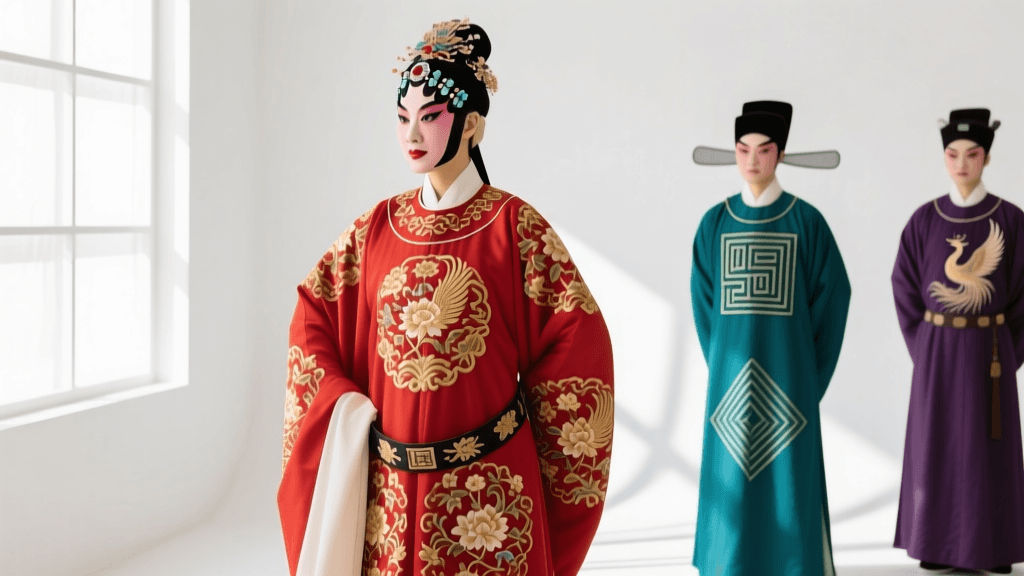
The Peking Opera wardrobe is strictly codified. According to Britannica's comprehensive guide to Peking Opera, costumes are categorized not by historical accuracy, but by the role type (Sheng, Dan, Jing, and Chou) and the character's social standing. Below is a comparison chart of the primary garments used in festival performances, along with practical sourcing data.
| Garment Name | Description & Role Type | Festival Use Case | Est. Custom Cost (USD) | Lead Time |
|---|---|---|---|---|
| Mang (Court Robe) | Round-collared, python-embroidered robe with water sleeves. Worn by emperors and high officials. | Grand parades, formal stage entries, static exhibitions. | $800 - $3,500 | 6 - 12 weeks |
| Kao (Armor) | Elaborate padded armor with flags (Kaoqi) on the back. Worn by generals and warriors. | Martial arts demonstrations, acrobatic festival acts. | $1,200 - $4,000 | 8 - 16 weeks |
| Pei (Informal Robe) | Cross-collared, wide-sleeved robe with floral or avian embroidery. Worn by nobles in casual settings. | Interactive festival booths, dance performances, photography. | $400 - $1,500 | 4 - 8 weeks |
| Xuezi (Scholar Robe) | Simple, cross-collared robe, often black or blue. Worn by scholars, commoners, or exiled officials. | Minimalist theatrical acts, comedic routines, chorus lines. | $150 - $400 | 2 - 4 weeks |
| Kuaoyi (Fast Garment) | Tight-fitting jacket and trousers with embroidered borders. Worn by martial heroes and scouts. | Acrobatic troupes, lion dance adjacent performances, stunts. | $250 - $600 | 3 - 5 weeks |
Sourcing Authentic Jingju Costumes
When sourcing costumes for a festival, organizers and performers must choose between machine-embroidered theatrical wear and hand-embroidered heritage pieces. The primary manufacturing hubs for these garments are Suzhou and Beijing. Suzhou is renowned for its exquisite silk embroidery (Suxiu), which features incredibly dense, smooth stitch work using split silk threads. Beijing workshops, conversely, often specialize in the heavy gold and silver couching techniques required for the 'Mang' and 'Kao' garments.
Machine-Embroidered vs. Hand-Embroidered
For amateur festival troupes or large ensemble casts, machine-embroidered polyester or blended-silk garments are the most practical choice. They typically cost between $150 and $400 per set, are highly durable, and can be spot-cleaned easily. However, for lead performers, cultural ambassadors, or museum-quality exhibitions, hand-embroidered silk is mandatory. A genuine hand-embroidered 'Mang' robe requires hundreds of hours of labor, pushing the cost to $2,500 or more. When commissioning hand-embroidered pieces, you must allow a minimum of three to six months for production, as master artisans often have extensive waiting lists.
Renting vs. Buying
If your festival appearance is a one-off event, renting from a specialized theatrical wardrobe house is highly recommended. Rental fees for a full 'Kao' armor set with helmets and flags typically range from $100 to $250 per weekend. However, renting requires a substantial security deposit and strict adherence to return timelines, which can be stressful during multi-day outdoor festivals where weather and crowd conditions are unpredictable.
Mastering the Water Sleeves (Shuixiu)
The 'Shuixiu', or water sleeves, are the most iconic element of the Peking Opera wardrobe. These long, flowing white silk extensions attached to the cuffs of the 'Mang' and 'Pei' robes are used to exaggerate hand gestures and convey complex emotions. Asia Society's educational resources on Jingju highlight that the manipulation of water sleeves is a distinct martial and expressive art form requiring years of practice.
Sizing and Fabric Selection
For festival performers who are not classically trained opera actors, selecting the correct sleeve length is crucial to avoid tripping or tangling during crowded parades.
- Beginners / Festival Walkers: 18 to 24 inches of extension beyond the fingertips. This length allows for graceful draping and basic flicking motions without stepping on the fabric.
- Intermediate Dancers: 24 to 30 inches. Suitable for staged performances where the performer has a cleared radius and has practiced basic folding and throwing techniques.
- Professional Opera Actors: 30 to 36+ inches. Reserved for trained professionals performing on elevated stages.
The fabric of the water sleeve should be white silk habotai or a high-quality synthetic equivalent like charmeuse. The fabric must have enough weight to 'snap' when flicked, but enough lightness to float when tossed. Some costumers sew a tiny, discreet lead weight or a thick cotton hem into the very edge of the sleeve to aid in the centrifugal force required for the 'snap' technique.
Fitting, Padding, and Footwear
A Peking Opera costume is not merely worn; it is constructed onto the body. The silhouette of a Jingju character is broad-shouldered, imposing, and larger than life. To achieve this, performers must utilize specific undergarments and padding.
The Art of Padding
Male roles (Sheng and Jing) require shoulder pads and chest padding to create a heroic, barrel-chested silhouette. This is typically achieved using a specialized padded vest called a 'Pangzao'. For female roles (Dan), the padding is more subtle, focusing on smoothing the natural figure and providing a structured base for the heavy silk robes. When ordering custom garments, you must provide your measurements while wearing your intended padding, otherwise, the robe's armholes and chest panels will be too restrictive during dynamic festival movements.
Footwear: Houdixue and Caiqiao
Footwear dramatically alters the performer's posture and gait. Male officials and scholars wear 'Houdixue', thick-soled boots with white uppers and black velvet toes. The soles can range from 2 to 4 inches in height, made of compressed cotton and wood. Festival performers must practice walking in these boots on uneven outdoor terrain (like cobblestones or grass) well before the event to prevent ankle injuries. Female roles traditionally wear 'Caiqiao', a highly restrictive shoe that mimics the gait of foot-bound women, though modern festival adaptations often use slightly elevated, flat-soled embroidered slippers for safety and comfort during long parades.
Maintenance and Storage of Silk Festival Garments
Theatrical garments are massive investments and require meticulous care, especially after being worn in humid, crowded, or outdoor festival environments. Sweat, makeup, and environmental dust can quickly degrade silk and tarnish metallic embroidery threads.
Cleaning Protocols
Never machine wash or aggressively hand-wash a silk opera costume. The metallic gold and silver threads (often made of copper alloys or synthetic films) will oxidize, fray, or snap. Instead, use a soft, dry brush to remove surface dust after every wear. For sweat stains on the inner collars, use a slightly damp cloth with a pH-neutral textile cleaner, dabbing gently without rubbing. If the garment requires a deep clean, it must be taken to a dry cleaner who specializes in theatrical or historical textiles, explicitly pointing out the metallic embroidery.
Storage Solutions
Between festival seasons, 'Mang' and 'Kao' garments should never be hung on standard wire or wooden hangers, as the immense weight of the embroidery (a fully embroidered court robe can weigh over 15 pounds) will tear the shoulder seams. Instead, fold the garments along their natural seam lines, interleaving the folds with acid-free tissue paper to prevent the dye from transferring and the silk from creasing permanently. Store them in breathable cotton garment bags in a climate-controlled environment. Avoid using chemical mothballs directly in the storage bin, as the fumes can discolor the silk; opt for natural cedar blocks or dried lavender sachets placed in the corners of the storage chest.
Conclusion
Participating in a cultural festival wearing traditional Peking Opera garments is a profound way to honor and perpetuate Asian theatrical heritage. By understanding the distinct roles of the 'Mang', 'Kao', and 'Pei', investing in the correct proportions for water sleeves, and adhering to strict maintenance protocols, performers can ensure their 'Xingtou' remains as vibrant and commanding as the art form itself. Whether you are a seasoned theatrical director or a first-time festival participant, respecting the mechanics of these garments will elevate your performance from a simple costume display to a living, breathing tribute to Jingju.