The Ultimate Tai Chi Uniform Guide: Fabrics and Fit
The Intersection of Mind, Body, and Attire in Tai Chi
Tai Chi Chuan is often described as meditation in motion. It is a profound internal martial art that requires deep concentration, fluid movement, and a harmonious connection between the mind and body. According to Harvard Health Publishing, the slow, deliberate movements of Tai Chi offer immense physical and psychological benefits, ranging from improved balance to significant stress reduction. However, to fully immerse yourself in this ancient practice and allow your Qi (vital energy) to flow without obstruction, your clothing must be an extension of your body, not a hindrance.
Choosing the right Tai Chi uniform—often referred to as a Wushu uniform or traditional practice wear—is not merely an aesthetic choice. It is a functional necessity. The right garments accommodate deep stances, facilitate breathwork, and honor the rich cultural heritage of Chinese martial arts. In this comprehensive guide, we will explore the anatomy of traditional Tai Chi practice wear, breaking down fabric choices, precise measurement guidelines, footwear essentials, and garment care.
The Philosophy and Evolution of the Tai Chi Suit
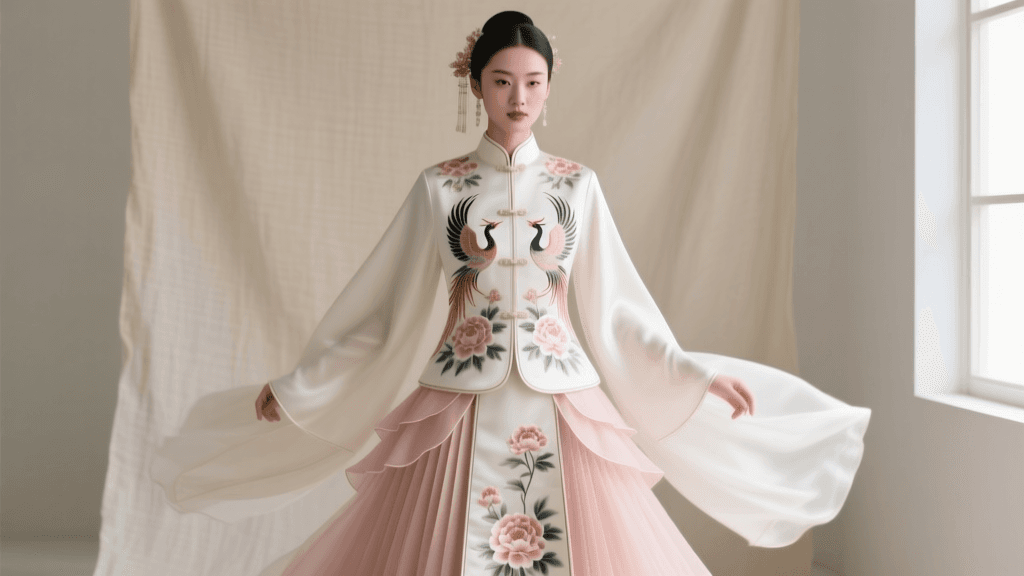
The modern Tai Chi suit is a beautiful synthesis of historical Chinese clothing adapted for the rigorous demands of martial arts. While early practitioners may have trained in their everyday robes, the contemporary uniform draws heavy inspiration from the Tangzhuang (Tang suit) and traditional Hanfu elements, streamlined for the dynamic movements of Wushu and Tai Chi.
A defining feature of the traditional Tai Chi jacket is the use of pankou (frog buttons). These knotted cloth fasteners are not just decorative; they lie flat against the body, preventing the hard pressure points that plastic or metal buttons might cause during grounding exercises or when holding postures for extended periods. As noted by the Encyclopedia Britannica, the cultural and historical roots of Tai Chi are deeply intertwined with Chinese philosophy, and wearing traditional attire helps practitioners mentally transition from the chaos of daily life into a focused, disciplined martial mindset.
Choosing the Right Fabric for Your Practice
The fabric of your Tai Chi uniform dictates your comfort, temperature regulation, and the visual flow of your movements. Different materials serve different environments, seasons, and levels of practice.
1. 100% Cotton: The Workhorse of Daily Practice
Cotton is the most popular choice for beginners and daily practitioners. It is highly breathable, durable, and easy to maintain. A high-quality cotton uniform absorbs sweat effectively during rigorous forms like the Chen style, which incorporates explosive movements (fajin). Cotton suits typically cost between $30 and $50, making them an accessible entry point. However, pure cotton can wrinkle easily and may feel heavy if it becomes saturated with perspiration.
2. Linen: The Summer Essential
For practitioners who train outdoors in parks during the humid summer months, linen is unparalleled. Linen fibers are hollow, allowing for maximum airflow and rapid moisture evaporation. A linen Tai Chi suit provides a crisp, elegant drape that accentuates the flowing nature of Yang style forms. Expect to invest between $45 and $80 for a quality linen set. The primary drawback is its tendency to wrinkle, though many practitioners embrace this as part of the garment's natural, organic aesthetic.
3. Silk and Silk Blends: The Competition Standard
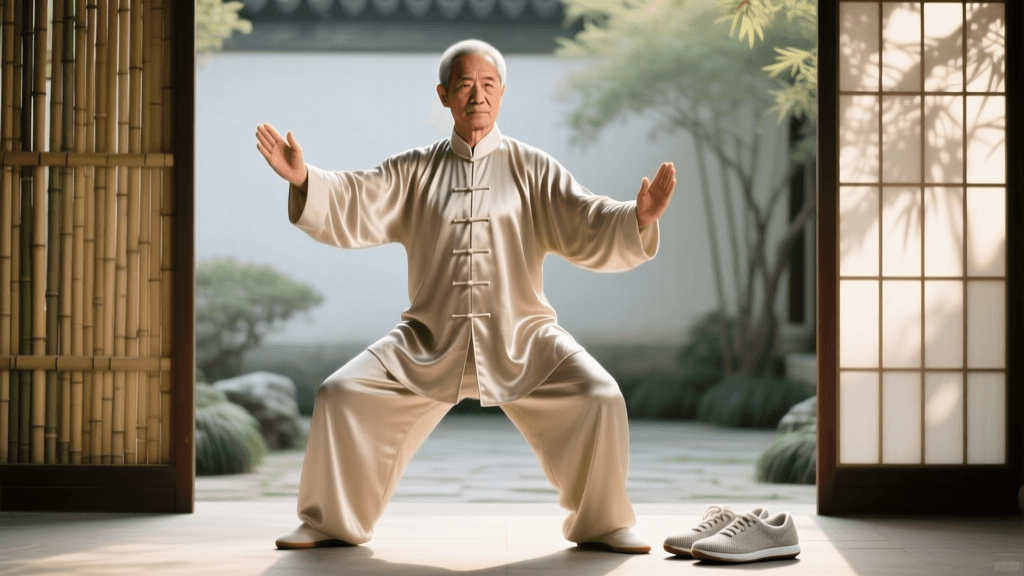
Silk is the pinnacle of traditional Chinese textile craftsmanship. A silk Tai Chi uniform offers a luminous sheen and a whisper-light feel that makes the practitioner's movements look like water flowing over stones. Silk is naturally temperature-regulating, keeping you cool in the heat and warm in the cold. Due to its delicate nature and high production costs, authentic silk uniforms range from $120 to over $250. They are generally reserved for demonstrations, competitions, and special community events rather than daily, sweaty training sessions.
4. Bamboo Viscose: The Modern Eco-Alternative
Bamboo fabric has surged in popularity within the Tai Chi for Health Institute community and beyond due to its incredible softness, natural antibacterial properties, and superior moisture-wicking capabilities. It drapes beautifully, mimicking the fluid look of silk but with the durability and easy care of cotton. Bamboo suits usually cost between $50 and $90.
Fabric Comparison Chart
| Fabric Type | Breathability | Durability | Average Cost (USD) | Best Use Case |
|---|---|---|---|---|
| 100% Cotton | High | Very High | $30 - $50 | Daily practice, beginners, Chen style |
| Linen | Very High | High | $45 - $80 | Summer outdoor practice, Yang style |
| Silk / Silk Blend | Moderate | Low | $120 - $250+ | Competitions, demonstrations, formal events |
| Bamboo Viscose | High | Moderate | $50 - $90 | Year-round indoor practice, sensitive skin |
Sizing and Measurements for Unrestricted Qi Flow
A Tai Chi uniform must never restrict your range of motion. The foundational stances of Tai Chi, such as Ma Bu (horse stance) and Pu Bu (drop stance), require extreme flexibility in the hips, knees, and shoulders. Therefore, the fit of your practice wear must be intentionally generous.
Key Measurement Guidelines
- Chest and Shoulders: Measure your chest at its widest point. Add 4 to 6 inches to this measurement when selecting a jacket size. The shoulders should feature a "drop shoulder" seam that falls slightly down the upper arm, preventing the fabric from pulling when you raise your arms in postures like Bai He Liang Chi (White Crane Spreads Wings).
- Waistband: Traditional Tai Chi pants feature an elastic or drawstring waistband. Avoid rigid zippers or buttons. The pants should sit comfortably at your natural waist or slightly below the navel (the Dantian area), allowing for deep diaphragmatic breathing.
- Inseam and Length: The pants should be wide-legged to accommodate deep lunges. Crucially, the inseam should end 1 to 2 inches above the ankle bone. If the fabric pools around your ankles, it creates a tripping hazard during sweeping movements and weight transfers.
- Jacket Length: The hem of the jacket should fall just below the hips, covering the belt line but never extending down the thighs, which would impede high knee raises.
Footwear: Grounding Your Practice
Your connection to the earth is paramount in Tai Chi. Modern running shoes, with their thick, cushioned heels and aggressive arch support, are entirely unsuitable for traditional practice. They elevate the heel, shifting your center of gravity forward and dulling the proprioceptive feedback from the soles of your feet.
Authentic Tai Chi shoes feature a completely flat, thin sole made of rubber or layered canvas. This design allows you to feel the ground, grip the surface with your toes, and properly root your stance. Traditional cotton slippers with rubber soles are excellent for indoor wooden floors, while flat-soled canvas martial arts shoes (often costing between $15 and $30) are ideal for outdoor concrete or park grass. When trying on Tai Chi shoes, ensure there is enough width in the toe box for your toes to splay naturally, which is essential for maintaining balance during single-leg stances like Jin Ji Du Li (Golden Rooster Stands on One Leg).
Caring for Your Traditional Practice Wear
Proper maintenance of your Tai Chi uniform ensures longevity and preserves the integrity of the traditional garments. Treat your practice wear with the same respect you apply to your martial arts discipline.
"The way you care for your tools reflects the respect you have for your craft. A well-maintained uniform prepares the mind before the body even begins to move."
- Washing: Always hand wash silk garments in cold water using a pH-neutral detergent designed for delicates. Cotton, linen, and bamboo can be machine washed on a gentle, cold-water cycle. Turn the garments inside out to protect the pankou frog buttons from snagging.
- Drying: Never put traditional Chinese garments in a mechanical tumble dryer. The high heat will shrink natural fibers and degrade silk. Instead, gently squeeze out excess water and lay the garments flat on a drying rack in the shade. Direct sunlight can cause vibrant colors, especially deep reds and blacks, to fade prematurely.
- Ironing: If you must remove wrinkles, use a low-heat steam iron. For silk, always place a cotton pressing cloth between the iron and the fabric to prevent scorching and water spots.
Conclusion
Selecting the right Tai Chi uniform is a deeply personal journey that bridges the gap between historical Chinese culture and your individual martial arts practice. By understanding the unique properties of traditional fabrics, adhering to precise sizing for unrestricted movement, and choosing appropriate grounding footwear, you equip yourself for a more profound, comfortable, and authentic Tai Chi experience. Whether you are practicing the slow, meditative forms of Yang style in a misty park or the dynamic, stomping routines of Chen style in a studio, your attire will support every breath, stance, and flow of Qi.