Kimono Storage Preservation: The 2026 Kiri-Bako Guide
The Critical Need for Proper Kimono Preservation in 2026
The preservation of traditional Japanese garments, particularly silk kimono, requires a meticulous approach that balances historical techniques with modern conservation science. As we navigate the environmental challenges of 2026, including increasingly erratic seasonal humidity and temperature fluctuations driven by shifting global climate patterns, proper kimono storage preservation has never been more critical. Whether you are managing a private collection of vintage Meiji and Taisho-era textiles or safeguarding a modern heirloom furisode, understanding the science of textile degradation is paramount. Silk is a delicate protein fiber, highly susceptible to hydrolysis, mold, photo-degradation, and pest damage. Implementing a rigorous collection management strategy ensures these cultural artifacts survive for future generations.
The Gold Standard: Paulownia Wood (Kiri-Bako)
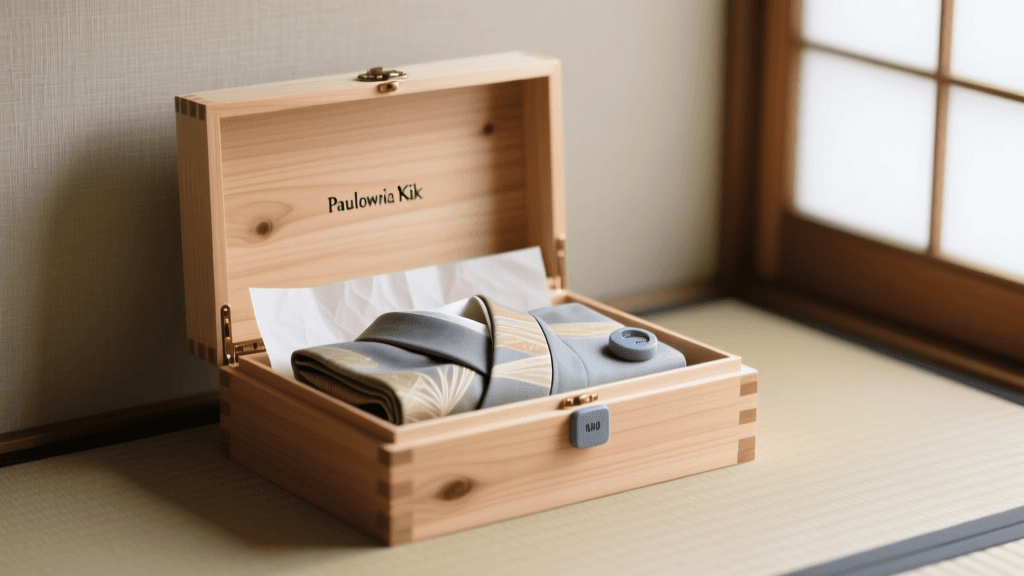
For centuries, the undisputed gold standard for kimono storage has been the kiri-bako, a traditional chest crafted from Paulownia wood (Paulownia tomentosa). In 2026, authentic Japanese-crafted paulownia boxes remain highly sought after by serious collectors, auction houses, and museums alike. Paulownia is uniquely suited for textile preservation due to its hygroscopic nature; the wood naturally expands during high humidity to seal the joints and contracts during dry periods to allow the chest to breathe. Furthermore, the wood contains natural tannins and oils that deter pests, particularly the webbing clothes moth (Tineola bisselliella), which can rapidly decimate protein-based silk fibers.
When sourcing a kiri-bako today, expect to invest between $250 and $650 for a high-quality, traditional sashimono (interlocking joinery without metal nails) box. It is absolutely vital to ensure the interior is unfinished. Modern synthetic varnishes, lacquers, or polyurethane coatings can off-gas volatile organic compounds (VOCs) that accelerate silk degradation and cause irreversible yellowing of white or pastel textiles.
Wrapping Techniques: Tatoushi and Acid-Free Alternatives
Before a kimono is placed in a chest, it must be properly wrapped. The traditional Japanese method utilizes tatoushi, a specially sized, acid-free paper designed to protect the garment from dust, light, and physical abrasion. Standard kimono require tatoushi sheets measuring at least 80 cm by 100 cm. In 2026, conservationists heavily emphasize the importance of using unbuffered, acid-free tissue or paper for protein fibers like silk and wool.
Buffered papers, which contain an alkaline reserve (usually calcium carbonate) to neutralize acids, are excellent for cotton and linen but can actually damage silk over time. According to guidelines from the American Institute for Conservation, avoiding direct contact with plastics and ensuring proper interleaving with unbuffered, acid-free materials is essential for long-term textile stability. Never store silk in polyethylene or PVC plastic bins, as these materials trap moisture and emit harmful plasticizers that fuse to metallic threads (kinran and ginran).
The Art of Folding: Sode-Datami Method
The folding technique itself is a vital component of preservation. The traditional sode-datami (sleeve folding) method ensures that the garment's weight is distributed evenly, preventing permanent creases along the delicate silk warp and weft threads. To prevent sharp folds from breaking the fibers over time, collectors in 2026 increasingly use unbuffered tissue rolls to stuff the sleeves and bodice folds, creating gentle, rounded curves rather than harsh, damaging angles.
Step-by-Step Sode-Datami Folding:
- Lay the kimono face down on a clean, acid-free surface.
- Fold the left side of the body inward, aligning the seam with the center back.
- Fold the right side over the left, creating a long, narrow rectangle.
- Fold the sleeves back so they do not extend past the body's width.
- Insert unbuffered tissue rolls into the sleeve curves to prevent hard creases.
- Fold the garment into thirds or quarters horizontally, depending on the size of your tatoushi paper.
- Wrap securely in the tatoushi and tie with a flat, undyed cotton cord or twill tape.
Climate and Humidity Control Strategies
Climate control is arguably the most complex aspect of collection management. Silk is highly sensitive to both high and low relative humidity (RH). High RH (above 65%) promotes mold growth and accelerates the hydrolysis of silk proteins, while low RH (below 40%) causes the fibers to become brittle and prone to shattering. The ideal target for a kimono collection is a stable RH between 50% and 55%, coupled with a temperature of around 18°C to 20°C (64°F to 68°F).
The Canadian Conservation Institute provides extensive research on the use of preconditioned silica gel, such as Art-Sorb or Prosorb cassettes, to maintain microclimates within storage enclosures. In 2026, electronic dehumidifiers with smart-home integration allow collectors to monitor ambient room conditions via smartphone apps, triggering automated alerts if the storage room's RH deviates from the safe zone. For individual kiri-bako chests, placing a small, breathable cassette of conditioned silica gel inside the box provides an excellent secondary buffer against rapid environmental shifts.
Pest Management: Protecting Silk from Webbing Moths
Pest management requires a proactive, integrated approach. The webbing clothes moth and the carpet beetle are the primary threats to silk and embroidered threads. While traditional Japanese storage often relied on natural camphor (shobu) or cedar, modern conservation science advises against placing these directly in the storage environment, as their strong oils can transfer to the textiles and cause discoloration or chemical reactions with metallic dyes.
Instead, utilize pheromone traps placed strategically around the perimeter of the storage room to monitor for adult male moths. If an infestation is detected, the safest 2026 protocol for treating affected garments is anoxic treatment (oxygen deprivation using nitrogen or argon gas) or controlled freezing in specialized conservation freezers, rather than the application of chemical pesticides, which can leave harmful, off-gassing residues on historic silk.
Collection Management and Inventory Tracking
Effective collection management also involves meticulous inventory tracking. As collections grow, repeatedly opening kiri-bako chests to locate specific garments exposes the textiles to unnecessary light and handling. In 2026, many private collectors and small institutions utilize passive RFID (Radio Frequency Identification) tags or printed QR codes attached to the exterior of the tatoushi wrapping or the storage box itself—never directly to the garment. These tags link to a digital database containing high-resolution photographs, provenance records, condition reports, and the date of the last mushiboshi (airing out).
Comparison of Kimono Storage Materials (2026)
| Storage Material | Pros | Cons | 2026 Estimated Cost |
|---|---|---|---|
| Paulownia Kiri-Bako | Hygroscopic, pest-resistant, traditional, breathable. | Expensive, heavy, requires periodic exterior maintenance. | $250 - $650+ |
| Acid-Free Archival Boxes | Lightweight, affordable, chemically stable for silk. | Does not buffer humidity, vulnerable to physical crushing. | $40 - $90 |
| Polyethylene Plastic Bins | Waterproof, cheap, stackable. | Traps moisture, off-gasses VOCs, promotes mold. Not recommended. | $15 - $30 |
The Ritual of Mushiboshi (Insect Airing)
The traditional practice of mushiboshi, or "insect airing," involves taking kimono out of storage on dry, breezy days in the late autumn and early spring to air them out and inspect them for damage. While modern climate control reduces the absolute necessity of this practice, it remains a highly recommended ritual for collection managers. It provides a scheduled opportunity to refold the garments along slightly different lines, preventing permanent fiber memory and crease degradation, while allowing you to visually inspect the silk for early signs of foxing, dye migration, or pest activity.
By combining the ancestral wisdom of the kiri-bako and tatoushi with 2026's advanced environmental monitoring and digital cataloging, collectors can ensure their kimono remain vibrant, structurally sound, and culturally preserved for centuries to come.