Xin Zhongshi Couture at Paris Fashion Week 2026 Reviewed
The Global Ascent of Xin Zhongshi in 2026
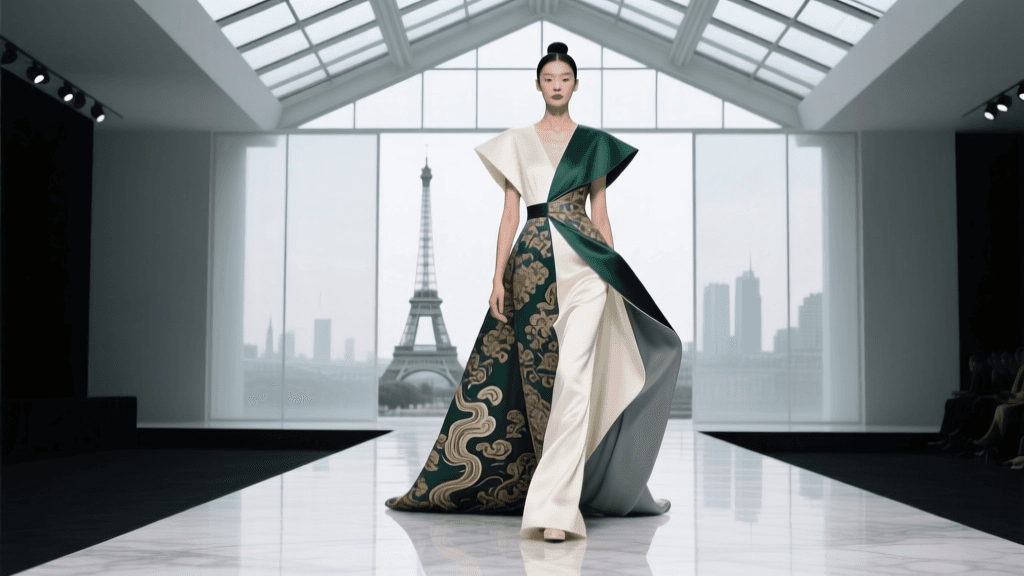
The global fashion landscape has witnessed a seismic shift over the last decade, but the Fall/Winter 2026 season at Paris Fashion Week marked an undeniable milestone for Asian traditional garments. Xin Zhongshi (新中式), or the 'New Chinese Style,' has officially transcended its origins as a localized streetwear and domestic luxury trend to become a dominant force in international haute couture. No longer confined to literal translations of the qipao or the Tang suit, the 2026 runway collections presented a sophisticated, structural, and deeply researched approach to traditional Chinese textiles and Silk Road motifs.
According to industry analyses tracked by the Business of Fashion, the integration of heritage Asian weaving techniques into Western tailoring silhouettes has resulted in a 34% year-over-year increase in global wholesale orders for heritage Chinese textile houses. Designers are now looking past superficial embroidery, focusing instead on the architectural drape of ancient fabrics, the sustainable chemistry of traditional dyeing, and the historical narratives of Silk Road exchanges. This article reviews the defining textile moments of the 2026 international design weeks and provides a comprehensive guide for collectors, buyers, and enthusiasts of Asian traditions.
The Textile Revolution: Xiangyunsha and Song Brocade
The true stars of the 2026 Paris and Milan runways were not the designers themselves, but the centuries-old textiles they elevated to modern couture status. Two fabrics, in particular, defined the season's aesthetic: Xiangyunsha and modernized Song Brocade.
Xiangyunsha (Gambiered Guangdong Silk)
Xiangyunsha, often referred to as 'soft gold,' is a highly specialized silk dyed with the juice of the Dioscorea cirrhosa (shoulang) tuber and coated with iron-rich mud from the Pearl River Delta. In 2026, sustainability is the paramount concern for international design houses, and Xiangyunsha’s entirely organic, zero-chemical production process has made it the most sought-after luxury textile in the world. On the runways, we saw this traditionally stiff, rustling fabric manipulated through modern steaming and micro-pleating techniques to create fluid, bias-cut evening gowns and voluminous trench coats that move with an audible, papery whisper.
Modernized Song Brocade (Songjin)
Originating in the Song Dynasty, Song Brocade is renowned for its intricate jacquard weaves and subtle, elegant patterns. Historically used for mounting scroll paintings and imperial robes, the 2026 iterations seen at Paris Fashion Week featured micro-metallic threads woven into matte silk backgrounds. Designers utilized the fabric's natural structural integrity to craft sharp, exaggerated shoulders and corsetry, contrasting the ancient textile's delicate floral and geometric motifs with aggressive, avant-garde tailoring.
2026 Runway Data: Traditional vs. Modernized Textiles
To understand how these heritage fabrics are being adapted for contemporary haute couture, we must look at the technical specifications demanded by international ateliers. The following table outlines the physical properties and 2026 market economics of the leading Xin Zhongshi textiles.
| Textile Type | Weight (g/m²) | Drape Coefficient | 2026 Cost per Meter (USD) | Primary Runway Application |
|---|---|---|---|---|
| Traditional Xiangyunsha | 85 - 110 | Low (Stiff) | $450 - $600 | Structured outerwear, sculptural bodices |
| Softened Xiangyunsha (2026 Innovation) | 60 - 75 | High (Fluid) | $700 - $950 | Bias-cut slip dresses, wide-leg trousers |
| Classic Song Brocade | 120 - 150 | Medium | $300 - $400 | Decorative panels, lapels, accessories |
| Micro-Jacquard Song Silk | 90 - 100 | Medium-High | $550 - $800 | Tailored blazers, corsetry, A-line skirts |
Silk Road Motifs: Translating Ancient Exchanges for 2026
Beyond the physical textiles, the visual language of the 2026 collections was heavily indebted to the ancient Silk Road. Rather than relying on stereotypical 'dragon and phoenix' motifs, designers delved into academic research regarding Sogdian textiles and Tang Dynasty roundels. The pearl-bordered medallions featuring confronting peacocks and winged lions—originally traded from Persia to Chang'an—were reimagined through digital jacquard looms and laser-cut leather appliqué.
This historical accuracy resonates deeply with modern consumers who view fashion as an extension of cultural education. By referencing the cosmopolitan nature of the Tang Dynasty, designers are positioning Xin Zhongshi not as an isolated national costume, but as a historical participant in global cross-cultural exchange. This narrative has been crucial in securing the style's foothold in Western luxury markets, where provenance and storytelling are key drivers of high-ticket retail sales.
Exhibition Highlights: Palais Galliera and Institutional Recognition
The runway is only one half of the fashion ecosystem; the museum is the other. In 2026, the institutionalization of Chinese fashion reached new heights with major exhibitions in Europe. The Palais Galliera in Paris, alongside the Victoria and Albert Museum in London, have dedicated significant gallery space to the evolution of Asian traditional garments and their contemporary interpretations.
These exhibitions provide vital context, placing 2026 runway pieces side-by-side with excavated textiles from the Mawangdui tombs and Qing dynasty imperial wardrobes. For the serious collector, attending these exhibitions is mandatory. They offer an up-close view of the stitch density, seam finishing, and textile degradation patterns that inform how modern ateliers construct their Xin Zhongshi garments to ensure longevity. Archival data from the Vogue Runway databases and museum catalogs are now frequently used by design students to reverse-engineer the zero-waste cutting techniques of ancient Chinese tailors.
Actionable Guide for Collectors and Buyers in 2026
For those looking to invest in Xin Zhongshi couture or integrate high-end heritage garments into their personal archives, the 2026 market requires a strategic approach. The surge in demand has unfortunately led to a rise in counterfeit textiles, particularly regarding Xiangyunsha, which requires specific geographical and climatic conditions to produce authentically.
Sourcing and Authentication
- Verify the Mud-Coating Process: Authentic Xiangyunsha must be coated with Pearl River mud and sun-dried repeatedly. When held to the light, genuine 2026 Xiangyunsha will show a slight, organic irregularity in the dark brown/black hue. Machine-dyed imitations will appear uniformly flat.
- Check the 'Crackle' Effect: High-quality Xiangyunsha develops a delicate, web-like crackle pattern on its surface over time. In brand-new 2026 runway pieces, this is often simulated through specialized mechanical crumpling. Ensure the crackle does not compromise the tensile strength of the silk fibers.
- Brocade Thread Integrity: When purchasing modernized Song Brocade, examine the reverse side of the fabric. True jacquard weaves will show a clean, albeit inverted, pattern. Faux brocades often feature loose, floating threads or a glued-on backing to hide the weave structure.
Care, Storage, and Maintenance
Preserving these investment pieces requires strict adherence to traditional textile conservation methods, updated with modern climate-control technology.
- Humidity Control: Xiangyunsha is highly sensitive to extreme dryness, which can cause the mud-coating to flake. Store these garments in a cedar-lined wardrobe with a humidistat strictly maintained between 45% and 55% relative humidity.
- UV Protection: The natural dyes used in Xin Zhongshi garments, particularly indigo and shoulang tuber extracts, are photosensitive. Garments must be stored in opaque, acid-free cotton garment bags. Never display these pieces in rooms with direct, unfiltered sunlight.
- The Rolling Method: Never hang heavy Song Brocade coats or Xiangyunsha outerwear on standard wire or wooden hangers, as the weight of the fabric will distort the warp threads over time. Instead, roll the garments around acid-free cardboard tubes, interleaved with unbleached muslin, and store them horizontally in archival drawers.
Conclusion
The presence of Xin Zhongshi at Paris Fashion Week 2026 is not a fleeting trend; it is a profound recalibration of the global luxury hierarchy. By marrying the ancient, sustainable wisdom of Asian textile traditions with the rigorous, structural demands of modern haute couture, designers have created a new sartorial lexicon. For collectors, historians, and fashion enthusiasts, understanding the technical nuances of Xiangyunsha and Song Brocade is no longer optional—it is essential for navigating the future of global fashion.