Hanfu Undergarments: Structural Layers and Basics of Chinese Dress
The Hidden Architecture of Hanfu
When most people envision traditional Chinese clothing, they picture the sweeping sleeves of the Shenyi (deep robe) or the elegant, chest-high skirts of the Qixiong Ruqun. However, the true beauty and structural integrity of Hanfu rely entirely on what lies beneath. Hanfu is not a single garment but a complex, multi-layered system designed to create a specific silhouette, ensure modesty, and provide comfort across varying climates. Understanding Hanfu undergarments and structural layers is essential for anyone looking to wear these garments authentically and comfortably.
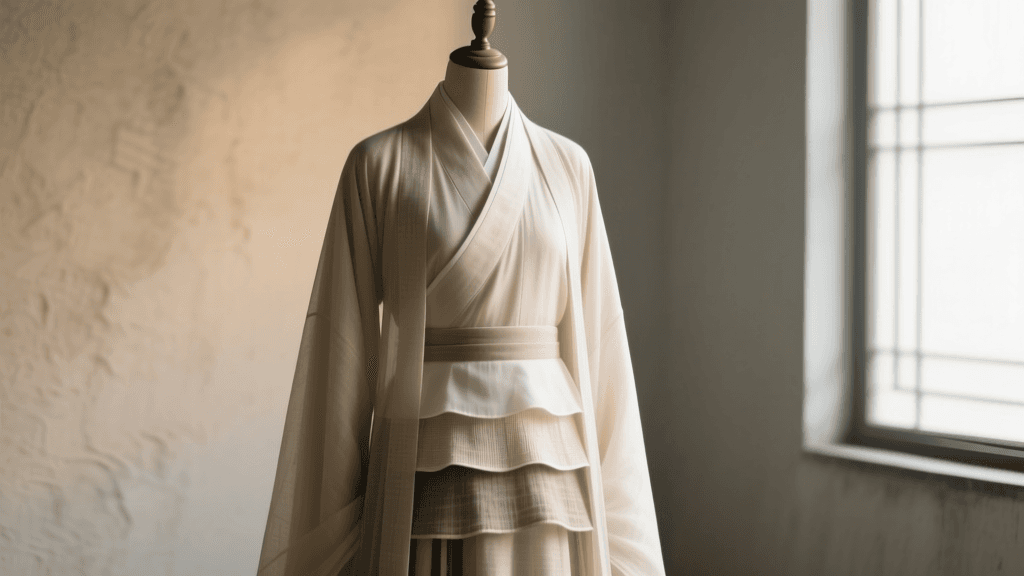
The foundational layers of Hanfu serve three primary purposes: they protect expensive outer silks from body oils and sweat, they provide the necessary structural support for heavy skirts and wide sleeves, and they create the signature layered collar look that is a hallmark of traditional Chinese aesthetics. In this comprehensive guide, we will explore the anatomy of Hanfu undergarments, offering practical advice on sizing, fabric selection, and historical context.
The Core Foundation: Base Layers and Bustiers
The base layer of Hanfu is designed for intimacy and support. Unlike Western corsetry, which historically aimed to reshape the torso through rigid boning, traditional Chinese base layers focused on smoothing, supporting, and providing a comfortable barrier between the skin and the outer garments.
MoXiong and BaoDu: Supporting the Silhouette
For styles that feature chest-high skirts, such as the Tang and Song dynasty Qixiong Ruqun, a supportive bustier is mandatory. The modern Hanfu community frequently utilizes the MoXiong, a tube-top style undergarment that wraps around the bust and secures with ties or hidden elastic. Historically, this evolved from the BaoDu (belly band) and the Dudou, which were diamond or square-shaped garments tied around the neck and back.
Wearing a chest-high Hanfu skirt without a proper MoXiong often results in the skirt slipping down, as the human torso lacks a natural hip shelf at that height. A well-fitted MoXiong grips the upper ribcage, providing a secure anchor for the heavy, pleated skirts that are tied over it. Modern reproductions often incorporate subtle elastic smocking or silicone grip strips along the inner top edge to prevent wardrobe malfunctions during active festival wear.
The Structural Bridge: Zhongyi (Middle Garments)
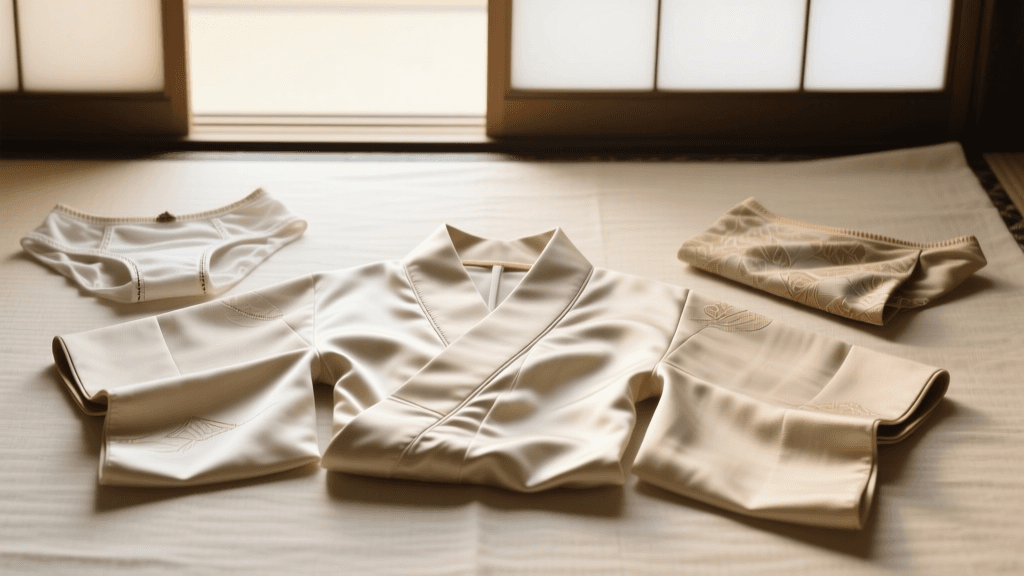
The Zhongyi (middle clothes) and Zhongku (middle trousers) form the critical bridge between the intimate base layers and the lavish outer robes. The Zhongyi is typically a cross-collared, narrow-sleeved top, while the Zhongku consists of loose, comfortable trousers.
The Importance of the Layered Collar
One of the most defining visual characteristics of Hanfu is the layered collar, known as Jiaoling. When wearing a cross-collared outer robe, the collar of the Zhongyi is meant to peek out, creating a beautiful, structured frame around the neck. This is not an accident of styling; it is a deliberate design feature rooted in Confucian ideals of modesty and order. The inner collar must always follow the strict Jiaoling Youren rule, where the left side of the garment crosses over the right side. (Crossing right over left was historically reserved for the deceased or certain non-Han ethnic groups).
The Zhongyi also serves a highly practical purpose. Outer Hanfu garments, especially those made from delicate silks, brocades, or intricate embroidered gauzes, are difficult to wash and expensive to replace. The Zhongyi absorbs perspiration and friction, preserving the outer layers. Furthermore, in colder months, multiple layers of Zhongyi can be stacked to provide insulation without disrupting the drape of the outer robe.
Comparative Guide to Hanfu Undergarments
To help you navigate the various foundational pieces required for a complete Hanfu ensemble, refer to the comparison table below. This chart outlines the primary undergarments, their specific functions, and average market costs for modern, high-quality reproductions.
| Garment Name | Primary Function | Best Fabric Choice | Average Cost (USD) |
|---|---|---|---|
| MoXiong | Bust support; anchors chest-high skirts | Cotton-spandex blend, Silk | $15 - $35 |
| Zhongyi | Cross-collar layering; sweat barrier | Summer: Ramie/Linen. Winter: Cotton | $20 - $45 |
| Zhongku | Leg coverage; prevents outer skirt friction | Bamboo viscose, lightweight Cotton | $15 - $30 |
| Dudou / BaoDu | Historical bustier; worn for Ming/Qing styles | Silk, embroidered Cotton | $25 - $60 |
Practical Advice: Sizing, Fabrics, and Modern Wear
Transitioning from modern Western clothing to traditional Hanfu layering requires an adjustment in how you think about sizing and textiles. Here is actionable advice for building your foundational wardrobe:
- MoXiong Sizing: Do not rely on standard S/M/L sizing. Measure your upper bust (directly under the armpits) and your lower bust. A proper MoXiong should fit snugly against the upper bust to prevent slipping. If purchasing online, look for vendors that offer adjustable tie-backs rather than fixed hook-and-eye closures.
- Zhongyi Collar Alignment: When purchasing a Zhongyi, ensure the collar band is stiff enough to stand up slightly. Floppy collars will collapse under the weight of the outer robe, ruining the layered effect. Some modern vendors insert a thin layer of fusible interfacing into the collar band to maintain structural integrity throughout the day.
- Seasonal Fabric Swaps: In the sweltering heat of a Chinese summer, avoid synthetic Zhongyi at all costs. Opt for Xiangyunsha (gambiered Canton gauze) or high-quality ramie, which are naturally cooling and breathable. For winter, a quilted cotton Zhongyi or a fine merino wool blend base layer provides necessary warmth without adding excessive bulk that distorts the outer silhouette.
- Petticoats and Skirt Volume: While not strictly a traditional undergarment, modern Hanfu wearers often use lightweight, A-line petticoats under Mamianqun (horse-face skirts) or pleated skirts to maintain the garment's structural flare and prevent the heavy fabric from tangling between the legs while walking.
Cultural Significance and the Modern Revival
The layering of Hanfu is deeply intertwined with the history of Chinese textile production and cultural philosophy. The creation of the silks and linens used in these layers relies on ancient techniques. As recognized by UNESCO's Intangible Cultural Heritage list, Chinese sericulture and silk craftsmanship represent millennia of knowledge regarding the cultivation of mulberry trees, the rearing of silkworms, and the weaving of complex textiles that historically dictated the drape and feel of both inner and outer Hanfu layers.
Furthermore, the structural modesty provided by the Zhongyi reflects the Confucian emphasis on decorum and social harmony. The body was to be concealed and presented in a structured, orderly manner. The meticulous wrapping of the middle garments ensured that the wearer moved with deliberate grace, as hasty or erratic movements would disrupt the layered collars.
Today, the meticulous recreation of these undergarments is a major focal point of the broader cultural movement. As noted in NPR's coverage of the Hanfu revival, younger generations are not just wearing these clothes for aesthetic photography; they are deeply researching historical texts, tomb murals, and museum artifacts to reconstruct the complete, layered experience of traditional dress. This dedication to accuracy has driven a massive market for historically informed undergarments, pushing modern manufacturers to abandon cheap synthetic linings in favor of breathable, historically accurate ramie and silk blends.
The textiles themselves are a marvel of historical engineering. According to The Metropolitan Museum of Art's Heilbrunn Timeline of Art History, the development of various silk weaves—from lightweight gauzes used for summer layering to heavy, structured brocades—allowed ancient tailors to manipulate the drape and stiffness of garments. The Zhongyi acted as the vital canvas upon which these outer textile masterpieces were displayed.
Conclusion
To wear Hanfu is to engage with an architectural system of clothing. The outer robes may capture the eye, but it is the MoXiong, the Zhongyi, and the Zhongku that capture the essence of the tradition. By investing in high-quality, properly fitted undergarments and understanding the structural purpose of each layer, wearers can achieve a silhouette that is not only historically respectful but profoundly comfortable. Whether you are dressing for a traditional festival, a cultural exhibition, or a formal tea ceremony, remembering the foundational layers ensures that your Hanfu experience is built on solid, authentic ground.