Kimono Layering Guide: Essential Undergarments Explained
The Art of the Unseen: Kimono Layering Basics
When most people envision the traditional Japanese kimono, they immediately picture the vibrant, patterned silk outerwear that graces festivals, tea ceremonies, and weddings. However, the true foundation of kimono dressing—known as kitsuke—lies entirely out of sight. The intricate system of kimono undergarments and layering is what creates the garment's iconic silhouette, ensures the wearer's comfort, and protects expensive outer silks from damage. According to the Encyclopædia Britannica, the evolution of the kimono from a simple undergarment in the Heian period to a complex, multi-layered cultural symbol is one of the most fascinating aspects of Japanese textile history.
For modern practitioners and cultural enthusiasts, understanding these foundational layers is critical. This guide breaks down the essential kimono undergarments, provides actionable dressing advice, and explores the seasonal adjustments required for authentic wear.
The Philosophy of the Cylindrical Silhouette
Unlike Western tailoring, which is designed to accentuate the natural curves of the human body, traditional kimono dressing aims to create a tsutsu-gata, or cylindrical silhouette. This straight, tubular shape allows the flat panels of the kimono to hang elegantly without wrinkling or pulling. Achieving this shape requires strategic padding and a specific sequence of undergarments that smooth the body's natural contours, particularly the waist, bust, and hips.
The Base Layer: Hadajuban and Susoyoke
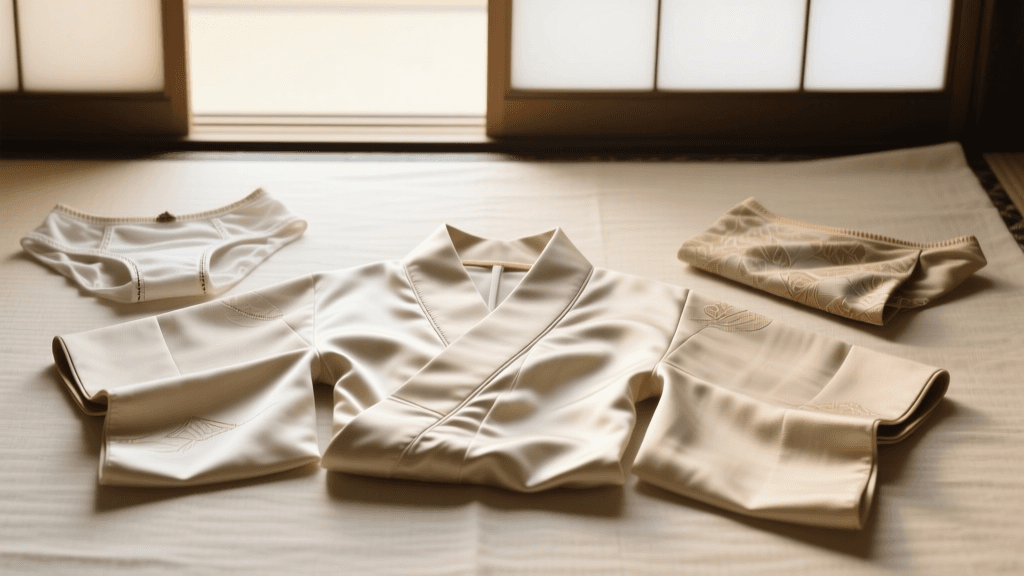
The layer closest to the skin serves a purely functional purpose: hygiene and moisture absorption. Because outer kimonos are often made of delicate, unwashable silks, the base layer acts as a vital barrier against sweat and body oils.
Hadajuban (The Under-Shirt)
The hadajuban is a short, lightweight undergarment worn on the upper body. It typically features a wide, open neckline to ensure it remains hidden beneath the outer kimono's collar.
- Materials: Usually made of breathable cotton, bamboo blends, or moisture-wicking synthetic meshes for summer.
- Cost: $20 to $45 USD.
- Actionable Tip: Always choose a hadajuban with a deep V-neck or U-neck. If the collar peeks out from the kimono's eri (collar), it is considered a major dressing faux pas.
Susoyoke and Koshimaki (The Underskirts)
For the lower body, wearers use either a susoyoke (a wrap-around underskirt) or a koshimaki (a shorter, tighter waist wrapper). The susoyoke prevents the legs from catching on the kimono fabric while walking and reduces friction.
- Materials: Seersucker cotton is highly preferred for its textured surface, which prevents the skirt from clinging to the skin.
- Cost: $25 to $50 USD.
- Measurement Note: Ensure the susoyoke is tied tightly at the hip bones, not the natural waist, to avoid creating bulges that will ruin the cylindrical silhouette.
The Middle Layer: Nagajuban and Han-eri
The nagajuban is a full-length under-kimono that bridges the gap between the skin and the outer garment. While mostly hidden, two crucial parts of the nagajuban remain visible: the collar and the sleeve cuffs.
The Nagajuban
This garment provides structure and adds a secondary layer of warmth or breathability depending on the season. Modern nagajuban are often made of washable polyester or silk blends.
- Cost: $50 for basic synthetics; $150 to $300+ for traditional silk.
- Care: Synthetic versions can be machine-washed in a mesh bag, while silk requires professional dry cleaning.
The Han-eri (Decorative Collar)
The han-eri is a removable, decorative collar that is basted or pinned onto the nagajuban. It is the only part of the undergarment system meant to be seen, framing the face and adding a pop of color or intricate embroidery near the neckline.
- Styling Rule: A plain white han-eri is mandatory for the most formal occasions (like wearing a kurotomesode), while embroidered or patterned collars are perfect for semi-formal and casual wear.
- Cost: $15 to $100 USD, depending on the level of embroidery and beadwork.
Shaping the Silhouette: Padding and Tying
To achieve the tsutsu-gata shape, strategic padding is applied before the nagajuban is secured. Modern kitsuke relies heavily on specialized towels and sashes.
- Towel Padding: Small, folded cotton towels are wrapped around the waist and tied with a thin cord to fill in the dip of the small of the back and smooth the hips.
- Koshihimo: These are long, thin cords (usually made of cotton or silk) used to tie the kimono and undergarments in place. A full dressing session requires 3 to 5 koshihimo.
- Datejime: A wide, stiff under-sash tied over the koshihimo to flatten the chest and secure the collar in place. Modern versions often feature Velcro or elastic for ease of use.
- Korin Belt: A modern invention featuring clips that hold the kimono collars perfectly crossed without the need for complex tying.
Step-by-Step Dressing Sequence
- Don the hadajuban and susoyoke, ensuring all ties are flat against the skin.
- Apply towel padding to the waist and hips, securing with a thin cord.
- Put on the nagajuban. Cross the left side over the right side (the right-over-left style is strictly reserved for dressing the deceased).
- Tie the first koshihimo at the waist to secure the nagajuban.
- Adjust the han-eri so it sits evenly at the nape of the neck, with a fist-width of space (the eri-nuki gap) between the collar and the skin.
- Wrap the datejime over the chest and tie securely.
- Proceed to drape the outer kimono.
Seasonal Layering Guide
Japanese traditional dress is deeply tied to the seasons. The weight, weave, and lining of both the outer kimono and the nagajuban must change according to the calendar. Below is a structured guide to seasonal layering.
| Season | Months | Nagajuban Type | Outer Kimono Type | Key Fabric Characteristics |
|---|---|---|---|---|
| Summer | June - September | Unlined (Hitoe) or Gauze | Ro or Sha (Gauze) | Highly breathable, sheer weaves, cool to the touch. |
| Spring / Autumn | Oct - Nov / Mar - May | Lined (Awase) | Awase (Lined Silk) | Standard weight, opaque, provides moderate insulation. |
| Winter | December - February | Padded or Heavy Lined | Awase with Wadding | Silk floss padding, heavy crepe (chirimen), layered warmth. |
Historical Context and Museum Preservation
The modern layering system is a streamlined descendant of the Heian period (794–1185) junihitoe, a spectacular twelve-layered robe worn by court ladies. While contemporary dressing utilizes far fewer layers, the philosophy of expressing seasonality and status through hidden or partially visible textiles remains intact. Institutions such as the Victoria and Albert Museum and the The Metropolitan Museum of Art actively preserve historical examples of these layered garments, showcasing how under-collars and sleeve linings were historically used to hint at the wearer's refined taste and awareness of the changing seasons.
Care and Maintenance of Undergarments
Proper care of your layering system extends the life of your entire kimono wardrobe.
- After Every Wear: Remove the han-eri and gently wipe the inside of the nagajuban collar with a damp cloth to remove makeup and skin oils.
- Airing Out: Hang the nagajuban and hadajuban on a wide hanger in a shaded, well-ventilated area for 24 hours before storing to prevent mildew.
- Storage: Store cotton base layers folded in a breathable cotton bag. Never store silk nagajuban in plastic, as this traps moisture and leads to yellowing.
Conclusion
Mastering kimono undergarments and layering is a rewarding journey into the heart of Japanese sartorial culture. By investing in high-quality base layers, understanding the mechanics of the cylindrical silhouette, and respecting the seasonal rules of textile weaves, you ensure that your outer kimono not only looks exquisite but drapes flawlessly. The unseen layers are, ultimately, what give the kimono its enduring grace and structural integrity.