The Modern Hanfu Revival: A Practical Guide to Building Your Wardrobe
The Hanfu Renaissance: More Than Just a Trend
Over the past two decades, China has witnessed a profound cultural awakening centered around traditional dress. What began as a niche internet forum discussion in the early 2000s has blossomed into a mainstream cultural phenomenon known as the Hanfu Movement. Driven by Gen Z and millennials, this revival is not merely about cosplay or historical reenactment; it is a deliberate reclamation of Han Chinese sartorial heritage that had been largely absent from daily life since the Qing Dynasty's imposition of Manchu dress codes in the 17th century.
Today, Hanfu (汉服) is worn on city streets, in corporate offices, and at global cultural festivals. As noted by international observers like BBC News, the movement represents a surge in cultural confidence among Chinese youth, blending ancient aesthetics with modern lifestyle demands. For enthusiasts and newcomers alike, building a Hanfu wardrobe requires an understanding of historical silhouettes, modern market dynamics, and precise sizing.
Core Hanfu Styles for the Modern Wardrobe
The term "Hanfu" encompasses over 3,000 years of clothing history. However, the modern revival primarily focuses on three distinct dynastic aesthetics, each offering unique silhouettes and practical benefits for contemporary wearers.
1. Tang Dynasty: Qixiong Ruqun (Chest-High Skirt)
Characterized by its high waistline, the Qixiong Ruqun (齐胸襦裙) is a staple of the Tang dynasty aesthetic. It consists of a short, often wide-sleeved top (ru) and a voluminous skirt tied securely above the bust, frequently accompanied by a draped shawl (pibo). This style is highly flattering, elongates the legs, and is exceptionally popular in summer due to its breathable, lightweight fabrics.
2. Song Dynasty: Beizi and Pleated Skirts
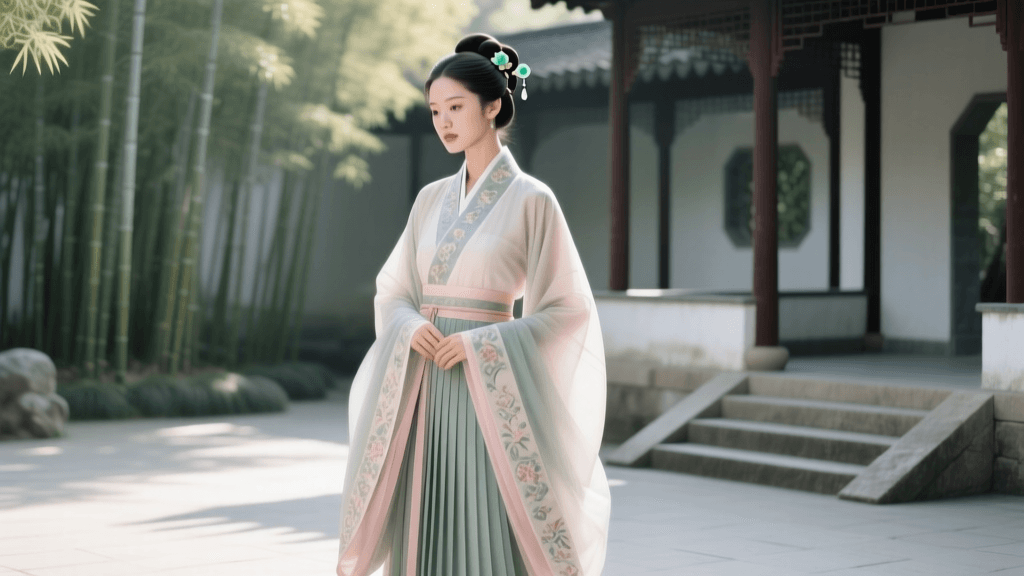
For a more understated, intellectual elegance, the Song dynasty Beizi (褙子) is ideal. This is a long, open-front coat with narrow, straight sleeves, typically worn over a pleated skirt or trousers. The Song aesthetic favors muted, monochromatic palettes and subtle woven patterns over the bold, vibrant colors of the Tang era. Its streamlined silhouette makes it highly practical for modern office environments and transitional spring or autumn weather.
3. Ming Dynasty: Aoqun and the Mamianqun
The Ming dynasty Aoqun (袄裙) represents the pinnacle of traditional Chinese tailoring. According to the Metropolitan Museum of Art, the Ming era established strict sumptuary laws and advanced textile weaving techniques that heavily influence today's premium recreations. The defining piece of this era is the Mamianqun (horse-face skirt), featuring flat front and back panels with deep pleats on the sides. Paired with a lined, high-collared top (Ao), this style is structured, regal, and perfect for winter or formal events.
Practical Buying Guide: Sizing and Measurements
Unlike Western fast fashion, authentic Hanfu relies on traditional flat-cutting techniques. This means garments are constructed from straight pieces of fabric without darts or tailored curves, relying on the drape of the fabric and the wearer's tie-system to create shape. Consequently, sizing requires specific measurements.
Crucial Measurements for Hanfu
- Bust, Waist, and Hips: While flat-cutting is forgiving, knowing your waist is vital for skirts, as they must be wrapped and tied securely. A standard Mamianqun requires a waist measurement plus an extra 20cm for the overlapping wrap panels.
- Arm Span (Crucial): Traditional Hanfu sleeves (such as the Guangxiu or wide sleeves) are measured by arm span, not just shoulder width. Stand with arms outstretched and measure from fingertip to fingertip. A standard traditional sleeve should extend past the hands by at least 10-15cm when arms are relaxed.
- Skirt Length: Measure from your natural waist (or bust line for Tang styles) down to the ankle bone. Standard lengths range from 95cm to 105cm. If you plan to wear platform cloud shoes, add 3-5cm.
Navigating the Market: Costs, Brands, and Timing
The modern Hanfu market is vast, primarily centered on Chinese e-commerce platforms like Taobao and Tmall. Understanding the terminology and pricing tiers is essential for a successful purchase.
Cost Breakdown and Brand Tiers
| Tier | Representative Brands | Price Range (USD) | Materials & Quality |
|---|---|---|---|
| Entry-Level | Shisanyu, Chunqiu Ji | $40 - $80 | Polyester, cotton blends. Good for beginners, daily wear, and travel. |
| Mid-Tier | Zhongzheng, Tingyue | $100 - $250 | Silk blends, high-quality jacquard, accurate historical patterning. |
| High-End / Custom | Minghuatang, Xianjiang | $300 - $1,500+ | Pure mulberry silk, real gold thread weaving (Zhuanghua), museum-grade accuracy. |
The "Yushou" (Pre-Order) System
Newcomers are often surprised by the timing of Hanfu purchases. Due to the intricate embroidery and specialized weaving required, many top brands operate on a Yushou (pre-order) model. When a new collection drops, buyers pay a deposit (usually 20-30%). The manufacturing period typically lasts between 45 to 90 days. If you need a garment for a specific event, you must either buy Xianhuo (spot goods/inventory) or plan your pre-orders months in advance.
Styling Hanfu for the 21st Century
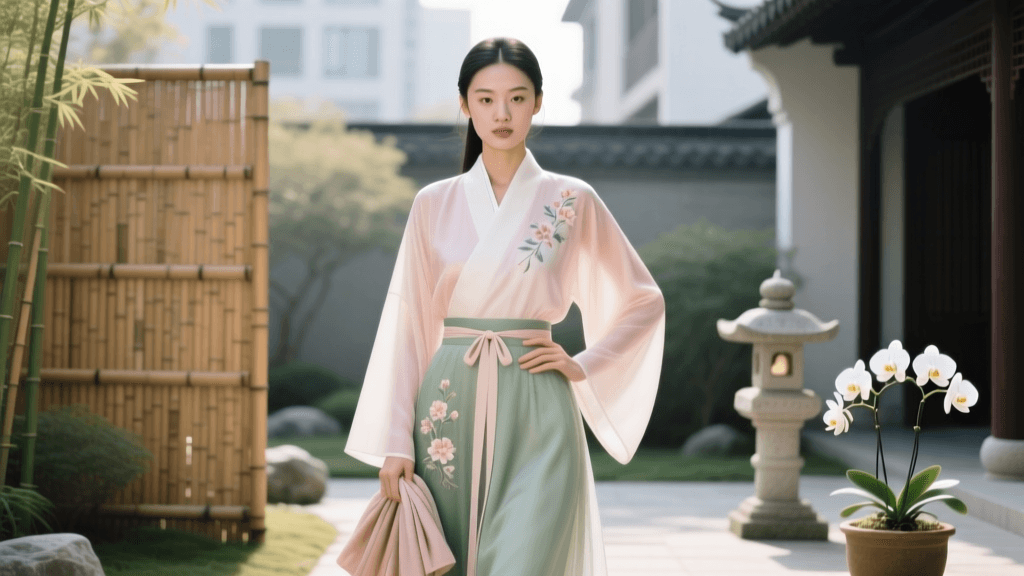
Integrating Hanfu into a modern wardrobe does not require head-to-toe historical accuracy. The "Hanfu Everyday" subculture champions mixing traditional pieces with contemporary fashion.
- Footwear: While traditional embroidered cloud shoes are beautiful, many modern wearers pair Ming dynasty skirts with leather Chelsea boots, loafers, or clean white sneakers for a chic, grounded look.
- Hair Accessories: Swap heavy, historical wigs for minimalist Zan (hair sticks) made of wood, jade, or metal. A single, well-crafted hair stick holding up a modern messy bun bridges the gap between ancient and contemporary aesthetics.
- Layering: In colder months, it is entirely acceptable to wear a modern turtleneck underneath a Song dynasty Beizi or a Ming dynasty short jacket.
"Hanfu is not merely a costume for photography; it is a living garment that reconnects us with the philosophical and aesthetic heritage of our ancestors. When we wear it to buy coffee or go to the library, we are breathing life back into history."
— Wang Letian, early pioneer of the Hanfu movement
Conclusion: Your First Steps
Embarking on your Hanfu journey is an investment in both craftsmanship and cultural history. For your very first set, a mid-tier Song dynasty Beizi set or a versatile Ming dynasty Mamianqun offers the best balance of historical elegance and modern practicality. Take your measurements carefully, embrace the pre-order culture, and remember that the true spirit of the Hanfu revival lies in making these ancient garments a vibrant, living part of your everyday life.