Best Hanbok Making Workshops 2026: Seoul & Virtual Classes Reviewed
The Heritage Craft Revival of 2026
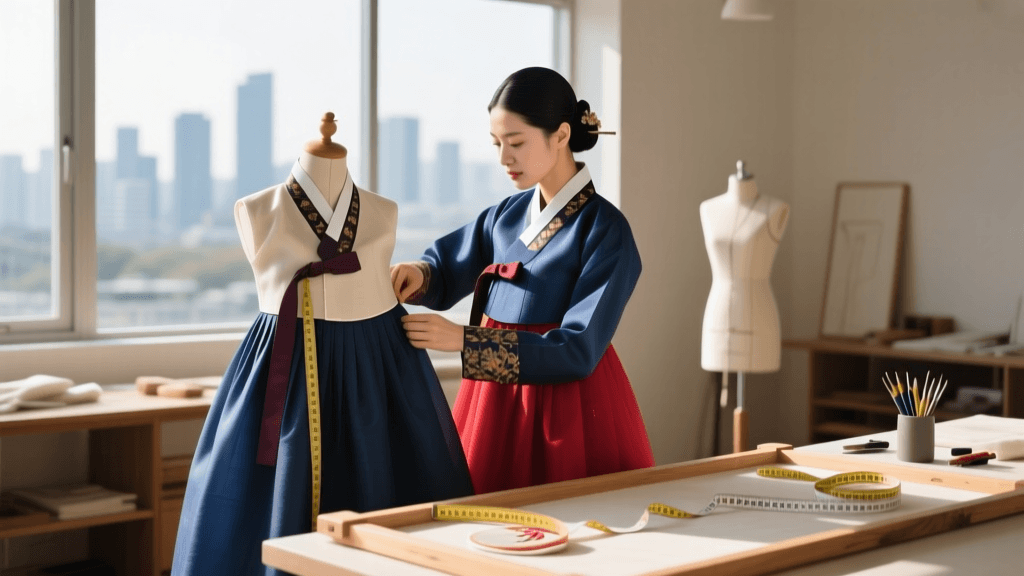
The year 2026 has marked a monumental shift in the global slow fashion movement, with a massive resurgence of interest in traditional Asian garment construction. Among the most sought-after skills is the art of Hanbok making. Characterized by its vibrant colors, elegant curves, and structural brilliance, the traditional Korean dress offers a masterclass in flat-pattern cutting and zero-waste sewing techniques. Whether you are a seasoned seamstress looking to expand your couture repertoire or a cultural enthusiast eager to connect with your heritage, attending a dedicated Hanbok tailoring workshop is an unparalleled experience.
According to recent cultural preservation reports from the Korean Craft and Design Foundation (KCDF), enrollment in traditional textile and garment-making seminars has surged by over 45% since the early 2020s. This renaissance is driven by a desire for sustainable, made-to-measure clothing and a deeper appreciation for the intangible cultural heritage embedded in every stitch. In this comprehensive guide, we review the top in-person and virtual Hanbok making workshops available in 2026, helping you choose the perfect seminar to craft your very own jeogori (upper garment) and chima (skirt).
Top In-Person Hanbok Workshops in Seoul
There is no substitute for learning traditional tailoring in its birthplace. Seoul remains the epicenter of Hanbok craftsmanship, boasting world-class instructors and access to premium domestic textiles like myeonju (cotton-silk blends) and saekdong (traditional striped silk).
Seoul Global Cultural Center: Beginner Jeogori Intensive
For international residents and visitors, the Seoul Global Cultural Center continues to be a premier destination for accessible, high-quality cultural education in 2026. Their flagship 4-week jeogori intensive is designed specifically for beginners with basic machine-sewing experience. Over the course of four Saturdays, students learn the unique geometry of Korean flat-pattern drafting, which relies heavily on straight lines and graceful curves rather than Western darts and princess seams.
- Duration: 4 weeks (16 hours total)
- Cost: 380,000 KRW (approx. $285 USD in 2026), including all fabrics and notions
- Language: Korean with live English translation
- Highlight: Mastering the baerae, the iconic curved underarm seam that gives the Hanbok sleeve its balloon-like elegance.
Coreana Cosmetics Museum & Craft Annex: Silk Chima Masterclass
For those who have already mastered the upper garment, the specialized annex workshops focus on the chima. This advanced seminar teaches the intricate art of knife-pleating heavy silk organza and attaching it flawlessly to the wide waistband. Historical context provided by institutions like the National Museum of Korea highlights how the volume and drape of the chima historically denoted social status, making the precise calculation of fabric ratios a vital skill for modern reproductions.
Best Virtual Hanbok Seminars for Global Learners
Not everyone can travel to South Korea for a month-long immersive course. Fortunately, 2026 has seen the perfection of virtual garment-making seminars, complete with globally shipped material kits and multi-camera live streaming setups that allow instructors to critique your stitching in real-time.
The Global Hanbok Academy: Virtual Couture Certificate
This premium online program ships a comprehensive 'Couture Kit' to your doorstep, containing pre-washed silk, traditional Korean basting threads, and custom-milled wooden rulers. The virtual seminars are conducted via high-definition interactive platforms where instructors use overhead cameras to demonstrate the meticulous hand-stitching required for the dongjeong (the removable white paper-lined collar).
- Duration: 8 weeks (Self-paced video modules + bi-weekly live Q&A)
- Cost: $450 USD (includes international shipping of the silk kit)
- Language: English
- Highlight: Learning the traditional gamchimjil (blind hemming) technique to ensure no stitches are visible on the exterior of the silk.
Essential Tools for Your 2026 Hanbok Toolkit
Traditional Korean tailoring requires a specific set of tools that differ significantly from Western dressmaking. Before attending your first workshop, ensure you are familiar with these essentials. Most in-person Seoul workshops provide these, but virtual students may need to source them locally.
| Tool Name | Purpose in Hanbok Making | 2026 Recommended Brand/Type |
|---|---|---|
| Shitsuke Ito (Basting Thread) | Weak, easily breakable cotton thread used for temporary basting. Prevents damage to delicate silk when removed. | Clover White Basting Thread |
| Silk Pins (Fine) | Ultra-thin pins that do not leave permanent holes in tightly woven silk organza or ramie. | Shin-Ei Fine Glass Head Pins |
| Curved Seam Ruler | Essential for drafting the baerae (sleeve curve) and the sweeping hem of the chima. | Dritz Fashion Design Ruler |
| Traditional Charcoal Iron | Provides a heavy, dry, even heat necessary for pressing thick flat-felled seams without scorching silk. | Modern Naomoto Electric Iron (Dry setting) |
In-Person vs. Virtual: Which Seminar is Right for You?
Choosing between flying to Seoul or logging in from your home studio depends on your learning style, budget, and sewing environment. Below is a comparative breakdown of the two primary learning pathways in 2026.
| Feature | In-Person Seoul Workshops | Virtual Global Seminars |
|---|---|---|
| Cost | Moderate ($250-$400) + Travel/Hotel | Higher ($400-$600) + No Travel |
| Material Sourcing | Access to Dongdaemun textile markets | Curated kit shipped to your door |
| Instructor Feedback | Immediate, hands-on physical correction | Visual critique via HD camera angles |
| Pacing | Intensive, fast-paced weekend immersions | Flexible, self-paced with scheduled calls |
| Networking | High (meet local artisans and suppliers) | Moderate (global Discord/community groups) |
Mastering the Jeogori: Key Techniques to Watch For
Whether you choose a physical classroom in Jongno-gu or a virtual seminar from your living room, the construction of the jeogori will be the cornerstone of your education. Pay special attention to the following techniques during your coursework:
1. The Art of the Goreum (Ties)
The goreum are the long, elegant ribbons that tie the jacket closed. In 2026, modern workshops emphasize the structural integrity of the goreum knot. Instructors will teach you how to interface the ties with lightweight silk organza so they hold their dramatic, sweeping bow shape throughout the day without wrinkling or collapsing.
2. Flat-Felling the Side Seams
Because traditional Hanbok is unlined in its summer iterations (known as sok-jeogori), the interior finishing must be as beautiful as the exterior. You will learn the meticulous process of flat-felling side seams, where the seam allowance is trimmed, folded, and hand-stitched down to create a clean, durable edge that prevents fraying without the use of modern sergers.
3. Attaching the Dongjeong (Collar)
The stark white dongjeong frames the face and provides a striking contrast to the vibrant silk of the jacket. Learning to attach this collar so that it sits perfectly flush against the neck, with absolutely no puckering at the center-front intersection, is often considered the ultimate test of a Hanbok maker's skill. Expect your instructor to have you practice this step on muslin scrap at least three times before touching your final silk.
Conclusion
The art of Hanbok making is a profound meditation on geometry, texture, and cultural history. As we navigate 2026, the accessibility of these traditional Asian garment workshops has never been greater. Whether you are wandering the bustling fabric markets of Seoul with your instructor or unrolling a carefully curated silk kit at your home studio, the skills you acquire will forever change how you view clothing construction. By investing in a specialized workshop, you are not just learning to sew; you are actively participating in the preservation and evolution of a magnificent sartorial heritage.