Xin Zhongshi Couture at Paris Fashion Week 2026: A Guide
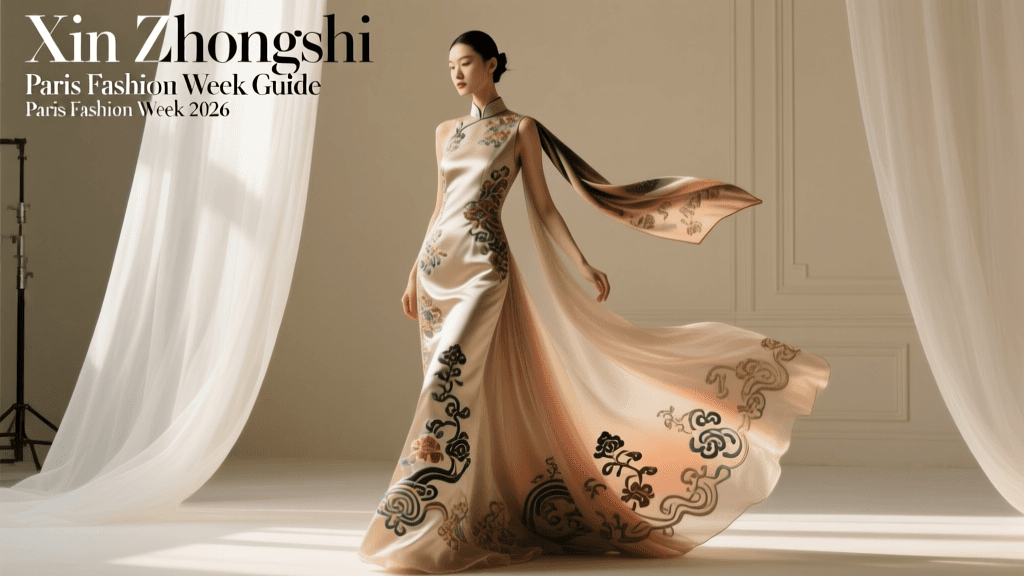
The intersection of ancient Chinese sartorial heritage and contemporary global haute couture has reached an unprecedented zenith in 2026. The "Xin Zhongshi" (New Chinese Style) movement, which began as a localized streetwear and office-wear trend, has now fully matured into a dominant force on the international stage. During the Spring/Summer and Autumn/Winter 2026 Paris and Milan Fashion Weeks, heritage garments like the Mamianqun (horse-face skirt) and Xiangyunsha (gambiered Canton gauze) were not merely referenced; they were structurally deconstructed and elevated to the highest echelons of luxury couture. For curators, fashion historians, and enthusiasts attending these global design weeks, understanding the nuance of these traditional textiles and their modern applications is essential.
The Global Ascent of Xin Zhongshi on the 2026 Runway
In previous decades, international interpretations of Chinese fashion often relied on superficial motifs or Orientalist tropes. The 2026 design week circuit marks a definitive departure from this past. Today's leading Chinese and international designers are collaborating directly with master artisans from Suzhou and Hangzhou to integrate authentic, historically accurate weaving techniques into modern silhouettes. According to recent analyses from the Business of Fashion's China market hub, the global luxury sector has seen a massive influx of capital and interest directed toward authentic heritage craftsmanship, driven by a younger, highly educated demographic of global consumers who demand cultural authenticity over pastiche.
This season in Paris, the runway was defined by architectural draping inspired by the Song dynasty, combined with the structural rigidity of Ming dynasty pleating. Designers showcased voluminous outerwear crafted from Song Brocade, featuring intricate, raised geometric patterns that catch the light dynamically as the model moves. Meanwhile, the Mamianqun was reimagined in heavy, matte-finished silks, featuring asymmetrical pleating and modernized waistbands that cater to contemporary proportions while strictly adhering to traditional flat-pattern cutting methods that generate zero fabric waste.
Spotlight on Heritage Textiles: A 2026 Technical Guide
To truly appreciate the Xin Zhongshi collections presented at international design weeks, one must understand the foundational textiles that make these garments possible. The 2026 exhibitions heavily emphasized the provenance and technical complexity of these fabrics. Below is a comparative analysis of the three most prominent heritage textiles featured on this year's runways.
| Textile Name | Traditional Technique | 2026 Runway Application | Drape & Weight | Curatorial Care Requirements |
|---|---|---|---|---|
| Xiangyunsha (Gambiered Canton Gauze) | Silk dyed with薯莨 (Dioscorea cirrhosa) tuber juice and coated in river mud, sun-baked repeatedly. | Structured trench coats, wide-leg trousers, and avant-garde sculptural collars. | Crisp, paper-like rustle; medium-heavy weight; stiff drape that holds sharp folds. | Store flat or on wide padded hangers; avoid high humidity to prevent mud-coating degradation. |
| Kesi (Cut Silk Tapestry) | Weft-faced plain weave where the weft threads are cut and turned back at color boundaries, creating a carved look. | Haute couture bodices, intricate appliqué panels on evening gowns, and statement obi-style belts. | Extremely dense, rigid, and heavy; holds three-dimensional shapes without internal boning. | Protect from direct UV light to prevent dye fading; requires professional textile conservation cleaning only. |
| Song Brocade (Song Jin) | Complex warp-faced compound weave with a soft, matte finish and subtle, low-contrast geometric or floral patterns. | Fluid evening wear, draped capes, and modernized Hanfu cross-collar jackets with oversized silhouettes. | Soft, fluid, and heavy; excellent bias drape that moves like liquid metal. | Roll in acid-free tissue for travel; never fold, as the warp threads can permanently crease or snap. |
The preservation and continued innovation of these techniques are vital to global cultural heritage. The complexity of sericulture and traditional silk weaving is so significant that it is officially protected and documented by UNESCO's Intangible Cultural Heritage registry, ensuring that the master weavers supplying the 2026 Paris runways maintain the exacting standards of their ancestors.
Navigating International Exhibitions and Archives
Beyond the commercial runways, the 2026 museum and gallery circuit has embraced Xin Zhongshi with dedicated retrospectives. Institutions such as the Palais Galliera in Paris and the Triennale in Milan are hosting exhibitions that place contemporary Chinese couture in direct dialogue with historical artifacts. When attending these exhibitions, curators and enthusiasts should pay close attention to the internal construction of the garments. Unlike Western tailoring, which relies on darts, seams, and internal corsetry to shape the body, traditional Chinese garment construction is inherently two-dimensional and relies on the drape of the fabric and the posture of the wearer to create volume.
For those researching the historical context of these pieces, cross-referencing runway garments with archival collections is highly recommended. The Victoria and Albert Museum's Asian collections and similar global archives provide invaluable digital and physical resources for understanding the evolution of motifs, such as the transition of the cloud-collar (Yunjian) from a functional detachable accessory in the Qing dynasty to a permanent, structural shoulder element in 2026 haute couture.
Travel and Packing: Preserving Couture for the Global Buyer
For international buyers, boutique owners, and private collectors attending design weeks to acquire bespoke Xin Zhongshi pieces, transporting these delicate heritage textiles requires meticulous planning. The structural integrity of Xiangyunsha and the delicate warp threads of Kesi are highly susceptible to environmental stress during international transit.
- Garment Bags: Never use plastic or synthetic vinyl garment bags, which trap moisture and off-gas chemicals that can yellow raw silk. Invest in archival-grade, unbleached cotton canvas garment bags with a breathable weave.
- Folding vs. Rolling: Mamianqun skirts and structured Kesi bodices should never be folded. Use the "interleaved rolling" method: lay the garment flat on a sheet of acid-free, unbuffered tissue paper, and roll it gently around a 4-inch diameter acid-free cardboard tube. This prevents hard creases that can shatter aged silk fibers.
- Climate Control: Silk is a protein fiber that is highly reactive to moisture. When traveling from the humid climate of a Parisian spring to a dry, air-conditioned hotel room, maintain a localized relative humidity (RH) of 45% to 55%. Portable, battery-operated hygrometers should be placed inside the transport cases to monitor fluctuations.
- Pest Prevention: Avoid chemical mothballs, which will permanently taint the silk and degrade the natural dyes. Instead, use sealed sachets of dried neem leaves or cedar blocks, ensuring they do not directly touch the fabric to prevent oil transfer.
Investing in 2026 Runway Pieces: Market Realities
Acquiring authentic, artisan-crafted Xin Zhongshi couture in 2026 is an exercise in patience and significant financial investment. The global luxury market has fully recognized the value of these time-intensive techniques. A bespoke, fully hand-woven Kesi jacket, requiring up to six months of continuous weaving by a single master artisan, now commands a starting price of €14,500 to €22,000 on the international market. Lead times for custom runway commissions placed during Paris Fashion Week frequently extend to 12 to 18 months.
Buyers must also navigate the complexities of export regulations. Certain heritage textiles, particularly those utilizing specific endangered plant dyes or antique loom techniques classified as protected cultural assets, may require special export permits from Chinese cultural heritage authorities before they can be legally shipped to European or North American galleries. Working with specialized fine-art and textile logistics firms is no longer optional; it is a mandatory step in the acquisition process.
Conclusion: A New Paradigm in Global Fashion
The 2026 international design weeks have unequivocally proven that Xin Zhongshi is not a fleeting trend, but a permanent paradigm shift in global luxury fashion. By demanding rigorous adherence to traditional techniques while embracing modern, avant-garde silhouettes, contemporary designers have forged a new visual language that respects the past while aggressively pushing the boundaries of the future. For the global fashion community, engaging with these garments requires a deep appreciation for the history, science, and artistry woven into every single thread.