How to Tie a Bunko Musubi Obi Knot: Step-by-Step Guide
Mastering the Bunko Musubi: The Essential Obi Knot
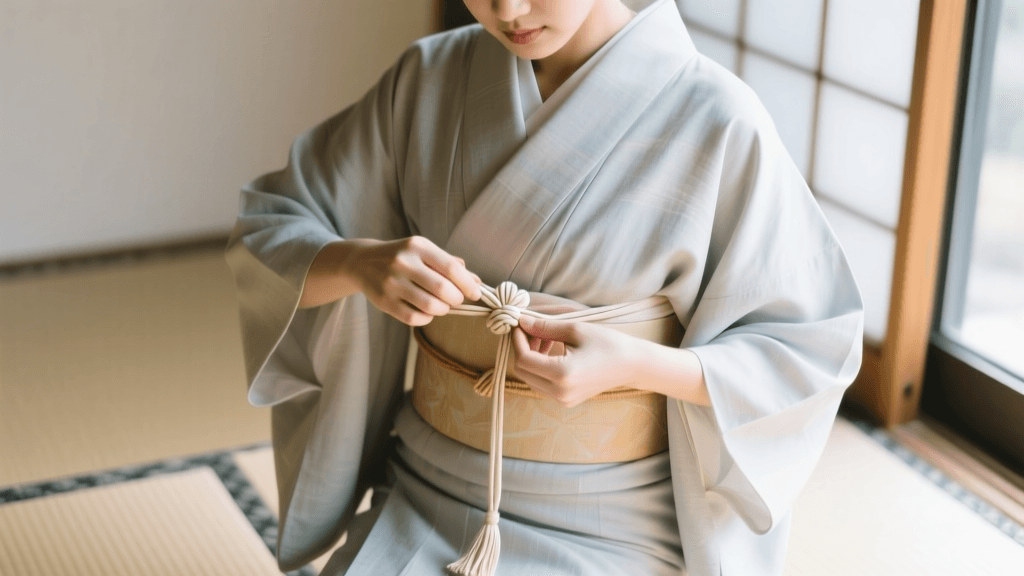
The art of kitsuke (kimono dressing) is a meticulous practice that transforms flat garments into sculptural elegance. At the heart of this transformation is the obi, the wide sash that secures the kimono or yukata. While there are hundreds of intricate obi knots, the Bunko Musubi (library knot) remains the undisputed champion for beginners and seasoned wearers alike. Characterized by its charming, book-like bow, it is the standard knot for yukata and casual everyday kimono.
According to the Metropolitan Museum of Art's comprehensive guide on Japanese dress, the evolution of the obi from a simple thin cord to a wide, decorative sash fundamentally changed how knots were tied, shifting from functional fastening to expressive art. The Bunko Musubi perfectly bridges this gap, offering a functional hold with a highly decorative, symmetrical aesthetic.
Essential Tools and Measurements
Before attempting the Bunko Musubi, you must gather the correct accessories. Attempting this knot with the wrong type of obi will lead to frustration. The Bunko Musubi is traditionally tied using a Hanhaba Obi (half-width obi).
Required Materials and Estimated Costs
- Hanhaba Obi: Measures approximately 15-17 cm (6-6.5 inches) wide and 360-400 cm (118-157 inches) long. Cost: $20 to $60 USD for casual cotton or polyester.
- Koshi-himo (Waist Ties): You will need at least two thin cotton ties to secure the kimono before wrapping the obi. Cost: $5 to $10 USD each.
- Obi-ita (Obi Board): A stiff insert placed inside the obi to prevent wrinkling at the front. Cost: $10 to $15 USD.
- Date-jime (Under-sash): A thin belt used to hold the wrapped obi in place while you tie the knot. Cost: $10 to $20 USD.
Selecting the Right Fabric for Your Hanhaba Obi
The success of your Bunko Musubi relies heavily on the material of your hanhaba obi. Cotton is the gold standard for beginners. It offers excellent grip, meaning the layers will hold their tension without slipping, and it is forgiving when you need to untie and re-tie the knot. Polyester is a popular, budget-friendly alternative that resists wrinkling, though it can be slippery and may require an anti-slip belt. Silk hanhaba obi are luxurious and feature exquisite woven patterns, but they are delicate, prone to snagging, and require advanced handling to maintain tension without crushing the fibers. For your first few attempts, invest in a high-quality cotton obi with a reversible pattern, allowing you to create two-toned bows by intentionally showing the reverse side during the pleating stage.
Step-by-Step Tutorial: Tying the Bunko Musubi
Ensure your yukata or kimono is already worn correctly, with the left side wrapped over the right. The Victoria and Albert Museum notes that the right-over-left style is strictly reserved for dressing the deceased. The hem should sit at your ankles, and the collar should form a neat V-shape at the nape of your neck.
Step 1: Measuring the Te-saki (The Tail)
Hold the obi behind your back. Measure out the te-saki (the end piece that will become the top loop of the bow). For a standard Bunko Musubi, this should be about 40 to 50 cm (16 to 20 inches), roughly the length from your fingertips to your elbow. Pinch this point firmly with your right hand.
Step 2: Wrapping the Do-maki (The Body)
Bring the longer end of the obi around your front, wrapping it tightly over your left hip, across your stomach, and back around to the right. Wrap it around twice, ensuring the bottom edge is slightly lower in the front and higher in the back to create a flattering silhouette. Insert the obi-ita between the layers at the front to keep the fabric smooth.
Step 3: Securing the Base
Once you have wrapped the obi twice and returned to the front, cross the long end over the short te-saki end. Pull both ends tightly to the sides to secure the tension. Tie a temporary half-knot at the center front to hold it in place, or use your date-jime to bind the wrapped layers together securely.
Step 4: Creating the Hane (The Wings)
Unfasten the temporary front knot and move the entire obi assembly to your back. Take the longer end and fold it into an accordion pleat to create the hane (the wings of the bow). The width of the pleats should match the width of the hanhaba obi (about 15 cm). Make 3 to 4 folds depending on the length of your obi.
Step 5: Tying the Core Knot
Take the shorter te-saki end and wrap it tightly around the center of your pleated hane. Wrap it twice, pulling firmly to cinch the bow together. Tuck the remaining tail of the te-saki down into the space between the obi and your back, hiding it completely.
Step 6: Final Adjustments
Shape the bow by pulling the top and bottom loops outward to create a full, symmetrical book shape. Ensure the knot sits squarely in the center of your back. Finally, rotate the entire obi clockwise around your waist until the bow is perfectly centered and the front is smooth.
Obi Knot Comparison Chart
While the Bunko Musubi is a staple, understanding how it compares to other popular knots helps in planning your kitsuke for different occasions.
| Knot Name | Difficulty Level | Primary Obi Type | Best Occasion | Average Time to Tie |
|---|---|---|---|---|
| Bunko Musubi | Beginner | Hanhaba (Half-width) | Summer festivals, casual outings, yukata | 3 - 5 minutes |
| Otaiko Musubi | Intermediate | Fukuro / Nagoya (Wide) | Tea ceremonies, formal visits, weddings | 10 - 15 minutes |
| Kawari Musubi | Advanced | Hanhaba / Fukuro | Coming of Age Day, stage performances | 15 - 30 minutes |
Troubleshooting Common Mistakes
The Obi is Slipping Down
If your obi slides down throughout the day, the tension during Step 2 was insufficient. The wrap must be pulled taut, and the date-jime must be tied tightly directly over the center of the obi wrap before moving the knot to the back. Additionally, using a silicone anti-slip belt (available for around $15 USD) under the obi can provide necessary friction against smooth silk or polyester yukata fabrics.
Asymmetrical Wings (Hane)
Uneven bow loops usually occur when the accordion pleating in Step 4 is rushed. Take your time to ensure each fold is exactly the width of the obi. If one side is longer, gently pull the excess fabric from the longer loop into the center knot before tucking the tail away.
Cultural Context and Modern Styling
The Bunko Musubi is not just a functional knot; it is a cultural touchstone. Historically, the knot was favored by scholars and librarians, hence the name library knot, as its flat, structured profile allowed for comfortable sitting while reading or studying. Today, it has been embraced by modern fashion enthusiasts who blend traditional kitsuke with contemporary accessories.
Modern stylists often incorporate a decorative obijime (a braided cord tied over the obi) or a vintage brooch pinned to the center of the Bunko bow to add a personalized, eclectic touch. As noted in cultural exhibitions by the Victoria and Albert Museum, the kimono has always been a dynamic garment, constantly evolving through the creative styling of its wearers. Mastering the Bunko Musubi is your first step into this living, breathing tradition.
Post-Wear Care and Storage
Proper maintenance of your obi ensures it remains structured for future wear. After untying your Bunko Musubi, never fold the obi immediately. The fabric will have taken on the shape of your body and the creases of the knot. Hang the obi over a specialized kimono hanger or a wide, padded clothing rack in a well-ventilated, shaded room for at least 24 hours. This allows the moisture from your body to evaporate and the natural fibers to relax and release the knot creases. Once the fabric has rested, fold it along its original seam lines. Store cotton and polyester obi in a cool, dry drawer. If you own a silk hanhaba obi, wrap it in acid-free tatoushi (traditional Japanese paper) to prevent yellowing and protect it from humidity and pests. Avoid using plastic bags, which can trap moisture and lead to mold growth.