Decoding Divine Hanfu: Styling Chinese Mythology Deities
The Intersection of Myth and Silk
Chinese mythology is a sprawling tapestry of celestial beings, terrestrial spirits, and legendary creatures. From the pages of the Classic of Mountains and Seas (Shan Hai Jing) to the epic journeys of Journey to the West, these stories have shaped Chinese culture for millennia. Today, the global Hanfu movement has transcended historical replication, venturing into the realm of the divine. Enthusiasts and couture designers alike are translating mythological deities into wearable art, blending ancient symbolism with modern textile engineering.
As explored in The Metropolitan Museum of Art's landmark exhibition "China: Through the Looking Glass," the intersection of Chinese myth, cinema, and fashion has long captivated global imaginations. But how do you actually construct and style a garment fit for a deity? This guide provides actionable, precise instructions for recreating the wardrobes of three iconic mythological figures: Chang'e (The Moon Goddess), the Huli Jing (Fox Spirits), and the Dragon King.
Chang'e (The Moon Goddess): Ethereal Elegance
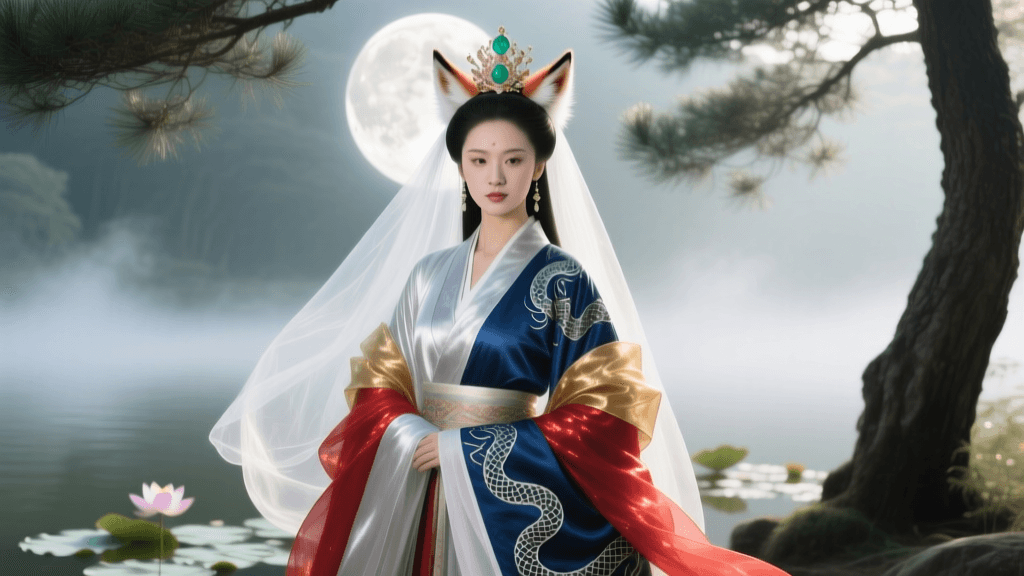
Chang'e is the epitome of celestial grace. Her aesthetic relies on weightlessness, flowing silhouettes, and a color palette dominated by lunar whites, pale blues, and silvers. The foundational garment for this look is the Qixiong Ruqun (chest-high skirt) paired with an expansive Pibo (silk shawl).
Fabric Selection and Measurements
To achieve the anti-gravity drape seen in Dunhuang murals and mythological illustrations, fabric weight is critical. Avoid heavy cottons or thick silks.
- The Skirt: Use 20D or 30D polyester chiffon or 8-momme silk georgette. For a standard height of 165cm, order 6 meters of fabric to achieve a 3-meter hem circumference. This ensures the skirt billows dramatically when spinning or caught in the wind.
- The Pibo (Shawl): The shawl should be at least 3.5 meters long and 40cm wide. Opt for 100% silk organza. The stiffness of organza allows the shawl to arch over the arms and maintain a halo-like structure around the shoulders without collapsing.
- Embroidery: Incorporate the "Jade Rabbit pounding elixir" motif. Use silver and pearl-thread Su embroidery along the hem. Custom machine embroidery of this scale typically costs between $80 and $120 USD and takes 14-21 days to complete.
Styling and Accessories
Anchor the look with a Buyao (dangling hairpin) featuring crescent moon and pearl elements. The hair should be styled in a high, sweeping Feixian Ji (flying immortal bun), secured with a U-shaped jade hairpin for structural integrity.
Huli Jing (Fox Spirits): Mystique and Movement
The Nine-Tailed Fox Spirit, or Huli Jing, represents transformation, allure, and wild nature. Styling a fox spirit requires a balance between refined aristocratic wear and untamed, feral elements. The ideal base is the Ming Dynasty Mamianqun (horse-face skirt) paired with a Song Dynasty Beizi (long outer jacket).
Construction and Layering
- The Mamianqun: Select a Jacquard brocade with a subtle damask weave. The skirt requires precise pleating: standard knife pleats should be exactly 4cm wide at the waist, expanding to 8cm at the hem to allow for fluid, predatory movement. A standard skirt requires 4.5 meters of 150cm-wide brocade.
- The Beizi: Use a lightweight linen or raw silk blend in deep crimson, forest green, or charcoal. The side slits must be cut high—ending just below the ribcage—to reveal the intricate skirt patterns during movement.
- Faux Fur Accents: To nod to the fox lineage without using animal products, source high-grade faux Tibetan lamb or fox fur for the collar and sleeve cuffs. A 1-meter strip of premium faux fur costs around $35 USD and can be hand-stitched to the inner collar using a blind hem stitch.
The Illusion of Tails
While literal nine tails are reserved for stage cosplay, the illusion of multiple tails can be achieved through the skirt's Zhuanghua (decorative woven bands). Choose a skirt with heavily embroidered vertical panels in gold and rust, which visually fracture the silhouette into multiple flowing "tails" when walking.
The Dragon King (Ao Guang): Regal Authority
The Dragon Kings of the Four Seas command water and weather. Their garments must project immense authority, structural rigidity, and imperial power. The Yuanlingpao (round-collar robe) is the definitive choice for this deity.
Structural Tailoring and Motifs
Unlike the ethereal Moon Goddess, the Dragon King's silhouette is grounded and broad. According to the Heilbrunn Timeline of Art History, the use of silk in Chinese history was deeply tied to status and cosmic order; for a Dragon King, heavy, structured silks are non-negotiable.
- The Robe: Use 19-momme silk satin or a heavy cotton-linen blend for the outer shell, fully lined with cotton batting for a rigid, bell-like structure. The robe should feature Mang (four-clawed python/dragon) motifs coiling around the shoulders and hem.
- The Yuling (Collar): The round collar must be heavily interfaced with buckram to stand stiffly against the neck, framing the face like a halo of power.
- Waist Cinching: Use a wide leather Geda belt with brass plaques. The belt should sit at the natural waist, pulling the heavy fabric into sharp, authoritative folds.
Color and Elemental Symbolism
While dragons are often associated with gold, the Dragon King of the East Sea (Ao Guang) is traditionally linked to the color azure or deep teal. Dye the fabric using natural indigo over-dyed with pomegranate rind to achieve a complex, oceanic teal that shifts in the light.
Deity Styling Matrix: Fabric, Cost, and Construction Time
Planning a mythological Hanfu build requires an understanding of textile behavior and tailoring logistics. Below is a comparative guide to help you budget and schedule your project.
| Deity Archetype | Primary Garment | Recommended Fabric | Est. Custom Cost (USD) | Tailoring Time |
|---|---|---|---|---|
| Chang'e (Moon) | Qixiong Ruqun + Pibo | 20D Chiffon, Silk Organza | $180 - $250 | 30 - 45 Days |
| Huli Jing (Fox) | Mamianqun + Beizi | Jacquard Brocade, Raw Silk | $220 - $350 | 45 - 60 Days |
| Dragon King | Yuanlingpao (Robe) | 19-Momme Satin, Heavy Brocade | $300 - $500 | 60 - 90 Days |
Sourcing and Ethical Craftsmanship
When commissioning mythological Hanfu, the provenance of your silk matters. Traditional silk craftsmanship is not merely a textile choice; it is a cultural inheritance. As recognized by UNESCO, sericulture and silk craftsmanship in China are vital intangible cultural heritage practices passed down through generations of weavers and embroiderers.
"To wear the garments of the gods is to carry the weight of their stories. Every pleat, every embroidered scale, and every flowing ribbon is a dialogue between the mortal realm and the divine."
Practical Sourcing Tips
- For Brocades: Source directly from weavers in Hangzhou or Suzhou via specialized Hanfu marketplaces like Taobao or dedicated international agents. Look for the term "Zhuanghua" (woven decorative bands) to ensure the patterns are woven into the fabric rather than printed.
- For Embroidery: If commissioning custom Su embroidery for deity motifs, expect to pay a premium of $15 to $30 per square inch for hand-stitched work. Machine embroidery is a viable alternative for budget builds, costing roughly $5 per square inch.
- Timing: Always factor in the Chinese New Year and National Day holidays (October), during which traditional garment workshops shut down for 2 to 4 weeks. Place custom orders at least three months before your intended convention or photoshoot.
Conclusion
Translating Chinese mythology into traditional clothing is a profound exercise in cultural storytelling. Whether you are capturing the lunar weightlessness of Chang'e, the cunning elegance of the Fox Spirit, or the oceanic authority of the Dragon King, the key lies in respecting the physics of the fabrics and the symbolism of the motifs. By understanding the precise measurements, textile weights, and historical contexts of these garments, you can step out of the mortal realm and bring the legends of antiquity into breathtaking, wearable reality.