Best Xin Zhongshi Cloud Shoes & Boots: 2026 Style Guide
The 2026 Renaissance of Traditional Chinese Footwear
As the Xin Zhongshi (New Chinese Style) movement matures in 2026, the focus of traditional fashion has expanded far beyond the popular Mamianqun (horse-face skirts) and tailored jackets. Today, the most discerning enthusiasts are turning their attention downward to complete their silhouettes with authentic, historically inspired footwear. Traditional Chinese footwear, particularly Cloud Shoes (Yuntou Lu) and embroidered boots, have undergone a massive design evolution, merging ancient craftsmanship with modern ergonomic technology.
In 2026, leading ateliers have successfully bridged the gap between museum-quality historical accuracy and the demands of modern urban walking. Whether you are attending a formal tea ceremony, navigating a bustling city, or simply elevating your daily wardrobe, understanding the nuances of traditional Chinese footwear is essential. This comprehensive guide explores the anatomy, styling, and maintenance of these exquisite pieces for the modern wearer.
Historical Roots and Cultural Significance
To appreciate the footwear of today, one must understand its origins. Traditional Chinese shoes were deeply tied to social status, gender, and regional climate. According to the Metropolitan Museum of Art's Heilbrunn Timeline of Art History, footwear during the Ming and Qing dynasties was characterized by intricate silk embroidery, symbolic motifs, and distinct silhouettes that denoted the wearer's rank and ethnic background. The upturned toes of scholar shoes, for instance, were designed to mimic the auspicious ruyi cloud motif, symbolizing heavenly blessings and upward mobility.
Today, the Xin Zhongshi movement honors these historical precedents while stripping away the restrictive elements of the past. Modern iterations utilize advanced 3D-molded insoles and lightweight rubber outsoles, ensuring that the rich heritage of Chinese shoemaking is accessible and comfortable for contemporary lifestyles.
Understanding the Classics: Cloud Shoes vs. Embroidered Boots
Cloud Shoes (Yuntou Lu / 云头履)
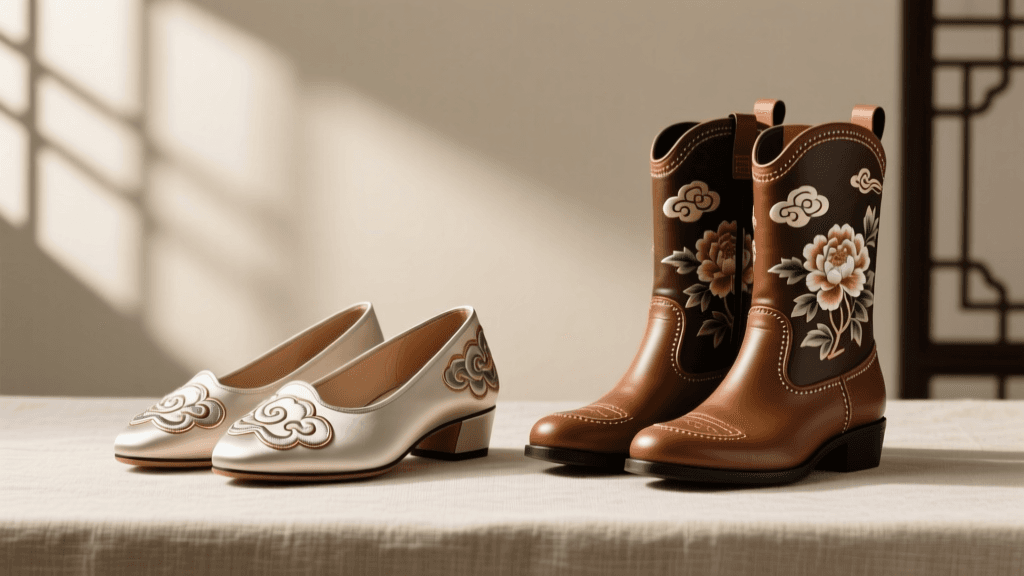
Cloud shoes are instantly recognizable by their prominent, upturned toe caps that resemble stylized clouds. Historically worn by scholars, officials, and eventually adopted into ceremonial wear for women, the cloud shoe is the quintessential traditional Chinese slip-on. In 2026, the most sought-after cloud shoes feature uppers made from sustainable peace silk or high-grade cotton-linen blends, adorned with subtle Suzhou embroidery. The toe box has been widened to accommodate modern foot shapes, and the traditional multi-layered cloth sole has been largely replaced by shock-absorbing EVA foam wrapped in traditional cotton binding.
Embroidered Boots and Manchu Platforms (Hua Pen Xie)
For those seeking a more structured silhouette, embroidered ankle boots (Xuezi) and Manchu-style platform shoes offer striking alternatives. Xuezi boots, often crafted from velvet or heavy brocade, feature intricate Chinese embroidery techniques depicting peonies, cranes, or bamboo. These are ideal for autumn and winter styling. Meanwhile, the Manchu platform shoe, historically characterized by its central pedestal sole, has been reimagined in 2026 as a chunky, wedge-style Mary Jane. This modern adaptation provides the height and dramatic posture of the original without the severe instability, making it a favorite for avant-garde Xin Zhongshi street style.
2026 Buyer’s Guide: Materials, Pricing, and Sizing
When investing in traditional footwear, understanding the current market landscape is crucial. The 2026 market is divided into mass-produced fashion pieces and artisan-crafted heritage wear. Below is a comparative breakdown to help you make an informed purchase.
| Footwear Type | Primary Upper Material | Sole Construction | Avg. Price Range (USD) | Best Use Case |
|---|---|---|---|---|
| Everyday Cloud Shoes | Cotton-Linen Blend | Vulcanized Rubber | $45 - $85 | Daily walking, casual Hanfu |
| Ceremonial Cloud Shoes | Heavy Silk Brocade | Leather / EVA Hybrid | $120 - $250 | Weddings, formal tea ceremonies |
| Embroidered Ankle Boots | Velvet / Woven Wool | Stacked Wooden Heel | $150 - $300 | Autumn/Winter street style |
| Modern Platform (Hua Pen) | Faux Leather / Satin | Chunky Rubber Wedge | $90 - $180 | Avant-garde fashion, cosplay |
Sizing and Fit Considerations
Traditional Chinese shoes were historically designed with a wider, flatter last (the mold used to shape the shoe). However, 2026 manufacturers have adopted standardized international sizing with built-in arch support. When ordering online, always measure your foot length in centimeters from heel to the longest toe. If you have a high instep, opt for lace-up boots or adjustable Mary Jane styles over rigid slip-on cloud shoes, as the embroidered uppers rarely stretch.
How to Style Traditional Footwear for Modern Wardrobes
Styling traditional footwear in 2026 is all about balance. The goal of Xin Zhongshi is not to wear a historical costume, but to integrate heritage elements into a cohesive, modern aesthetic.
Pairing Cloud Shoes with Mamianqun
The Mamianqun (horse-face skirt) remains a staple of the modern traditional wardrobe. When wearing cloud shoes, the hem of your skirt is critical. The skirt should ideally fall 3 to 5 centimeters above the floor. This specific length ensures that the intricate embroidery of the shoe is visible and prevents the heavy pleats of the skirt from dragging on the ground and catching under your heel. Pair a muted, solid-colored cloud shoe with a heavily patterned skirt to avoid visual clutter.
Styling Boots with Tailored Outerwear
Embroidered ankle boots pair exceptionally well with wide-leg Songku (Song dynasty trousers) or modern tailored trousers. For a striking 2026 office-appropriate look, combine a minimalist, mandarin-collar blazer with cropped wool trousers and a pair of dark velvet embroidered boots. The boots add a subtle cultural touch without overwhelming the professional silhouette. According to exhibitions at the Victoria and Albert Museum, the juxtaposition of structured tailoring with fluid, embroidered textiles is a hallmark of contemporary Asian fashion design.
Care and Maintenance for Longevity
Traditional footwear, particularly those featuring silk and delicate embroidery, requires meticulous care to maintain its vibrancy and structural integrity in 2026's varied climates.
- Cleaning Silk and Brocade: Never machine wash or submerge embroidered silk shoes. Use a soft, dry brush to remove surface dust. For stains, consult a professional dry cleaner who specializes in heritage textiles. Spot cleaning with a damp microfiber cloth and mild, pH-neutral detergent is acceptable for cotton-linen blends.
- Protecting the Embroidery: The metallic threads used in modern Xin Zhongshi embroidery can tarnish if exposed to high humidity. Store your shoes in breathable cotton dust bags with silica gel packets. Avoid plastic bins, which trap moisture and promote mold.
- Sole Maintenance: While modern rubber soles are durable, traditional cloth-bound soles require protection from water. If you purchase shoes with authentic multi-layered cloth soles, apply a waterproofing spray designed for textiles and avoid wearing them on rainy days. Many 2026 artisans offer a resoling service, allowing you to replace worn rubber outsoles without damaging the embroidered upper.
Embracing the Future of Heritage Fashion
The evolution of traditional Chinese footwear is a testament to the enduring appeal of cultural heritage. By choosing pieces that respect historical silhouettes while embracing modern comfort and sustainable materials, wearers in 2026 are actively participating in the preservation of ancient craftsmanship. Whether you are stepping out in cloud-tipped silk or grounding your winter wardrobe with velvet boots, traditional footwear offers a profound connection to the past, beautifully adapted for the strides of the future.