2026 Guide to Traditional Chinese Footwear: Cloud Shoes & Boots
The Resurgence of Traditional Chinese Footwear in 2026
As the Xin Zhongshi (New Chinese Style) movement continues to dominate global fashion runways and streetwear in 2026, enthusiasts and designers alike have turned their attention to the final frontier of the traditional silhouette: footwear. For years, the Hanfu revival and the broader appreciation for Asian traditional garments focused heavily on flowing robes, intricate jackets, and pleated skirts. However, completing the authentic aesthetic requires stepping into the rich history of traditional Chinese footwear. From the elegantly upturned toes of Cloud Shoes (Yunxie) to the structured, commanding presence of Hanfu boots, 2026 has brought unprecedented innovations in comfort, materials, and everyday wearability.
According to archival research highlighted by the Victoria and Albert Museum, historical Chinese footwear was deeply intertwined with social status, regional geography, and philosophical ideals of harmony. Today, modern artisans are bridging this ancient heritage with contemporary ergonomic science, making traditional silhouettes viable for modern urban commuting, travel, and high-fashion styling.
Understanding the Classics: Cloud Shoes and Hanfu Boots
Cloud Shoes (Yunxie) and Qiaotou Designs
The term 'Cloud Shoe' often refers to the Qiaotou (upturned toe) shoe, a design that has been a staple of Chinese sartorial culture for over a millennium. The upturned toe was originally designed to prevent the long, flowing hems of traditional silk robes from catching on the ground or becoming soiled by mud. Visually, the curved tip mimics the eaves of traditional Chinese architecture and the stylized cloud motifs found in classical paintings, symbolizing a connection between the earthly realm and the heavens.
In 2026, the modern Yunxie has evolved. While traditional versions featured layers of quilted cotton and hemp soles that required weeks of hand-stitching, contemporary iterations utilize hidden memory foam insoles and flexible EVA (ethylene-vinyl acetate) midsoles. The uppers still feature exquisite Suzhou or Shu embroidery—often depicting plum blossoms, cranes, or lotuses—but are now treated with nano-coatings to repel water and resist urban staining.
Traditional Hanfu Boots (Xuezi and Zao)
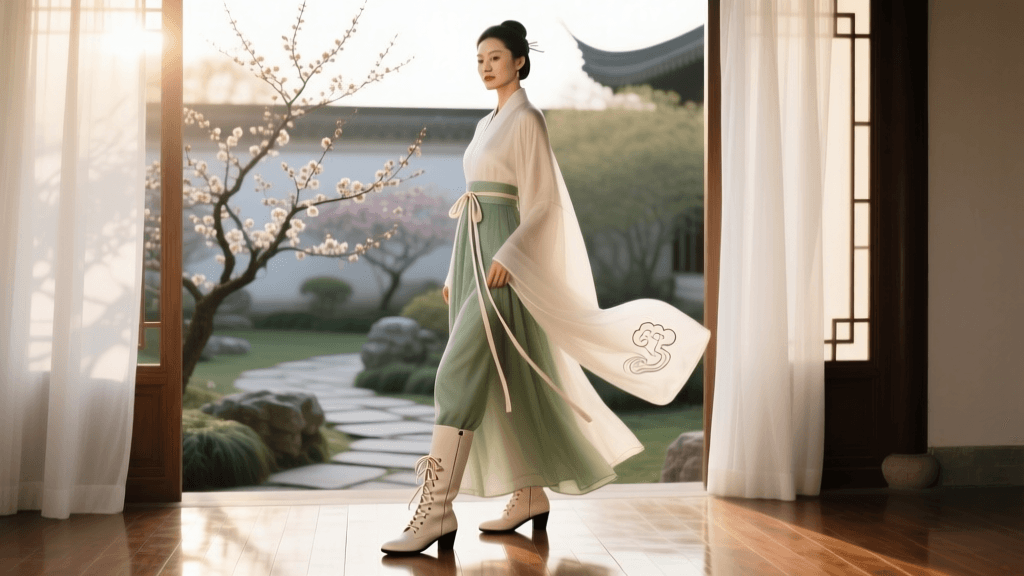
While Cloud Shoes are often associated with elegance and civilian wear, traditional boots carry a more martial and official lineage. The Xuezi, a soft-soled boot historically worn by martial artists and performers, has seen a massive resurgence in 2026 streetwear. Characterized by a low ankle cut and a flexible sole, modern Xuezi boots are crafted from vegan leathers, matte cotton canvas, and even upcycled denim, blending ancient silhouettes with sustainable fashion mandates.
Conversely, the Zao boot—traditionally featuring a thick, multi-layered white sole and a black upper—was the standard for officials and scholars. Today's adaptations maintain the striking visual contrast of the thick sole but replace the heavy, compressed paper-and-cloth base with lightweight, shock-absorbing rubber compounds, allowing wearers to navigate concrete pavements without the foot fatigue associated with historical replicas.
The Xin Zhongshi Revolution: 2026 Innovations
The Xin Zhongshi (New Chinese Style) movement of 2026 is defined by hybridization. Designers are no longer creating strict historical replicas; instead, they are extracting the DNA of traditional footwear and applying it to modern forms. This year's most sought-after releases include:
- Cloud-Toe Mary Janes: Combining the upturned Qiaotou silhouette with the secure strap system of a Western Mary Jane, these shoes are crafted from brocade and feature anti-slip rubber treads.
- Sneaker-Boot Hybrids: Taking the ankle profile of the Xuezi boot and mounting it on a chunky, modern sneaker sole. These are highly popular among younger demographics pairing them with modified Mamianqun (horse-face skirts) and oversized tech-wear jackets.
- Woven Rattan and Silk Slippers: Inspired by indoor court shoes, these feature breathable rattan-weave uppers combined with silk-lined collars, designed specifically for warm-weather travel and resort wear.
'Footwear in traditional Chinese dress was never merely functional; it was the anchor of the garment's drape. The shoe dictated how the silk moved, how the wearer walked, and ultimately, how they interacted with the space around them.' — Excerpt from a 2026 symposium on Asian Sartorial History, as documented in the Journal of Dress History.
2026 Buyer's Guide: Sizing, Pricing, and Materials
Purchasing traditional Chinese footwear online in 2026 is easier than ever, but understanding the material composition and pricing tiers is essential for making an informed investment. Below is a comparison of the primary styles available on the market this year.
| Footwear Type | Best For | 2026 Average Price (USD) | Top Material Innovations |
|---|---|---|---|
| Embroidered Qiaotou (Cloud Shoe) | Formal events, Hanfu styling, photography | $85 - $220 | Stain-resistant silk brocade, orthopedic cork footbeds |
| Xuezi Ankle Boot | Daily streetwear, martial arts, travel | $60 - $150 | Matte vegan leather, flexible vulcanized rubber soles |
| Xin Zhongshi Mary Jane | Office wear, casual outings, hybrid styling | $90 - $180 | Woven jacquard, adjustable elastic straps, EVA midsoles |
| Scholar's Zao Boot | Ceremonial wear, winter layering, avant-garde fashion | $120 - $300 | Full-grain leather uppers, lightweight honeycomb rubber soles |
Navigating Asian Sizing in 2026
One of the most common hurdles for international buyers is sizing. Traditional Chinese footwear is typically sized in millimeters (MM) or standard Asian sizing, which runs narrower than Western equivalents. In 2026, most premium Xin Zhongshi brands have adopted dual-sizing charts. However, because traditional silk uppers do not stretch like modern knit sneakers, it is highly recommended to measure your foot length in millimeters and consult the brand's specific chart. If you have a wider foot, sizing up by 5mm to 10mm and utilizing a thin, traditional cotton insole is the standard practice for achieving a comfortable fit.
Styling Traditional Footwear for Modern Wardrobes
The beauty of the 2026 Xin Zhongshi movement is its versatility. You no longer need to wear a full, multi-layered historical Hanfu set to justify wearing Cloud Shoes or traditional boots. Here are the top styling methodologies favored by fashion editors this year:
- The Mamianqun Pairing: The pleated horse-face skirt remains a wardrobe staple. Pair a mid-calf length Mamianqun with a sleek, black Xuezi ankle boot. The structured boot grounds the flowing pleats, creating a striking, modern silhouette suitable for the workplace.
- Denim and Brocade: For a casual weekend look, pair wide-leg, raw-hem denim jeans with embroidered Cloud Shoes. The contrast between the rugged, utilitarian denim and the delicate, shimmering silk brocade of the shoe creates a visually dynamic outfit.
- Tech-Wear and Tradition: The avant-garde streetwear scene has embraced the thick-soled Scholar's Zao boot, pairing it with cargo trousers, asymmetrical tunics, and waterproof tech-jackets. The monochromatic black-and-white contrast of the boot perfectly complements the utilitarian aesthetic of modern tech-wear.
Care and Maintenance for Silk and Embroidered Footwear
Investing in high-quality traditional footwear requires a commitment to proper maintenance. Silk, brocade, and delicate embroidery are susceptible to moisture, friction, and UV degradation. To ensure your footwear lasts for years, follow these 2026 best practices for garment care:
- Preventative Waterproofing: Before wearing silk or brocade shoes outdoors, apply a specialized, breathable nano-waterproofing spray designed for delicate textiles. This will protect the embroidery threads from oil-based stains and sudden rain showers without altering the fabric's natural sheen.
- Proper Storage: Never store traditional shoes in plastic bins, as this traps moisture and encourages mold growth, particularly in the natural hemp or cotton linings. Use breathable cotton dust bags and insert cedar shoe trees to maintain the structural integrity of the upturned toes and absorb ambient humidity.
- Cleaning Embroidery: If your shoes become dusty, use a soft-bristled makeup brush or a specialized suede brush to gently sweep the dust out of the embroidery crevices. Never machine wash or submerge embroidered silk shoes in water. For deep stains, consult a professional textile conservator.
- Sole Maintenance: While modern adaptations feature rubber and EVA soles, traditional hemp-soled replicas are still available for purists. Hemp soles must be kept completely dry. If you are wearing hemp-soled shoes, limit their use to indoor events or dry-weather outdoor gatherings.
Conclusion
The evolution of traditional Chinese footwear in 2026 represents a perfect synthesis of cultural preservation and modern innovation. Whether you are stepping into a pair of meticulously embroidered Cloud Shoes for a cultural festival, or lacing up a pair of hybrid Xuezi boots for a day navigating the city, you are participating in a living, breathing tradition. As institutions like the Bata Shoe Museum continue to highlight the global impact of Asian footwear history, the market for these culturally significant, beautifully crafted pieces will only continue to grow. By understanding the history, selecting the right modern adaptations, and caring for your garments properly, you can seamlessly integrate the elegance of ancient China into your contemporary wardrobe.