Jibata Looms & Kasuri Weaving Guide 2026: Master Japanese Textiles
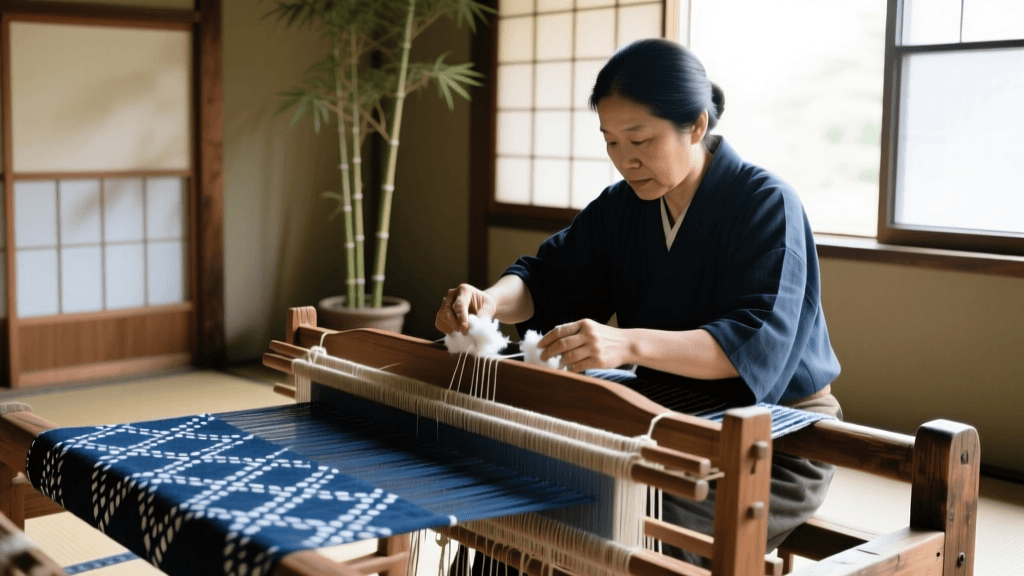
The Resurgence of Japanese Hand-Weaving in 2026
As we navigate the global textile landscape of 2026, the intersection of heritage craftsmanship and sustainable slow fashion has never been more prominent. Discerning collectors, textile artists, and fashion historians are increasingly turning away from mass-produced fabrics, seeking instead the profound tactile and cultural depth of traditional Japanese hand-weaving. At the heart of this movement is the Jibata (traditional Japanese floor loom) and the mesmerizing Kasuri (ikat) resist-dyeing technique. Mastering these methods requires not only an understanding of mechanical weaving but also a deep respect for the agricultural and chemical processes that precede the loom.
This comprehensive guide explores the anatomy of the Jibata loom, current 2026 market pricing for authentic equipment, the meticulous process of Kasuri weaving, and actionable steps for setting up your own traditional Japanese weaving studio this year.
Anatomy of the Jibata Loom
Unlike the Western jack loom or the more rigid Takahata loom, the Jibata is a floor loom characterized by its low profile, back-strap tensioning system, and ergonomic seating position. The weaver sits on the floor or a low cushion, using their body weight to maintain warp tension. This intimate connection between the weaver's body and the textile allows for incredible nuance in beating the weft.
Core Components
- Warp Beam (Chikiri): The back roller where the unwoven warp threads are stored. In antique models, this is often a massive, hand-turned piece of Hinoki cypress.
- Cloth Beam (Makimono): The front roller that collects the finished fabric. It rests against the weaver's waist or is secured via a traditional back-strap (himo).
- Heddles (Sokou): Made from tightly twisted cotton or silk cord in traditional setups, though modern 2026 restorations sometimes use reinforced linen. The heddles separate the warp threads to create the shed.
- Reed (Osa): A comb-like structure made of bamboo or metal that beats the weft yarn into place, determining the density (ends per inch) of the final fabric.
- Shuttle (Hi): Often boat-shaped and carved from persimmon or cherry wood, designed to glide smoothly through the relatively narrow shed of a Jibata.
2026 Market Pricing and Sourcing
Acquiring an authentic Jibata in 2026 requires navigating a niche market of antique dealers in Kyoto, specialized guilds in rural weaving villages like Yuki and Kurume, and international textile export brokers. Due to recent 2026 export regulations aimed at preserving heritage woodworking artifacts, shipping fully assembled antique looms from Japan has become more restricted, driving up the price of restored models already located in North America and Europe.
| Loom Type | Weaving Width | Primary Wood | 2026 Est. Price (USD) | Condition & Notes |
|---|---|---|---|---|
| Antique Kotatsu/Jibata | 35 cm (Obi width) | Hinoki Cypress | $2,500 - $4,200 | Restored; ideal for narrow sashes and scarves. |
| Standard Floor Jibata | 70 cm (Kimono bolt) | Zelkova / Keyaki | $6,000 - $9,500 | Vintage; standard width for traditional tanmono bolts. |
| Modern Artisan Replica | 90 cm (Wide format) | Oak / Bamboo blend | $11,000 - $15,000 | New (2026); custom-built by master woodworkers in Kyoto. |
| Tabletop Mini-Jibata | 20 cm (Sample weaving) | Pine / Cedar | $450 - $800 | New; excellent for beginners learning Kasuri patterns. |
Kasuri: The Art of Resist-Dyeing
Kasuri is the Japanese iteration of ikat, a technique where yarns are tightly bound with string to resist dye penetration before they are woven. The hallmark of authentic Japanese Kasuri is the kasuri-aji—the characteristic blurry, feathered edge of the pattern where the dyed and undyed sections meet. According to Kogei Japan, the official registry of traditional crafts, regions like Kurume (cotton) and Ojiya (linen/ramie) remain the undisputed capitals of this craft.
Step 1: Designing the Pattern (Ezu)
Before touching any yarn, the weaver must draft the ezu (pattern grid). Because Kasuri relies on the precise intersection of dyed warp and weft threads, the mathematical calculation of shrinkage during dyeing and weaving is critical. In 2026, while some younger artisans use digital drafting software to calculate the exact tie intervals, master weavers still rely on hand-drawn graph paper, calculating a 3-5% shrinkage rate for cotton and up to 8% for raw silk.
Step 2: Tying the Resist Bundles
Using a strong, non-absorbent thread (traditionally ramie or modern synthetic nylon), the weaver tightly wraps the sections of the yarn bundle that are meant to remain white (or the base color). The tension must be absolute; if the dye seeps under the binding, the crispness of the geometric pattern is lost. A single kimono bolt (tanmono) requires approximately 12 to 14 meters of warp and weft, meaning the tying process alone can take 40 to 80 hours for complex pictorial Kasuri (e-gasuri).
Step 3: The Indigo Vat and Dyeing
Authentic Kasuri relies on natural sukumo (fermented indigo leaves) from Tokushima Prefecture. The chemical reduction of the indigo vat in 2026 still follows the centuries-old alkaline fermentation method, using wood ash lye, sake, and wheat bran. The bound bundles are dipped repeatedly—sometimes up to 30 times for deep navy (kachi-iro)—with oxidation breaks in between. Once the desired depth is reached, the binding threads are painstakingly cut away, revealing the stark white resist patterns against the deep blue.
Sourcing Authentic Sukumo Indigo in 2026
For international weavers, sourcing genuine Tokushima sukumo has become more streamlined in 2026 thanks to specialized agricultural export cooperatives. A standard 5kg bucket of premium, pre-fermented sukumo currently costs between $180 and $250 USD, excluding cold-chain shipping. It is vital to store sukumo in a climate-controlled environment (ideally 15°C - 20°C) to keep the indigofera tinctoria bacteria dormant but alive until you are ready to build your vat.
Warping Your Jibata: A Practical Guide
Dressing a Jibata differs significantly from warping a Western floor loom. Because the loom lacks a rigid frame to hold high tension, the warping process is deeply physical.
- Measuring the Warp: Use a traditional warping board (seidai). For a standard 12-meter kimono bolt, measure out your dyed Kasuri warp threads, ensuring the pattern repeats align perfectly on the pegs.
- Transferring to the Chikiri: Secure the cross (lease) with thick paper or smooth sticks. Wind the warp onto the back beam, inserting thick paper or cardboard between layers to ensure even tension and prevent the edges from digging into the inner layers.
- Threading the Heddles: Working from the center outwards, thread each warp end through the cord heddles. The traditional Jibata uses a simple two-shaft system for plain weave (hira-ori), meaning threads alternate between the front and back heddle sets.
- Sleying the Reed: Pass the threads through the bamboo reed. For fine Kasuri cotton, a density of 20 to 24 ends per inch (EPI) is standard. Tie the warp ends to the front cloth beam using a traditional overhand knot, adjusting individual threads by plucking them like guitar strings until the tension is perfectly uniform.
Preservation and Global Recognition
The survival of the Jibata and Kasuri techniques is a testament to the dedication of multi-generational weaving families and modern preservation societies. Institutions like The Metropolitan Museum of Art continue to highlight the profound technical mastery of Japanese textiles in their permanent collections, educating a global audience on the complexity of resist-dyeing and hand-weaving. Furthermore, contemporary fashion houses in 2026 are increasingly partnering with rural weaving cooperatives, offering premium contracts that ensure elderly masters can afford to take on apprentices.
Mastering the Jibata loom and the Kasuri method is not merely about producing fabric; it is an exercise in mindfulness, mathematics, and deep cultural reverence. Whether you are acquiring a restored Hinoki loom or simply studying the intricate geometry of a vintage indigo textile, engaging with these traditions ensures that the rhythmic clack of the wooden beater will continue to echo for generations to come.