The Silk Road Impact on Tang Hufu and Uyghur Garments
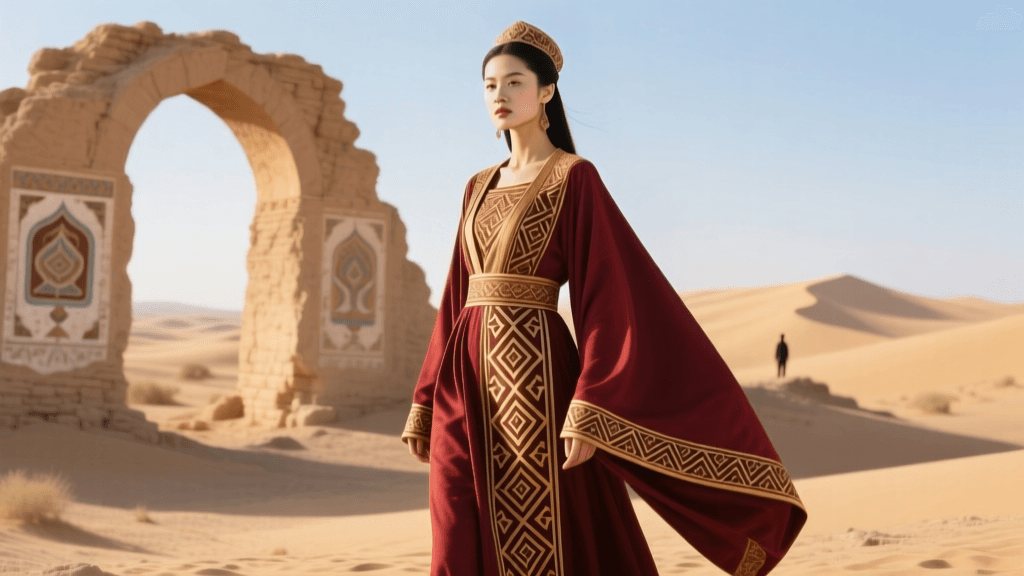
The Silk Road was not merely a conduit for spices, jade, and precious metals; it was the ancient world's most vibrant fashion superhighway. Spanning thousands of miles from Chang'an (modern Xi'an) to the Mediterranean, this intricate network of trade routes facilitated an unprecedented exchange of textiles, tailoring techniques, and aesthetic motifs. For traditional Chinese clothing, particularly during the cosmopolitan Tang Dynasty (618–907 CE), the Silk Road birthed a revolutionary sartorial movement known as Hufu (foreign dress). Simultaneously, cross-cultural pollination deeply influenced the textile traditions of Central Asian ethnic groups, most notably the Uyghur people of Xinjiang and their legendary Atlas silk.
Understanding the historical trade routes provides modern enthusiasts, collectors, and designers with a profound appreciation for Asian traditions. Today, the revival of these garments requires an understanding of historical contexts, authentic materials, and precise measurements. This guide explores the Silk Road's impact on Tang Hufu and Uyghur textiles, offering actionable advice for sourcing and styling these magnificent cross-cultural garments.
The Rise of Hufu: Tang Dynasty's Foreign Dress
During the Tang Dynasty, the capital city of Chang'an was a melting pot of over a million residents, including Sogdian merchants, Persian diplomats, and Turkic nomads. This demographic diversity heavily influenced local fashion. Hufu, literally translating to clothing of the Hu (foreign/nomadic) people, became wildly popular among both men and women of the Tang elite, largely due to its practicality and exotic appeal.
Key Garments of the Hufu Wardrobe
- Fanpao (Foreign Robe): A narrow-sleeved, knee-length coat with a round collar and lapels. Unlike traditional Hanfu, which featured wide sleeves and right-over-left closures, the Fanpao often had tight cuffs for horseback riding and occasionally featured left-over-right closures typical of nomadic tribes.
- Kuzhe (Riding Jacket): A shorter, waist-length jacket worn over trousers. It was heavily influenced by Sogdian and Sasanian riding gear, allowing for maximum mobility.
- Xue (Leather Boots): Replacing traditional cloth shoes, knee-high or calf-high leather boots were essential for the Hufu silhouette, providing protection for equestrian activities and harsh terrain.
The adoption of Hufu in the Tang court represents one of the earliest and most striking examples of cultural appreciation in global fashion history, driven entirely by the economic engines of the Silk Road. — Smithsonian National Museum of Asian Art
Uyghur Atlas Silk: The Ikat Legacy of the Silk Road
While the Tang court adopted foreign silhouettes, the indigenous populations of the Tarim Basin, particularly the Uyghurs, developed textile techniques that blended Central Asian, Persian, and Chinese influences. The most iconic of these is Atlas silk, a vibrant, resist-dyed ikat fabric that remains a cornerstone of Uyghur traditional clothing.
The word Atlas is derived from the Arabic word for silk, highlighting the Islamic and Persian trade influences that reached Xinjiang. The resist-dyeing technique (ikat) involves binding the warp threads before dyeing to create blurred, geometric patterns. Historically, the dyes were sourced from trade route botanicals: pomegranate rinds for yellow, walnut husks for brown, and indigo from southern trade routes for blue.
Actionable Advice: Sourcing Authentic Atlas Silk
For collectors and designers looking to incorporate authentic Uyghur Atlas silk into modern garments or historical reproductions, understanding the traditional loom specifications and market timing is crucial.
- Measurements and Loom Width: Authentic hand-woven Atlas silk is produced on narrow traditional looms. The standard usable width is strictly 40 to 45 cm (approx. 16-18 inches). When calculating yardage for a full dress or robe, you must account for this narrow width, often requiring 6 to 8 meters of fabric compared to the 3 meters needed for standard 150cm wide commercial silk.
- Cost Expectations: Genuine hand-loomed, naturally dyed Atlas silk from Hotan or Kashgar costs between 150 to 350 RMB ($20 to $50 USD) per meter. Mass-produced synthetic imitations sell for under $5 per meter but lack the historical drape and cultural value.
- Timing the Purchase: The optimal time to source high-quality Atlas silk is between March and May. During early spring, the new batches of silk are dyed and woven after the winter dormancy, ensuring the most vibrant color fastness before the intense summer heat affects the natural dye vats.
Cross-Cultural Motifs: Sasanian Pearls and Chinese Lotus
The visual language of Silk Road garments is defined by a fusion of motifs. As noted by the UNESCO Silk Roads Programme, textiles were the primary medium for transmitting artistic concepts across Eurasia.
One of the most prominent cross-cultural motifs found in both Tang Hufu textiles and later Central Asian garments is the Pearl Roundel. Originating from Sasanian Persia, this motif features a circular border of pearls enclosing animals like lions, boars, or ducks. When woven into Chinese samite (a weft-faced compound twill), the Persian roundel was often combined with the Chinese lotus flower or peony, creating a hybrid aesthetic that dominated the 8th-century fashion scene. Sogdian weavers who relocated to Chang'an were instrumental in merging these distinct artistic vocabularies into a single, luxurious fabric.
Data Comparison: Tang Hufu vs. Traditional Hanfu
Understanding the structural differences between indigenous Hanfu and imported Hufu is essential for accurate historical reproduction and modern styling. Below is a comparative breakdown of their core characteristics.
| Feature | Traditional Tang Hanfu | Tang Hufu (Foreign Dress) |
|---|---|---|
| Sleeve Style | Wide, flowing, floor-length (Daxiushan) | Narrow, fitted cuffs for mobility |
| Closure Direction | Strictly Right-over-Left (Jiaoling Youren) | Often Left-over-Right or Central Button |
| Lower Garment | Flowing skirts (Qun) or wide-leg trousers | Fitted riding trousers (Ku) tucked into boots |
| Primary Textile | Lightweight silk gauze, damask, brocade | Heavy samite, felt, leather, wool blends |
| Footwear | Silk or hemp flat shoes with upturned toes | Knee-high or calf-high leather riding boots |
Practical Guide: Styling the Silk Road Silhouette Today
Integrating Silk Road influences into a modern wardrobe or a historical Hanfu revival ensemble requires attention to specific tailoring details and accessories. Whether you are commissioning a bespoke piece or styling vintage textiles, follow these actionable guidelines:
1. The Belt and Waistline
Hufu relies heavily on a structured waistline to support the weight of the garments and accessories. Use a 3.5 cm to 5 cm wide tooled leather belt. Traditional Sogdian belts featured elaborate bronze or gold plaques. For modern wear, source belts with geometric brass buckles to mimic the Sasanian metalwork found along the trade routes.
2. Footwear Specifications
Do not pair Hufu with traditional Hanfu cloth shoes. Commission or purchase leather boots with a 25 cm to 30 cm shaft height. The toe should be slightly pointed or rounded, avoiding the extreme upturned toes of indigenous Tang court shoes. Black or dark brown vegetable-tanned leather is historically accurate and versatile.
3. Layering with Atlas Silk
Because authentic Uyghur Atlas silk is only 40-45 cm wide, it is best utilized as a striking accent rather than a full base garment for those unaccustomed to narrow-loom tailoring. Use Atlas silk for wide lapel facings, sleeve cuffs (15 cm depth), or as a contrasting sash over a solid-colored Hanfu robe. This mirrors the historical Tang practice of using imported, expensive Central Asian textiles as trim on indigenous silk garments.
4. Headwear and Accessories
Complete the Hufu look with a Sogdian-inspired Phrygian cap or a structured felt hood. Avoid the elaborate, hair-pin laden updos of traditional Tang Hanfu. Opt for practical, braided hairstyles or simple topknots secured with leather cords, reflecting the nomadic origins of the garment.
Conclusion
The garments born from the Silk Road are testaments to an era when borders were porous, and beauty was a collaborative, cross-cultural endeavor. From the equestrian practicality of Tang Hufu to the mesmerizing, mathematically precise ikat weaves of Uyghur Atlas silk, these traditions offer a rich tapestry of Asian heritage. By understanding the historical dimensions, sourcing authentic materials, and respecting the structural nuances of these garments, modern wearers can keep the vibrant legacy of the ancient trade routes alive. For further exploration into Central Asian textile histories, the Victoria and Albert Museum Asian Collections provides extensive visual archives of surviving Silk Road fragments.