Top Cloud Shoes & Traditional Boots for Xin Zhongshi 2026
The 2026 Xin Zhongshi Footwear Renaissance
As we navigate the global fashion landscape of 2026, the Xin Zhongshi (New Chinese Style) movement has matured from a niche internet aesthetic into a dominant force in contemporary wardrobes. While early adopters focused heavily on the drape of Mamianqun (horse-face skirts) and the structured collars of Ming-dynasty-inspired jackets, this year is undeniably about grounding the outfit with authentic, historically informed footwear. Traditional Chinese footwear—specifically the iconic Cloud-Head Shoes (Yuntou Lu) and structured traditional boots (Xue)—has seen a massive resurgence, blending centuries-old artisan techniques with modern ergonomic requirements.
According to The Metropolitan Museum of Art's Heilbrunn Timeline, historical Chinese dress has always relied on footwear to denote status, gender, and occasion. Today, modern artisans are reinterpreting these silhouettes for daily wear. Whether you are stepping into a boardroom in Shanghai or attending an international design week in Paris, understanding how to source, style, and care for traditional Chinese footwear is essential for the modern Xin Zhongshi enthusiast.
Yuntou Lu: The Iconic Cloud-Head Shoe
The Yuntou Lu, or Cloud-Head Shoe, is perhaps the most recognizable silhouette in traditional Han Chinese footwear. Characterized by its upturned, bifurcated toe that resembles a ruyi cloud or a lotus petal, this shoe was historically worn by both men and women during the Ming and Qing dynasties. The upward curve was not merely decorative; it served a practical purpose, allowing the wearer to easily grasp the hem of long robes and skirts while walking, preventing tripping and keeping the fabric clean.
2026 Innovations in Cloud Shoes
In 2026, the market for Cloud Shoes has evolved significantly. Artisans in Suzhou and Hangzhou have moved away from the stiff, flat cardboard soles of the past. Today’s premium Yuntou Lu feature hidden memory foam insoles, reinforced arch support, and lightweight EVA midsoles disguised beneath traditional layered cotton and silk outsoles. This ergonomic update means you can comfortably wear them for a full day of travel or work without the foot fatigue associated with historical replicas.
Furthermore, sustainable textiles are dominating the 2026 market. We are seeing a surge in Cloud Shoes crafted from Peace Silk (Ahimsa silk) and recycled brocade threads. The embroidery, often featuring motifs of peonies, cranes, or bamboo, is increasingly done using a blend of hand-stitched Su Xiu (Suzhou embroidery) on the vamp and high-precision digital embroidery on the heel, keeping costs accessible while preserving the artisanal look.
Styling Cloud Shoes for Modern Wear
The beauty of the Cloud Shoe lies in its versatility. In 2026, the most popular way to style them is by letting the upturned toe peek out from beneath a flowing, ankle-length Mamianqun or wide-legged Song-style trousers. For a more avant-garde Xin Zhongshi look, fashion influencers are pairing pastel silk Cloud Shoes with tailored, cropped Western trousers and structured linen blazers, creating a striking juxtaposition of ancient craft and modern minimalism.
Traditional Boots (Xue) in Modern Streetwear
While Cloud Shoes offer a delicate, elegant profile, traditional boots (Xue) provide structure, warmth, and a bold streetwear edge. Historically, boots in China were heavily influenced by nomadic equestrian cultures from the northern steppes, eventually being integrated into official court dress and military uniforms. The Zao Xue (black official boots) with their thick white soles, and the intricately embroidered riding boots, are now staple pieces in the gender-neutral Xin Zhongshi wardrobe.
The 2026 Boot Silhouette
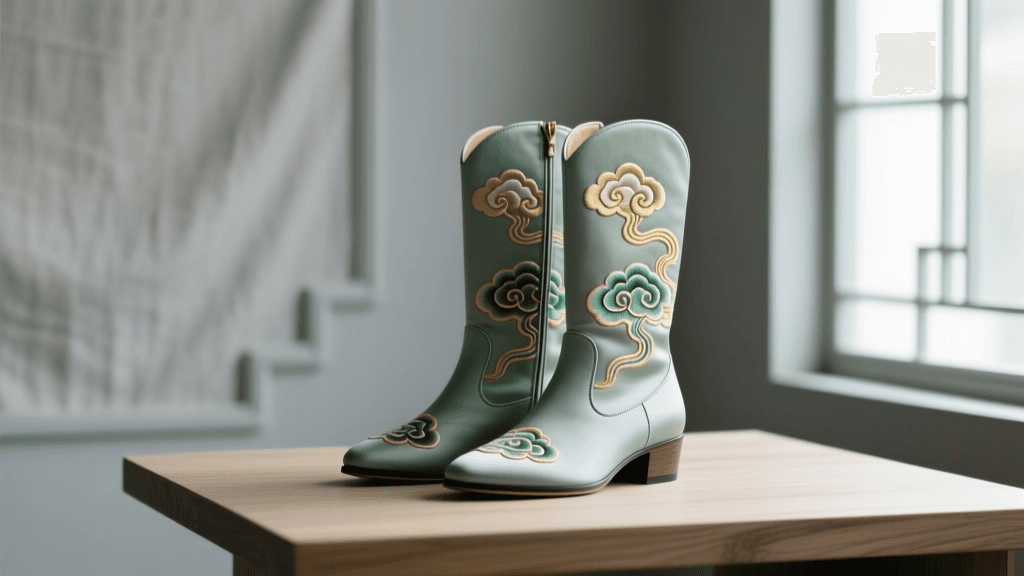
This year, traditional Hanfu boots have been streamlined for urban environments. The thick, multi-layered cotton soles of historical official boots have been replaced with durable, slip-resistant rubber and cork composites that mimic the stacked aesthetic but offer superior shock absorption. The shafts of the boots, traditionally made of stiff black satin or leather, are now being crafted from supple Xiangyunsha (Gambiered Canton Gauze) and matte vegan leathers, allowing the boot to slouch slightly and conform to the wearer's calf.
Embroidered riding boots, featuring intricate floral or mythical beast motifs climbing up the calf, are particularly popular in the autumn and winter seasons. According to the Victoria and Albert Museum's Asian Collections, the integration of equestrian motifs into everyday Chinese dress highlights the historical cross-pollination of the Silk Road. In 2026, these boots are styled with heavy wool pleated skirts, oversized knit cardigans, and long trench coats, bridging the gap between historical cosplay and high-end contemporary fashion.
2026 Buyer’s Comparison Chart: Traditional Footwear
To help you navigate the market, we have compiled a comprehensive comparison of the most sought-after traditional footwear styles available this year. Prices reflect the 2026 market average for high-quality, artisan-made pieces (not mass-produced costume replicas).
| Footwear Style | Historical Era | 2026 Avg. Price (USD) | Primary Materials | Best Styling Use Case |
|---|---|---|---|---|
| Yuntou Lu (Cloud Shoes) | Ming / Qing | $85 - $160 | Silk Brocade, Memory Foam, Cotton | Mamianqun, Wide-leg linen trousers |
| Zao Xue (Official Boots) | Ming / Qing | $120 - $220 | Matte Leather, Cork, Velvet | Structured winter coats, Tailored suits |
| Embroidered Riding Boots | Yuan / Qing | $150 - $300 | Xiangyunsha, Heavy Silk, Rubber | Pleated wool skirts, Streetwear layers |
| Gong Xie (Court Slippers) | Qing | $60 - $110 | Satin, Velvet, Wood wedge | Indoor events, Tea ceremonies |
Sourcing Authentic Pieces: Where to Shop in 2026
The proliferation of Xin Zhongshi fashion has unfortunately led to a market saturated with cheap, mass-produced polyester knockoffs. To invest in authentic traditional footwear, you must look toward specialized artisan hubs and heritage brands. In 2026, the most reputable sources for authentic Cloud Shoes and boots are still rooted in the Jiangnan region, specifically Suzhou and Hangzhou.
When shopping online via global marketplaces or direct-from-artisan platforms, look for sellers who explicitly detail their embroidery techniques and material origins. For instance, high-end brocade used in premium footwear often utilizes techniques recognized by UNESCO's Intangible Cultural Heritage registry, such as the Nanjing Yunjin brocade weaving technique. Authentic Yunjin incorporates real peacock feather yarn and gold leaf threads, which will be clearly documented by reputable sellers and reflected in the $200+ price point.
Red Flags to Avoid:
- Glued Soles: Authentic traditional shoes, even with modern ergonomic updates, use a combination of stitching and high-grade adhesives. If the sole looks like it was hastily glued with visible residue, it is a costume piece.
- Synthetic Sheen: Cheap polyester brocade has a harsh, plastic-like shine under direct light. Authentic silk or high-quality cotton blends have a deep, luminous, and multi-dimensional luster.
- Lack of Sizing Nuance: Traditional footwear often requires specific sizing considerations. Artisan shops will provide detailed millimeter measurements for the inner sole and vamp width, whereas mass-producers only offer generic S/M/L charts.
Care and Maintenance for Silk and Brocade Footwear
Investing in high-quality traditional footwear requires a commitment to proper maintenance. The delicate nature of silk, brocade, and Xiangyunsha means that these shoes cannot be treated like modern canvas sneakers.
Storage and Environment
Moisture and direct sunlight are the enemies of natural dyes and silk fibers. In 2026, the standard for storing traditional footwear involves using breathable cotton dust bags infused with natural cedar blocks to repel moisture and insects. Never store your Cloud Shoes or silk boots in plastic bins, as this traps humidity and promotes mold growth, which can permanently stain the embroidery.
Cleaning Protocols
Under no circumstances should you machine wash or submerge traditional embroidered footwear in water. For daily maintenance, use a soft-bristled horsehair brush to gently sweep away dust from the brocade and embroidered crevices. If you encounter a stain on the silk vamp, use a specialized, pH-neutral silk spot cleaner applied with a microfiber cloth, dabbing gently rather than rubbing. For deep cleaning or structural repairs, seek out a professional dry cleaner who specializes in heritage textiles and traditional garments.
Waterproofing for Urban Environments
While historical shoes were highly susceptible to rain, 2026 offers advanced textile protection. You can apply a nano-level, breathable fabric protector spray designed specifically for delicate silks and suedes. This creates an invisible hydrophobic barrier that will save your embroidered boots from sudden urban downpours without altering the hand-feel or breathability of the fabric.
Conclusion
The integration of traditional Chinese footwear into the 2026 Xin Zhongshi wardrobe is a testament to the enduring power of cultural heritage when paired with modern innovation. Whether you are stepping out in a pair of ergonomically enhanced Cloud-Head Shoes or grounding your winter streetwear with structured, historically inspired boots, you are participating in a living, breathing fashion tradition. By prioritizing authentic materials, supporting heritage artisans, and practicing meticulous care, your traditional footwear will remain a stunning, comfortable anchor in your wardrobe for years to come.