Sustainable Geta and Zori Footwear Craft: 2026 Guide
The Resurgence of Japanese Footwear in 2026
The rhythmic, resonant karankoron of wooden geta echoing down a cobblestone street is one of the most evocative sensory experiences in Japan. In 2026, traditional Japanese footwear has transcended its role as mere ceremonial attire for summer festivals (matsuri) and has firmly established itself in the realm of sustainable, everyday fashion. Driven by a global appetite for artisanal craftsmanship and eco-conscious materials, the craft of geta and zori making is experiencing a vibrant renaissance. Modern wearers are increasingly seeking out bespoke footwear that honors centuries-old techniques while incorporating contemporary ergonomic designs and sustainably harvested materials. This comprehensive guide explores the intricate craft of traditional Japanese footwear, focusing on the sustainable harvesting of paulownia wood, the meticulous art of hanao weaving, and how you can integrate these masterpieces into your 2026 wardrobe.
Geta vs. Zori: Understanding the Foundations
While often grouped together by the untrained eye, geta and zori are distinct in both construction and purpose. Understanding their anatomy is the first step in appreciating the artisan's craft.
The Architecture of Geta
Geta are characterized by their elevated wooden base, known as the dai, and the protruding wooden teeth, or koma, on the underside. The standard geta features two teeth, which elevate the wearer above mud, rain, and snow—a highly practical design in Japan's humid, rainy seasons. However, the tengu geta, featuring a single, centrally placed tooth, demands immense balance and is typically reserved for ascetic monks, kabuki actors, and advanced practitioners. The wood is traditionally left bare to showcase the grain, though high-end 2026 models often feature intricate urushi (lacquer) finishes or wood-burned calligraphy.
The Elegance of Zori
Zori, conversely, are flat-soled sandals. Historically woven from rice straw, modern artisan zori in 2026 are crafted from a variety of premium materials, including tightly woven igusa (rush grass), bamboo sheaths, and upcycled silk from vintage kimono. Unlike the casual, strolling nature of geta, high-quality zori are considered formal wear, frequently paired with luxurious kimono and obi for tea ceremonies, weddings, and official gatherings. The base is often covered in leather or vinyl for weather resistance, but the artisanal core remains deeply rooted in natural fibers.
Sustainable Paulownia (Kiri) Wood Harvesting
The soul of a premium geta lies in its wood. Paulownia, known in Japan as kiri, is the undisputed gold standard for geta crafting. It is exceptionally lightweight, resistant to moisture, and possesses a natural acoustic resonance that creates the beloved karankoron sound. In 2026, the geta industry has made massive strides in sustainability. According to the Japanese Ministry of Economy, Trade and Industry (METI), there has been a concerted push to support domestic forestry initiatives that prioritize the replanting and sustainable management of paulownia groves in regions like Niigata and Fukushima.
Artisans are now utilizing advanced kiln-drying techniques that reduce the moisture content of the kiri wood to optimal levels without the use of harsh chemical preservatives. This ensures the wood remains impervious to rot while maintaining its structural integrity. Furthermore, zero-waste crafting has become a hallmark of 2026 geta workshops. The sawdust and offcuts from carving the dai and koma are compressed into biomass pellets for heating the artisan workshops during the winter months, creating a beautifully closed-loop production cycle.
The Intricate Art of Hanao Weaving
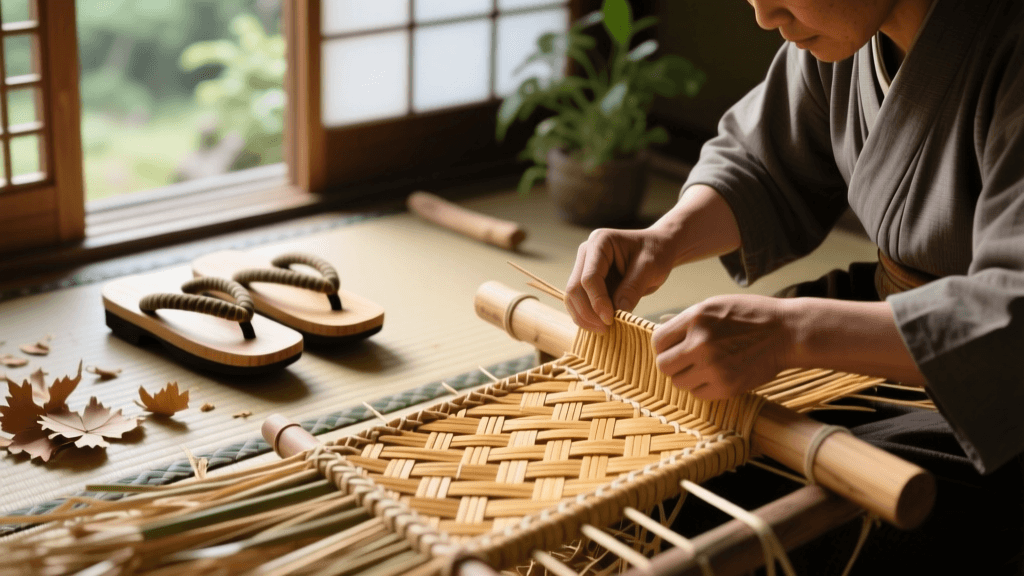
The hanao is the V-shaped thong that secures the foot to the base. Far from being a simple strap, the hanao is a marvel of textile engineering and aesthetic expression. In traditional crafting, the hanao is not merely glued or nailed to the base; it is threaded through three holes in the dai and secured using a complex, hidden knotting technique that allows for tension adjustment and eventual replacement.
Materials and 2026 Textile Trends
Historically, hanao were made from cotton or velvet. Today, the 2026 artisan market is dominated by upcycled and sustainably dyed textiles. Master weavers are repurposing damaged or unsalvageable silk kimono, cutting them into bias strips, and wrapping them around a durable, ergonomic core of braided hemp or recycled PET fiber. This provides the soft, luxurious touch of silk against the skin while ensuring the structural longevity required for daily walking.
Natural dyeing techniques, such as aizome (indigo) and kusakizome (plant-based dyes using madder root, persimmon tannin, and cherry blossoms), are highly sought after. These eco-friendly dyes not only reduce the chemical footprint of the footwear but also offer a living color that subtly shifts and deepens with exposure to sunlight and wear, a concept deeply tied to the Japanese aesthetic of wabi-sabi.
2026 Artisan Workshop Comparison
For enthusiasts looking to invest in bespoke footwear or learn the craft firsthand, several renowned workshops across Japan offer immersive experiences. Below is a comparison of top-tier artisan workshops operating in 2026, detailing their specialties and current pricing structures.
| Workshop / Location | Specialty Focus | Experience Duration | 2026 Price (Approx.) | Skill Level |
|---|---|---|---|---|
| Tsujiya Honten (Asakusa, Tokyo) | Bespoke Hanao fitting and velvet wrapping | 2 Hours | ¥18,000 / $120 USD | Beginner |
| Karankoron Geta Studio (Kyoto) | Paulownia wood carving and shaping | Full Day (6 Hours) | ¥45,000 / $300 USD | Intermediate |
| Shizuoka Kiri Crafters Co-op | Sustainable forestry tour and basic assembly | Half Day (4 Hours) | ¥25,000 / $165 USD | Beginner |
| Master Artisan Apprenticeship (Nara) | Comprehensive Zori weaving and lacquering | 3 Days | ¥150,000 / $1,000 USD | Advanced |
These workshops not only provide a hands-on understanding of the craft but also directly support the local artisan economy. As highlighted by the Traditional Craft Aoyama Square, experiential tourism focused on heritage crafts has become a vital revenue stream, allowing master craftsmen to pass down their knowledge to a new generation of international and domestic students.
Modern Styling and Everyday Wear
The notion that geta and zori are strictly reserved for yukata or kimono is a relic of the past. In 2026, fashion-forward individuals in Tokyo, Kyoto, and globally are integrating these pieces into contemporary wardrobes. Low-profile geta with rubberized koma caps (to prevent slipping on modern concrete and tile) are frequently paired with wide-leg linen trousers, tailored denim, and minimalist midi skirts. The elevated silhouette of the geta naturally improves posture, engaging the calf muscles and promoting a straighter spine, which has made them a popular choice among wellness-conscious consumers.
Zori, particularly those with modernized, slightly wedge-shaped bases made from compressed cork or high-density EVA foam wrapped in traditional igusa, offer a breathable, supportive alternative to standard summer sandals. When styling zori for everyday wear, the key is to let the footwear act as the statement piece, balancing its intricate textile patterns with solid, neutral-toned clothing.
Maintenance and Care for Longevity
Proper care is essential to ensure your artisan-crafted geta and zori last for decades. Because they are constructed from natural materials, they require a mindful maintenance routine. Follow these expert guidelines to preserve your footwear:
- Moisture Management: Paulownia wood is naturally moisture-resistant, but prolonged exposure to heavy rain can cause warping. If your geta get wet, wipe them down with a dry, soft cloth and let them air-dry in a well-ventilated, shaded area. Never place them near direct heat sources like radiators, as this will crack the wood.
- Hanao Cleaning: For silk or velvet hanao, use a specialized, pH-neutral textile cleaner. Gently dab stains rather than rubbing, which can fray the delicate fibers. For cotton hanao, a soft-bristled brush can be used to remove dust and dirt from the weave.
- Wood Nourishment: Once a year, treat bare paulownia wood with a light application of natural camellia oil (tsubaki oil) or beeswax. This nourishes the wood grain, prevents drying, and enhances the natural luster of the material.
- Koma Replacement: The wooden teeth of geta will naturally wear down over time, especially if worn on asphalt. Many traditional shops offer a koma replacement service. Alternatively, you can apply adhesive rubber sole protectors to the bottom of the teeth to extend their lifespan and provide better traction on slick surfaces.
- Storage: Store your footwear in a cool, dry place away from direct sunlight, which can fade the natural dyes of the hanao and bleach the wood. Use a breathable cotton dust bag rather than plastic, which can trap humidity and encourage mold growth on natural fibers.
Preserving a Walking Heritage
The craft of geta and zori making is a testament to Japan's ability to harmonize deep-rooted tradition with modern sensibilities. As we navigate 2026, the commitment to sustainable paulownia harvesting, the innovative upcycling of vintage textiles for hanao, and the ergonomic adaptations for contemporary city living ensure that this ancient footwear remains relevant and vibrant. By investing in artisan-crafted Japanese footwear, you are not merely purchasing a pair of sandals; you are supporting a living heritage, preserving the livelihoods of master craftsmen, and walking forward with a piece of history beneath your feet. For those looking to explore more of Japan's rich material culture, the Japan National Tourism Organization offers extensive resources on regional craft hubs and artisan trails to further deepen your understanding of these magnificent traditions.