Vintage Silk Kimono Restoration & Storage Guide 2026
The Evolution of Silk Conservation in 2026
Preserving vintage Asian garments, particularly Japanese silk kimonos and intricately woven Nishijin obis, requires a delicate balance between traditional craftsmanship and modern conservation science. As we navigate 2026, the field of textile preservation has seen a significant shift away from harsh, invasive chemical treatments toward eco-friendly, non-toxic, and highly localized restoration methods. Silk is a protein fiber composed of fibroin and sericin, making it uniquely vulnerable to environmental fluctuations, light degradation, and improper handling. Whether you are a collector of Taisho-era Yuzen-dyed silks or a family archivist protecting heirloom Meiji-period garments, understanding the latest 2026 conservation protocols is essential for ensuring these cultural treasures survive for future generations.
According to guidelines from The Metropolitan Museum of Art's Textile Conservation Department, the primary goal of modern textile conservation is stabilization and preventive care rather than aggressive restoration. This philosophy is especially critical when dealing with the metallic threads and delicate natural dyes found in traditional Japanese formal wear.
Assessing Vintage Kimono Damage: Tools and Techniques
Before attempting any cleaning or storage, a thorough condition assessment is mandatory. In 2026, conservators utilize advanced but accessible diagnostic tools to evaluate silk degradation without causing physical stress to the fibers.
- UV Flashlight Inspection: Using a 365nm UV flashlight in a darkened room helps identify hidden water stains, mold spores, and previous amateur repair attempts that fluoresce under ultraviolet light.
- Digital Macro Loupes: Handheld digital microscopes (magnifying 50x to 200x) allow you to inspect the structural integrity of the silk weave. Look for 'shattering'—a condition where the silk fibers break along fold lines due to historical weighting with metallic salts.
- pH Testing: Using non-invasive pH indicator strips on a slightly dampened cotton swab (tested on an inconspicuous inner seam) can reveal acidic degradation, which accelerates silk rot.
The Art of Arai-Hari: Traditional vs. Modern Spot Cleaning
Historically, the Japanese method of arai-hari involved completely unstitching the kimono into its original flat fabric bolts (tanmono), washing the silk in cold water with specialized soaps, stretching it on wooden frames (shinshi), and then re-sewing it. While this method is still practiced by master artisans in Kyoto, it is incredibly expensive and carries a high risk of dye bleeding if not performed by an expert.
For modern collectors in 2026, localized spot cleaning and surface conservation are the preferred methods for routine maintenance. If your vintage kimono has localized stains, follow these conservation-approved steps:
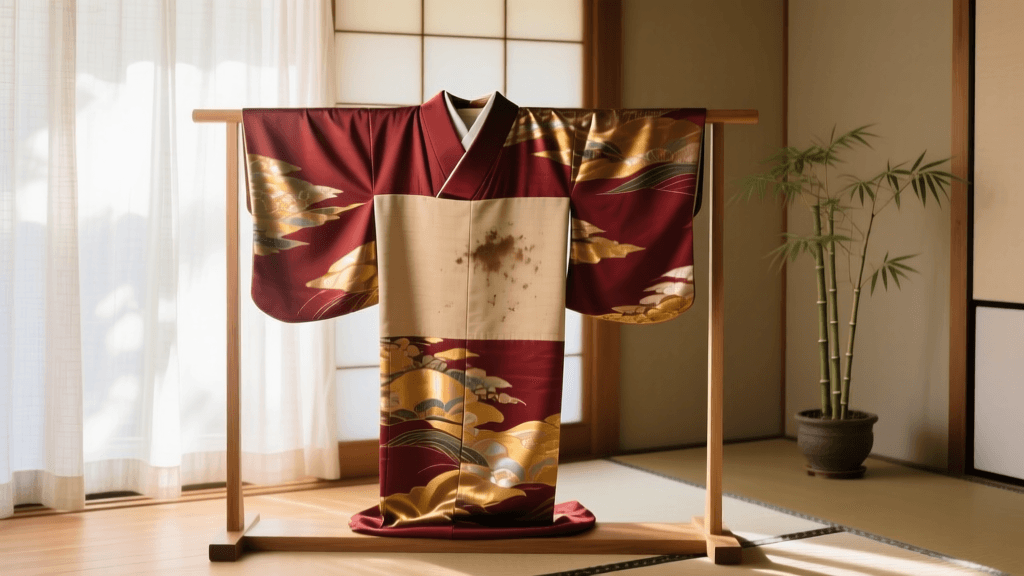
- Surface Dusting: Use a specialized conservation brush with ultra-soft goat hair bristles to gently lift particulate soil from the silk surface. Never use a standard vacuum, even on low suction, as it can pull and distort the fragile weave.
- Safe Solvents: Avoid commercial stain removers. Conservators in 2026 rely on conservation-grade deionized water mixed with a minimal amount of Orvus WA Paste, a pH-neutral, non-ionic detergent widely used in museum settings. Apply the solution using a micro-suction table or a localized blotting technique with unbleached cotton absorbent pads.
- Dye Bleed Mitigation: If you notice dye migrating during spot testing, immediately halt the process. The Victoria and Albert Museum's Conservation Department advises that attempting to reverse dye bleed on multi-colored Yuzen silks without professional intervention often results in permanent disfigurement.
Climate-Controlled Storage: 2026 Smart Monitoring
The environment in which a vintage kimono is stored is the single most critical factor in its longevity. Silk requires a stable microclimate to prevent mold growth (caused by high humidity) and fiber embrittlement (caused by low humidity). In 2026, integrating smart home technology into archival storage has become standard practice for serious collectors.
Ideal storage parameters for vintage silk are:
- Temperature: 65°F to 68°F (18°C to 20°C). Fluctuations of more than 5 degrees within a 24-hour period can cause the fibers to expand and contract, leading to structural fatigue.
- Relative Humidity (RH): 50% to 55%. Levels above 65% invite mold and silverfish; levels below 40% dry out the sericin, causing the silk to shatter.
- Light Exposure: Absolute darkness when stored. If displayed, light levels must not exceed 50 lux, and all light sources must be UV-filtered LEDs.
To maintain these parameters, collectors are now utilizing 2026-calibrated smart hygrometers, such as the latest Govee WiFi Thermometer Hygrometer models, which send real-time alerts to your smartphone if the microclimate inside your storage closet or archival bin deviates from the safe zone. Pairing these sensors with silica gel cassettes (like Prosorb or Art-Sorb) inside sealed archival enclosures ensures passive, stable humidity control.
Archival Storage Materials: Traditional vs. Modern
Choosing the right enclosures is vital. Traditional Japanese storage often utilizes tatoushi (paper wrappers) and kiri-bako (paulownia wood boxes). While beautiful, some modern equivalents offer superior protection against environmental pollutants.
| Storage Material | Pros | Cons | 2026 Recommendation |
|---|---|---|---|
| Traditional Paulownia Box (Kiri-bako) | Naturally regulates humidity; fire-resistant; aesthetically authentic. | Can off-gas acidic compounds if not properly sealed; susceptible to wood-boring insects. | Excellent for display and short-term storage, but line the interior with washed, unbleached cotton. |
| Acid-Free Unbuffered Tissue Paper | Prevents dye transfer; cushions folds; chemically inert to protein fibers. | Requires frequent replacement as it absorbs ambient acids over time. | Highly recommended. Always use UNBUFFERED tissue; buffered (alkaline) tissue damages silk. |
| Archival Polyethylene Bins | Creates a sealed microclimate; blocks dust, pests, and light completely. | Lacks the traditional aesthetic; requires active humidity monitoring inside. | The gold standard for long-term 2026 archiving. Use with silica cassettes and smart sensors. |
| Melinex 516 Polyester Film | Crystal clear; chemically stable; protects against handling oils. | Can trap moisture if sealed too tightly in fluctuating environments. | Use as an interleaving layer for heavily embroidered obis to prevent thread snagging. |
The Tato Folding Method and Pest Prevention
Improper folding causes permanent crease lines that eventually lead to silk shattering. The traditional tato folding method is designed to distribute stress across the garment and minimize sharp creases. When folding, always pad the major fold lines with rolls of acid-free unbuffered tissue paper to create soft, rounded curves rather than hard edges.
Pest management in 2026 has completely abandoned the use of naphthalene mothballs and paradichlorobenzene (PDB). These volatile chemicals not only pose severe health risks to humans but also react with the metallic threads in obis, causing them to tarnish and blacken irreversibly. Furthermore, the Canadian Conservation Institute strongly advises against the use of any direct-contact chemical pesticides on heritage textiles.
Instead, modern preservation relies on Integrated Pest Management (IPM):
- Anoxic Environments: For active infestations, sealing the garment in an oxygen-deprived environment using specialized barrier films for 21 days safely eradicates all life stages of textile pests without chemicals.
- Pheromone Traps: Place non-toxic webbing clothes moth pheromone traps in the periphery of your storage room to monitor and intercept male moths before they can breed.
- Freezing (With Caution): While freezing is a common museum treatment for pest eradication, it is generally discouraged for vintage kimonos with metallic threads or multiple layers of glue-based resist dyes, as the rapid thermal contraction can crack the gold leaf and shatter the silk.
Conclusion: Stewardship for the Future
Caring for vintage silk kimonos and obis is an act of cultural stewardship. By combining the philosophical respect for the garment inherent in traditional Japanese practices with the rigorous, data-driven environmental controls available in 2026, collectors can halt the degradation of these magnificent textiles. Remember that in textile conservation, less is often more; when in doubt about a stain or repair, consult a certified textile conservator rather than risking irreversible damage with DIY methods. Through vigilant monitoring, proper archival materials, and gentle handling, your collection will remain a vibrant, tangible link to Asia's rich sartorial heritage for decades to come.