Decoding Kimono Motifs: Colors, Seasons, and Symbolism
The Language of the Loom: Introduction to Kimono Symbolism
The Japanese kimono is far more than a mere garment; it is a wearable canvas that communicates the wearer’s age, marital status, social standing, and deep connection to the natural world. According to extensive research by the Victoria and Albert Museum, the strict rules governing kimono motifs and colors evolved during the Edo period (1603–1867), transforming textile design into a complex visual language. Understanding this language is essential for anyone looking to wear, collect, or appreciate traditional Japanese clothing authentically. Every stitch, dye, and woven thread carries centuries of cultural weight, turning the act of dressing into a profound expression of harmony with nature and society.
Seasonal Motifs: Wearing the Calendar
In Japanese culture, anticipating the season is considered far more refined than merely reacting to it. This aesthetic principle, deeply tied to the concept of shiki (the four seasons), dictates that seasonal motifs should be worn slightly before the season actually begins. Wearing cherry blossoms while they are already blooming is considered late; instead, one wears them as the buds are forming to express eager anticipation. The Metropolitan Museum of Art notes that this forward-looking approach to dress highlights the Japanese appreciation for the ephemeral nature of beauty, a concept known as mono no aware.
Below is a practical guide to seasonal motifs, detailing when to wear specific patterns to ensure your kimono aligns with traditional sartorial calendars.
| Season | Primary Motifs | Wearing Window | Symbolic Meaning |
|---|---|---|---|
| Spring | Sakura (Cherry Blossom), Ume (Plum), Fuji (Wisteria) | February – April | Renewal, fleeting beauty, elegance |
| Summer | Asagao (Morning Glory), Shobu (Iris), Seigaiha (Waves) | May – July | Coolness, resilience, purity of spirit |
| Autumn | Momiji (Maple), Kiku (Chrysanthemum), Susuki (Pampas) | August – October | Harvest, longevity, noble melancholy |
| Winter | Matsu (Pine), Yukiwa (Snow Rings), Tsubaki (Camellia) | November – January | Endurance, purity, steadfastness |
Color Symbolism and the Five Elements (Goshiki)
Color in traditional Japanese dress is not chosen merely for aesthetic appeal; it is deeply rooted in the Goshiki (Five Colors) theory, which derives from the Chinese Yin-Yang and Five Elements philosophy. Each color corresponds to a direction, an element, and specific spiritual properties. When selecting a kimono or an obi (sash), understanding these color associations allows you to project specific energies and intentions.
- Red (Beni/Aka): Associated with fire and the south. Red is a highly protective color believed to ward off evil spirits. It is predominantly worn by young, unmarried women (as seen in the vibrant furisode) and symbolizes youth, passion, and vitality. The red inner collar (han-eri) is specifically used to protect the wearer's neck from negative energy.
- White (Shiro): Representing metal and the west. White is the color of purity, sacredness, and new beginnings. It is the traditional color for bridal kimono (shiromuku) and is also used in mourning, symbolizing the pure transition to the afterlife. A white kimono devoid of patterns is considered highly formal and sacred.
- Black (Kuro): Tied to water and the north. Black represents formality, authority, and solemnity. The kurotomesode (black kimono with motifs only below the waist) is the most formal garment for married women, typically worn by the mothers of the bride and groom at weddings. The black dye absorbs light, symbolizing the depth of experience and maturity.
- Blue/Indigo (Ai/Ao): Associated with wood and the east. Historically, indigo was the color of the common people due to sumptuary laws, but it is highly prized for its practical and spiritual benefits. Indigo dye naturally repels insects and odors, making it ideal for summer yukata and undergarments. It symbolizes calmness, reliability, and groundedness.
- Yellow/Purple (Ki/Murasaki): Yellow represents earth and the center, symbolizing royalty and the sun. However, purple (murasaki) historically held the highest rank in the Japanese court system. A deep purple kimono signifies nobility, high social status, and profound spiritual wisdom, often reserved for elder stateswomen or high-ranking clergy.
Auspicious Motifs for Life Events
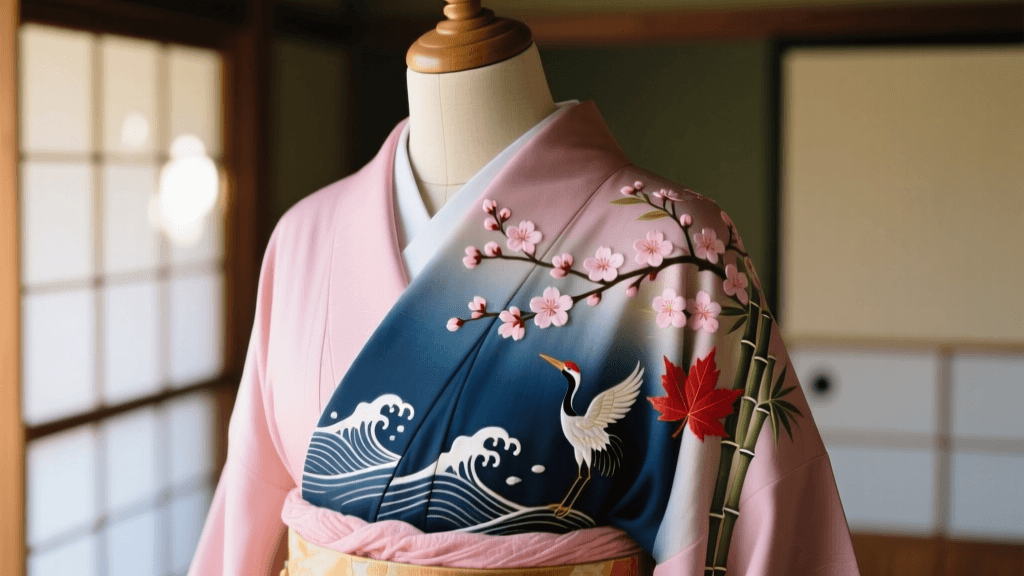
Beyond the seasons, specific motifs are deployed to invite good fortune during major life milestones. The most prominent of these is Shochikubai, the combination of Pine (Matsu), Bamboo (Take), and Plum (Ume). Together, they represent longevity (pine stays green in winter), resilience (bamboo bends but does not break), and perseverance (plum blossoms through the snow). This trio is a staple on wedding attire and formal tomesode.
'The crane lives for a thousand years, the turtle for ten thousand.' This ancient proverb dictates the use of Tsuru-Kame (crane and turtle) motifs on bridal garments, ensuring a marriage blessed with unparalleled longevity and enduring happiness.
Other auspicious motifs include the seigaiha (blue ocean waves), which represents surging good luck and peaceful seas, and the kikkou (tortoiseshell hexagon pattern), often used as a geometric background on obi to subtly invoke long life without overpowering the primary floral motifs.
Practical Guide: Sourcing, Sizing, and Styling Motif-Rich Kimono
Whether you are attending a tea ceremony, a wedding, or simply building a collection, acquiring a kimono with the correct motifs requires practical knowledge of the market, measurements, and timing. According to cultural guides like Japan Guide, navigating the modern kimono landscape means balancing historical authenticity with contemporary accessibility.
Sourcing and Costs
- Vintage (Recycle Shops): For beginners or those on a budget, vintage kimono shops (recycle shops) in areas like Kyoto's Shijo-dori or Tokyo's Shinjuku offer incredible value. You can find authentic, mid-20th-century silk kimono with exquisite Yuzen-dyed seasonal motifs for $50 to $300 USD. However, you are limited to the motifs and conditions available on the rack.
- Custom Bespoke: Commissioning a new kimono from a Kyoto artisan allows for total control over motif symbolism. A custom, hand-painted silk furisode or homongi typically costs between $3,000 and $10,000+ USD, depending on the complexity of the gold leaf (kinpaku) and embroidery work.
Measurements and Fit
Unlike Western clothing, kimono are not sized S, M, or L. They are tailored based on two critical measurements:
- Mitake (Back Length): Measured from the base of the neck to the ankle. Standard vintage kimono are tailored for women roughly 150cm to 158cm (4'11" to 5'2") tall. If you are taller, you must seek modern bespoke sizing or specialized tall-vintage pieces.
- Yuki (Sleeve Span): Measured from the center of the back of the neck, over the shoulder, down to the wrist. A standard Yuki is around 64cm to 66cm. Ensuring the Yuki is correct is vital; if the sleeves are too short, the auspicious motifs on the cuffs will be hidden when you fold your hands in front of you.
Timing and Commissioning
If you are commissioning a custom garment with specific auspicious motifs for a major event, timing is critical. Hand-painted Yuzen dyeing is a multi-step process involving starch-resist application, painting, steaming, and washing. Expect a lead time of 4 to 8 months. For example, if you need a custom furisode featuring winter pine and crane motifs for January's Coming of Age Day (Seijin no Hi), you must begin consultations with your artisan by May or June of the previous year.
Conclusion
The traditional Japanese kimono is a masterclass in visual storytelling. By understanding the intricate symbolism of colors, the strict adherence to seasonal calendars, and the profound meanings behind auspicious motifs, you elevate the act of wearing a kimono from mere dress-up to a respectful participation in a living cultural heritage. Whether you are draping a vintage indigo yukata adorned with summer morning glories or commissioning a bespoke black tomesode featuring gold-leaf cranes, you are speaking the ancient, elegant language of the loom.