2026 Guide to Traditional Chinese Footwear: Cloud Shoes & Boots
The Resurgence of Heritage Footwear in 2026
The Xin Zhongshi (New Chinese Style) movement has completely reshaped the global fashion landscape by 2026. While the Mamianqun (horse-face skirt) and Song-style jackets often dominate the sartorial conversation, true authenticity in traditional Chinese dress lies from the ground up. Traditional Chinese footwear, particularly the iconic Cloud Shoes (Yuntou Xie) and structured heritage boots (Xue), has experienced a massive renaissance this year. No longer relegated to museum displays or theatrical costumes, these garments have been re-engineered for modern urban life while retaining their profound cultural symbolism. According to Britannica's comprehensive guide to Chinese dress, footwear in ancient China was not merely functional; it was a strict indicator of social status, ethnic identity, and cosmological belief. Today, the 2026 market sees a harmonious blend of ancient craftsmanship and contemporary ergonomic science, making heritage footwear more accessible and comfortable than ever before.
The Anatomy of Traditional Chinese Footwear
Cloud Shoes (Yuntou Xie): Elegance in Every Step
Cloud shoes, characterized by their distinctive upward-curving toe caps, are among the most recognizable silhouettes in Chinese fashion history. The upturned toe is designed to resemble the Ruyi scepter or auspicious clouds, symbolizing good fortune and a smooth path forward. Historically, as noted by the Metropolitan Museum of Art's Heilbrunn Timeline, these shoes were predominantly worn during the Ming and Qing dynasties by women with natural (unbound) feet, as well as by scholars and officials. The upper part of the shoe is traditionally crafted from silk brocade or satin, heavily embroidered with motifs like peonies for wealth, bats for luck, or cranes for longevity. In 2026, the cloud shoe has been adapted into a versatile slip-on flat and a low-heeled mule, featuring the signature curved toe but constructed with flexible, lightweight materials that allow for all-day wear in modern city environments.
Traditional Boots (Xue): Structure and Status
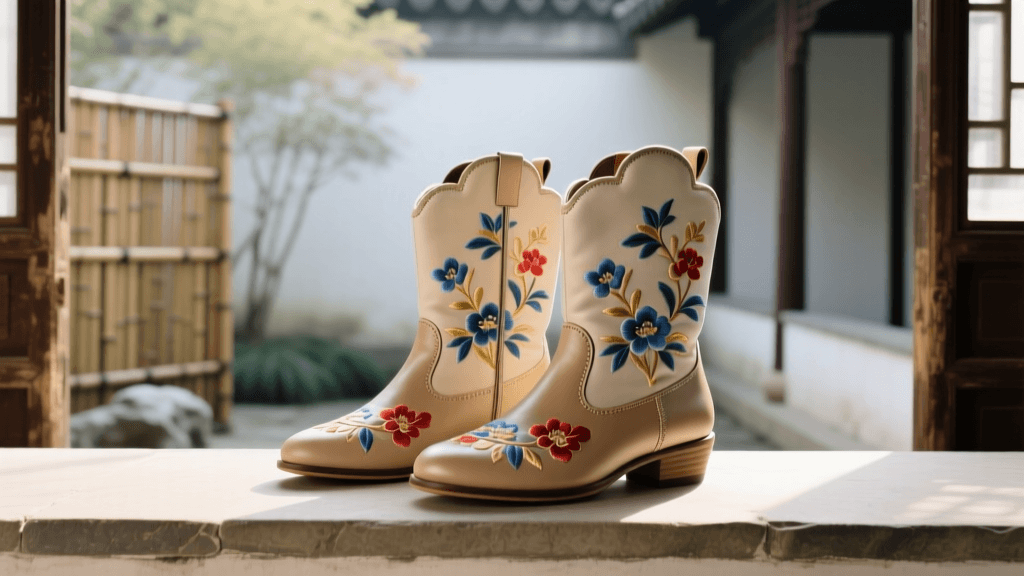
Traditional Chinese boots, or Xue, offer a stark contrast to the delicate nature of cloud shoes. Originating from nomadic equestrian cultures and later integrated into Han and Manchu court dress, these boots are defined by their thick, multi-layered soles and high shafts. The soles were historically made by stitching together dozens of layers of cotton cloth and rice paste, creating a shock-absorbing base that elevated the wearer above the mud and dust of unpaved roads. In the modern 2026 Xin Zhongshi wardrobe, embroidered boots are the ultimate statement piece for autumn and winter. They feature intricate Shu or Su embroidery along the shaft and are frequently paired with tailored wool coats or heavy linen trousers, bridging the gap between historical grandeur and contemporary streetwear.
2026 Innovations: Where Heritage Meets Modern Technology
The most significant shift in the 2026 traditional footwear market is the integration of sustainable technology and ergonomic design. Heritage brands and modern indie labels alike have moved away from the rigid, unforgiving constructions of the past. Today's premium cloud shoes feature memory foam insoles encased in moisture-wicking bamboo charcoal linings, ensuring that the foot remains supported during long commutes. Furthermore, the 2026 sustainable textile mandates in China have pushed manufacturers to utilize 3D-knitted recycled silk blends for the uppers. These innovative fabrics replicate the rich, lustrous texture of traditional Shu brocade but offer superior weather resistance and breathability. For traditional boots, vegan leather alternatives derived from mycelium (mushroom root structures) are being used for the shafts, providing a cruelty-free, water-resistant option that takes traditional embroidery beautifully. Artisanal, hand-embroidered pairs using genuine silk and natural dyes currently retail between $250 and $450, while high-quality, machine-embroidered 3D-knit versions are available in the $120 to $180 range.
Comprehensive Sizing and Fit Guide
Sizing traditional Chinese footwear can be challenging for international buyers, as historical lasts (the foot molds used to shape shoes) differ significantly from Western standards. Cloud shoes typically feature a wider toe box to accommodate the embroidered upper, while traditional boots require careful consideration of calf circumference and winter sock thickness. Below is the standard 2026 conversion chart utilized by major heritage footwear exporters.
| CN Size | EU Size | US Men | US Women | Foot Length (cm) | Fit Notes for 2026 Models |
|---|---|---|---|---|---|
| 36 | 36 | 4 | 5.5 | 23.0 | True to size for cloud shoes; snug fit. |
| 38 | 38 | 5.5 | 7.5 | 24.0 | Size up half a size for winter boots. |
| 40 | 40 | 7.5 | 9 | 25.0 | Standard width for embroidered flats. |
| 42 | 42 | 9 | 10.5 | 26.0 | Allow 0.5cm extra for thick boot socks. |
| 44 | 44 | 10.5 | 12 | 27.0 | Check brand-specific lasts; wider toe box. |
Pro Tip: When purchasing traditional boots online in 2026, always measure your calf circumference at its widest point. Many modern heritage brands now offer adjustable side-gussets or lace-up inner linings to accommodate varying calf sizes without compromising the sleek exterior silhouette.
Styling Cloud Shoes and Boots for the Modern Wardrobe
Integrating traditional footwear into a contemporary wardrobe requires a balance of proportions and textures. The Xin Zhongshi aesthetic thrives on juxtaposition—pairing historical garments with modern tailoring.
- Cloud Shoes with Songku (Wide-Leg Trousers): The sweeping hem of traditional Song-style wide-leg linen trousers pairs flawlessly with the low profile of cloud shoes. The upward-curving toe peeks out from beneath the fabric, drawing the eye and adding a subtle historical accent to an otherwise minimalist outfit.
- Cloud Shoes with the Mamianqun: For a fully traditional look, pair heavily embroidered cloud shoes with a Mamianqun (horse-face skirt). In 2026, tone-on-tone styling is highly popular; match the dominant color of the shoe's embroidery to the secondary pleat color of the skirt for a cohesive, high-fashion appearance.
- Embroidered Boots with Tailored Wool: Traditional black or navy satin boots look incredibly striking when paired with modern, structured wool overcoats and straight-leg denim. The rigid structure of the boot grounds the outfit, providing a sophisticated, gender-neutral edge that is highly favored in current urban street style.
- Mixing Textures: If your footwear features heavy, raised Shu embroidery, keep the rest of your lower half in matte fabrics like raw silk, linen, or matte cotton to prevent the outfit from looking overly costume-like.
Expert Care and Maintenance for Brocade and Silk
Despite the advancements in weather-resistant textiles, authentic silk brocade and natural-dye embroidery require meticulous care to preserve their structural integrity and vibrant colors. As highlighted by the textile conservation experts at the Victoria and Albert Museum's Asian textile collections, protein-based fibers like silk are highly susceptible to environmental damage, light fading, and pest infestation.
Step-by-Step Cleaning Protocol
- Dry Brushing: After each wear, use a soft-bristled horsehair brush to gently sweep away dust and dirt from the embroidered uppers. Never use wet wipes or harsh chemical cleaners on natural silk.
- Spot Cleaning: For minor scuffs on the satin or brocade, use a microfiber cloth slightly dampened with distilled water. Dab—do not rub—the affected area. For the thick cotton soles of traditional boots, a mild saddle soap applied with a soft brush will lift stains without degrading the stitched layers.
- Drying: Always air-dry your footwear at room temperature, away from direct sunlight or radiators. UV exposure will rapidly degrade natural dyes like indigo and madder, causing irreversible fading.
Storage and Preservation
Proper storage is critical for maintaining the shape of the upturned toe in cloud shoes and the shaft of heritage boots. Insert acid-free tissue paper or specialized cedar shoe trees into the shoes when not in use. Cedar is highly recommended as it naturally absorbs moisture and repels silverfish and moths, which are notorious for destroying silk threads. Store your footwear in breathable cotton dust bags inside a climate-controlled closet, aiming for a relative humidity level between 45% and 55%. Avoid plastic bins, which can trap moisture and lead to mildew growth on the intricate embroidery threads.
Conclusion
The 2026 revival of traditional Chinese footwear is a testament to the enduring appeal of the Xin Zhongshi movement. Cloud shoes and embroidered boots are no longer mere historical artifacts; they are dynamic, living components of a modern, culturally rich wardrobe. By understanding their historical anatomy, utilizing accurate sizing guides, and committing to proper textile care, enthusiasts can confidently step into the future while honoring the exquisite craftsmanship of the past. Whether you are navigating a modern metropolis or attending a formal cultural event, heritage footwear offers an unmatched blend of symbolic elegance and contemporary comfort.