2026 Kimono Storage Guide: Archival Silk Preservation Tips
Introduction to Silk Preservation in 2026
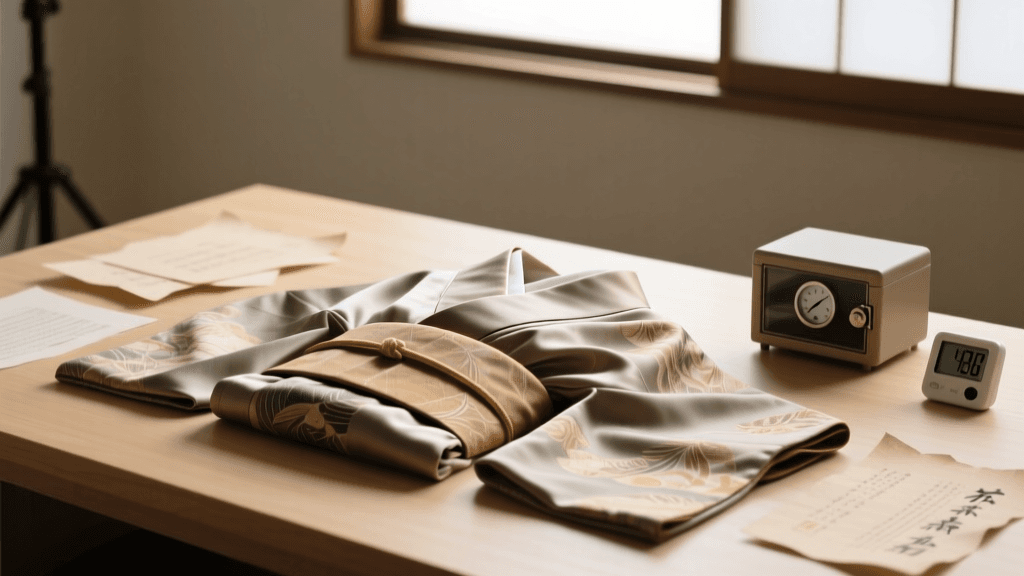
Preserving vintage Japanese garments is a meticulous discipline that bridges historical reverence with modern conservation science. As of 2026, the global market for antique and vintage kimonos—particularly those from the Meiji, Taisho, and early Showa periods—has seen a massive resurgence among international collectors and museum institutions. However, the very nature of these garments makes them inherently vulnerable. Silk is a delicate protein fiber that reacts aggressively to environmental fluctuations, light exposure, and improper handling. For serious collectors and heritage custodians, implementing a rigorous kimono storage preservation and collection management protocol is no longer optional; it is essential for ensuring these textile masterpieces survive for future generations.
The Chemistry of Vintage Silk and Environmental Threats
To understand proper storage, one must first understand the material. Silk is composed primarily of fibroin, a protein that is highly sensitive to alkaline environments, excessive moisture, and ultraviolet radiation. When exposed to high humidity (above 60% relative humidity), silk becomes a breeding ground for mold spores, which can cause irreversible foxing and staining. Conversely, environments that are too dry (below 40% RH) cause the fibroin to become brittle, leading to micro-fractures along the fold lines and embroidered crests (kamon).
Furthermore, many vintage kimonos feature metallic threads (surihaku) and natural dyes that are prone to oxidation and fading. In 2026, conservation standards dictate that all storage materials in direct contact with silk must be chemically inert, pH-neutral, and completely free of lignin and optical brighteners.
Traditional vs. Modern Archival Materials
Tatoushi (たとう紙): The Gold Standard
In Japanese tradition, kimonos are stored wrapped in a specialized paper called tatoushi. Historically, this was made from high-quality, hand-mulled mulberry bark (kozo). Today, authentic archival tatoushi remains the premier choice for wrapping silk. The paper is breathable, allowing the garment to 'exhale' ambient moisture while protecting it from dust and sudden light exposure. When sourcing tatoushi in 2026, collectors must verify that the paper is unbuffered. Unlike cotton or linen, which benefit from alkaline-buffered archival tissues (pH 8.5), protein fibers like silk and wool require a strictly neutral pH (7.0) to prevent alkaline hydrolysis, which weakens the silk fibers over time.
Paulownia Wood Boxes (Kiri-bako) vs. Archival Plastics
The traditional vessel for kimono storage is the kiri-bako, a box crafted from Paulownia wood. Paulownia is uniquely suited for textile preservation because it is highly hygroscopic—it naturally absorbs and releases moisture to buffer the internal microclimate against external humidity spikes. It is also naturally fire-resistant and contains compounds that deter insects. However, authentic, kiln-dried Paulownia boxes are expensive and heavy. As an alternative, modern collectors increasingly utilize archival-grade Polypropylene (PP) plastic bins, which are chemically inert and waterproof, provided they are paired with silica gel cassettes to manage internal humidity.
Storage Material Comparison Chart (2026 Market Data)
| Material | Pros | Cons | Ideal Use Case | 2026 Avg. Cost (USD) |
|---|---|---|---|---|
| Paulownia Wood (Kiri-bako) | Natural humidity buffering, pest deterrence, traditional aesthetic | Heavy, expensive, requires periodic airing | High-value antique silk, heirloom pieces | $350 - $800 |
| Unbuffered Archival Cardboard | pH neutral, lightweight, affordable | No moisture buffering, susceptible to water damage | Study collections, short-term archival | $45 - $90 |
| Polypropylene (PP) Plastic | Waterproof, chemically inert, stackable | Traps off-gassing if unventilated, requires desiccants | Humid climates, basement storage, large archives | $60 - $130 |
| Cedar Wood | Pleasant scent, widely available | Acidic oils stain silk, volatile compounds damage fibers | NEVER USE FOR SILK | N/A |
Climate Control: Smart Monitoring for Textile Collections
Maintaining a stable microclimate is the cornerstone of textile conservation. According to the Northeast Document Conservation Center (NEDCC), the ideal storage environment for historic textiles is a temperature of 65-70°F (18-21°C) with a relative humidity (RH) strictly maintained between 45% and 55%. Fluctuations in these metrics are often more damaging than a stable, slightly sub-optimal baseline, as expansion and contraction cause mechanical stress on the fibers.
In 2026, collection managers rely on Bluetooth Low Energy (BLE 5.4) smart data loggers placed directly inside kiri-bako and archival drawers. These sensors transmit real-time temperature and RH data to centralized dashboards, alerting curators via smartphone if the microclimate breaches safe thresholds. For collectors in highly humid regions, integrating localized desiccant cassettes (such as silica gel conditioned to 50% RH) inside the storage boxes is a critical failsafe.
The Art of Folding: Preventing Crease Degradation
Improper folding is the leading cause of structural failure in vintage kimonos. Repeated pressure on the same fold lines causes the silk to split, particularly in garments weighted with metallic salts (a common practice in the early 20th century). The traditional Japanese folding method, hon-datami, is designed to distribute stress and align the garment's seams to prevent sharp, unnatural creases.
When executing the hon-datami fold, always use clean, lint-free cotton gloves to protect the silk from the natural oils and acids on your skin. Once folded, the kimono is wrapped in unbuffered tatoushi paper. To further protect vulnerable areas—such as heavily embroidered obi sashes or raised kamon crests—conservators recommend inserting small, unbuffered tissue 'sausages' (rolls of tissue paper) into the folds. This creates a gentle curve rather than a hard, sharp crease, significantly reducing mechanical stress on the fibroin structure.
Pest Management: Non-Toxic Strategies
Textile pests, notably the webbing clothes moth (Tinea pellionella) and the carpet beetle (Anthrenus verbasci), are voracious consumers of protein fibers like silk and wool. The Victoria and Albert Museum (V&A) emphasizes that prevention and environmental control are vastly superior to chemical interventions, which can leave harmful residues on delicate dyes.
Never use traditional mothballs (naphthalene or paradichlorobenzene) in a kimono collection. These chemicals not only emit toxic fumes but can also react with metallic threads, causing them to tarnish and turn black. Instead, rely on strict quarantine protocols for any newly acquired garments. New arrivals should be isolated in sealed polyethylene bags and subjected to anoxic (oxygen-deprived) treatment or deep freezing (at -20°C for 72 hours) to eradicate any microscopic eggs before they are introduced to the main archive. For ongoing deterrence, maintain rigorous housekeeping, ensure excellent air circulation in the storage room, and utilize pheromone traps to monitor for adult male moths, providing an early warning system before an infestation can take hold.
Collection Management: Digitizing Your Kimono Archive
Physical preservation must be paired with robust digital collection management. As collections grow, tracking the provenance, condition, and specific material composition of each garment becomes impossible through memory alone. In 2026, professional collectors and small institutions utilize specialized cloud-based collection management systems (CMS) tailored for fashion and textiles.
A comprehensive digital record for a kimono should include:
- High-Resolution Imagery: Full garment shots, macro photography of weave structures, and UV-light photography to detect hidden stains or prior restorations.
- Provenance & Dating: Era (e.g., Taisho 1912-1926), previous owners, and acquisition details.
- Material Analysis: Base fabric (e.g., rinzu figured satin, tsumugi pongee), dye types (natural indigo vs. synthetic aniline), and lining materials.
- Condition Mapping: A standardized grading system noting areas of shattering, foxing, seam stress, or discoloration, updated annually.
- Storage Location: Exact aisle, shelf, and box number, cross-referenced with the BLE climate sensor ID assigned to that specific container.
By digitizing these records, collectors minimize the need to physically handle the garments, thereby reducing light exposure and mechanical wear. When a researcher or potential buyer requests information, the digital archive can fulfill the inquiry without the silk ever leaving its climate-controlled sanctuary.
Conclusion
The preservation of vintage kimonos is an ongoing commitment that honors the artisans who wove, dyed, and embroidered these magnificent garments. By combining the time-tested wisdom of Japanese traditions—such as tatoushi wrapping and kiri-bako storage—with 2026's advanced climate monitoring and digital cataloging technologies, collectors can ensure their archives remain pristine. Proper kimono storage preservation is not merely about halting decay; it is about actively safeguarding a tangible piece of Asian cultural heritage for the centuries to come.