Best Performance Hanfu & Kunqu Stage Costumes for 2026
The Intersection of Hanfu and Traditional Chinese Opera
The revival of traditional Chinese performing arts has reached a spectacular zenith in 2026, bridging the gap between historical preservation and modern theatrical expression. At the heart of this cultural renaissance is the intricate relationship between everyday Hanfu and the highly specialized stage costumes, known as Xifu, used in Peking Opera (Jingju) and Kunqu. While the modern Hanfu movement has popularized historical dress for daily wear, the garments required for traditional performing arts demand an entirely different level of engineering, fabric dynamics, and visual impact. Kunqu, recognized as a Masterpiece of the Oral and Intangible Heritage of Humanity by UNESCO, relies heavily on the fluid, sweeping motions of its costumes to convey emotion and narrative. Similarly, the acrobatic and highly stylized movements of Peking Opera require garments that can withstand extreme physical exertion while maintaining a flawless visual silhouette under intense stage lighting.
Daily Hanfu vs. Stage Xifu: Understanding the Difference
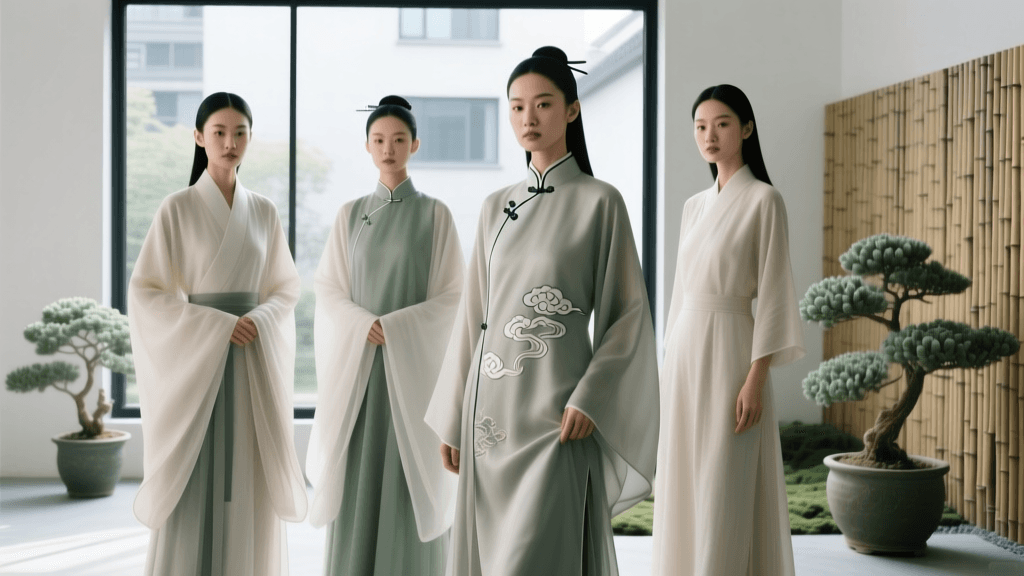
It is a common misconception among newcomers that traditional stage costumes are simply everyday Hanfu adapted for the theater. In reality, stage Xifu is a distinct sartorial category that evolved specifically for the theatrical environment. While daily Hanfu prioritizes historical accuracy, comfort, and drape based on specific dynasty silhouettes (such as the Tang dynasty Ruqun or Ming dynasty Mamianqun), stage costumes prioritize exaggerated proportions, vibrant color blocking, and kinetic movement. In 2026, theatrical costumers utilize advanced structural tailoring, incorporating hidden weights in hems and specialized stiffening in collars to ensure the garment moves exactly as the choreography demands, regardless of the actor's physical exertion.
Core Garments in Kunqu and Peking Opera
To properly select or commission a performance costume, one must understand the foundational garments that define the traditional stage wardrobe:
- The Mang (Python Robe): Worn by emperors, high-ranking officials, and nobility. The Mang is heavily embroidered with python motifs (which feature four claws, distinguishing them from the five-clawed imperial dragon). In 2026, master-crafted Mang robes utilize metallic gold and silver threads interwoven with high-tensile silk to catch modern LED stage lights without adding excessive weight.
- The Pei (Cloak): A versatile, long-sleeved outer garment worn by scholars, officials, and noblewomen in casual or semi-formal stage settings. The Pei is characterized by its center front opening and flowing sleeves, allowing for elegant, sweeping gestures essential to Kunqu's romantic and poetic scenes.
- The Xuezi (Informal Robe): The most common garment for scholars and commoners. It features a crossed collar and side slits. The simplicity of the Xuezi places the burden of performance entirely on the actor's body language and the manipulation of the water sleeves.
The Mastery of Water Sleeves (Shuixiu)
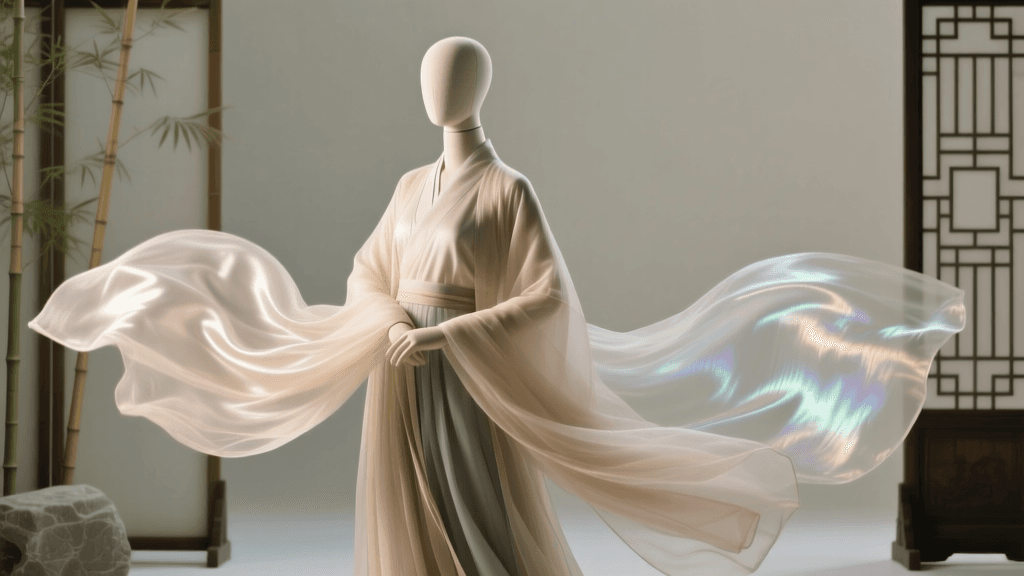
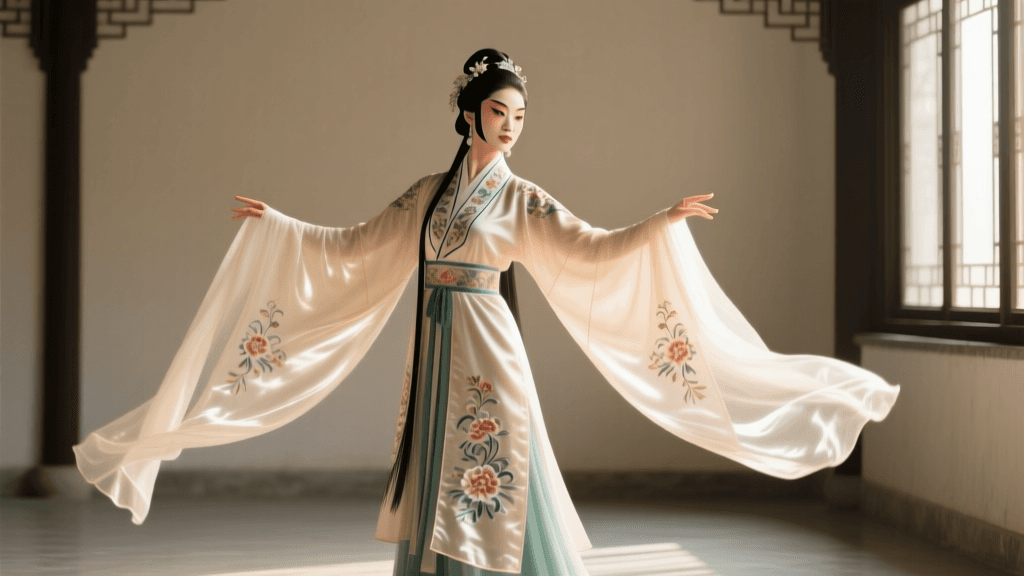
No element of traditional Chinese performance wear is more iconic or technically demanding than the Shuixiu, or water sleeves. These are long, flowing extensions of white silk or synthetic-silk blend attached to the cuffs of the costume. In 2026, the standard length for professional Kunqu water sleeves ranges from 1.5 to 2.5 feet for emerging performers, while seasoned masters often manipulate sleeves extending up to 3.5 feet. The fabric weight is critical: it must be heavy enough to extend fully with a flick of the wrist, yet light enough to ripple and float gracefully when caught in the air. Modern performers favor a specialized crepe-backed satin blend that provides the necessary fluid drape while resisting the wrinkling and tearing associated with pure silk during rigorous rehearsals.
Color Symbolism and Theatrical Lighting in 2026
Color in traditional Chinese opera is not merely decorative; it is a strict semiotic system that immediately communicates a character's personality, age, and social status to the audience. Red signifies loyalty and bravery, black denotes impartiality and a fierce temperament, while white often suggests treachery or cunning. In 2026, the transition to ultra-high-definition LED theatrical lighting has forced costume designers to adapt their dyeing techniques. Historical vegetable dyes, while beautiful in natural sunlight, can appear washed out under modern 5600K stage LEDs. Consequently, top-tier costume houses now use specialized, light-fast reactive dyes that maintain the deep, saturated hues of traditional lacquer reds and indigo blues without bleeding or fading under intense thermal and luminous exposure.
Comparison Chart: Daily Hanfu vs. Stage Performance Xifu
| Feature | Daily Hanfu (Streetwear) | Stage Performance Xifu |
|---|---|---|
| Primary Function | Historical appreciation, daily wear, photography | Theatrical performance, acrobatic movement, character portrayal |
| Silhouette & Fit | Follows historical dynasty patterns, relaxed fit | Exaggerated proportions, tailored for harness/padding underneath |
| Sleeve Design | Standard historical widths (narrow, wide, or pipa) | Extended cuffs with attached white Shuixiu (water sleeves) |
| Embroidery | Subtle, historically accurate motifs, often machine-made | High-contrast, bold motifs (dragons, tigers, clouds), dense stitching |
| Fabric Weight | Light to medium weight for breathability and comfort | Structured, often lined, with weighted hems for kinetic control |
Sourcing Performance Costumes in 2026
Acquiring authentic performance-grade Hanfu and Kunqu costumes requires navigating a specialized market. In 2026, the premier hub for these garments remains Suzhou, Jiangsu Province, where the legacy of Su Xiu (Suzhou embroidery) continues to supply the world's top opera troupes. For international buyers and independent performers, sourcing directly from established theatrical tailor houses in Beijing's Xuanwu district or Suzhou's Gusu district is highly recommended.
Pricing in 2026 reflects the immense labor involved. Entry-level, machine-embroidered performance sets suitable for university troupes and amateur productions range from $250 to $450. Mid-tier sets featuring partial hand-embroidery and high-grade synthetic-silk blends cost between $800 and $1,500. Master-crafted, fully hand-embroidered pure silk garments, utilizing traditional gold-couching techniques and custom-tailored to the performer's exact kinetic measurements, command anywhere from $3,500 to over $12,000.
Textile Care and Conservation
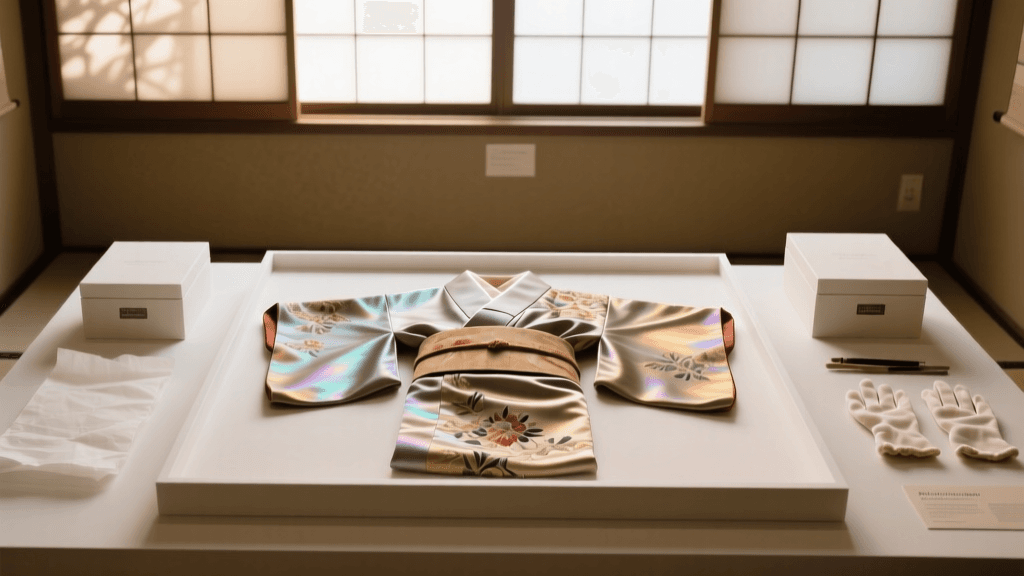
Performance costumes are significant financial and cultural investments that require meticulous care. The heavy embroidery and delicate silk bases make traditional washing impossible. Following the rigorous textile preservation standards outlined by institutions like the Victoria and Albert Museum's conservation department, stage garments must only be spot-cleaned using specialized, pH-neutral textile sponges. After every performance, the garments must be aired out in a climate-controlled environment to prevent sweat and theatrical makeup from degrading the fibers.
Storage is equally critical. Costumes should never be hung on standard wire or wooden hangers, as the weight of the heavy embroidery will distort the shoulder seams and warp the fabric over time. Instead, they must be padded with acid-free tissue paper and stored flat in archival-grade textile boxes. Water sleeves should be detached or carefully folded with tissue buffers to prevent permanent creasing, ensuring that the next time the performer steps onto the stage, the silk flows as flawlessly as water.