Traditional Chinese Footwear 2026: Cloud Shoes & Boots Guide
The 2026 Xin Zhongshi Footwear Renaissance
As the Xin Zhongshi (New Chinese Style) movement matures in 2026, fashion enthusiasts and heritage artisans are looking beyond the ubiquitous horse-face skirts and mandarin-collar jackets. The final frontier of this sartorial revival lies at the foundation of the outfit: traditional Chinese footwear. From the scholarly elegance of Cloud Shoes (Yunxie) to the structured authority of Manchu riding boots (Xuezi), heritage footwear is experiencing a massive resurgence in both Asian streetwear and international design weeks. No longer confined to museum displays or martial arts dojos, these historical silhouettes are being reimagined with modern ergonomics, sustainable textiles, and contemporary styling. This comprehensive guide explores the anatomy, styling, and market landscape of traditional Chinese footwear in 2026.
The Heritage and Anatomy of the Cloud Shoe (Yunxie)
Cloud Shoes, or Yunxie, trace their origins back to the Ming and Qing dynasties, historically favored by scholars, monks, and martial artists for their lightweight comfort and quiet tread. According to historical archives preserved by The Metropolitan Museum of Art, the evolution of Chinese textiles and footwear was deeply tied to social status, regional craftsmanship, and the philosophical emphasis on harmony with nature. The Cloud Shoe is characterized by its upturned toe, which historically resembled the auspicious ruyi cloud motif, and its flat, flexible sole.
The Thousand-Layer Sole (Qiancengdi) Technique
The defining feature of the authentic Cloud Shoe is the qiancengdi, or 'thousand-layer sole.' In 2026, heritage artisans in Beijing and Suzhou continue to craft these soles using a painstakingly labor-intensive process. Dozens of layers of pure cotton cloth are cut into precise foot-shaped templates and bonded using a natural, breathable paste made from wheat flour and water. Once dried into a rigid block, the sole is hand-stitched using thick, waxed hemp twine. A master cobbler will execute over 10,000 individual stitches per sole, pulling the twine tight with a specialized awl to ensure maximum density and shock absorption. This traditional method creates a sole that molds to the wearer's arch over time, offering a bespoke fit that modern synthetic EVA foams cannot replicate.
2026 Material Innovations
While the soles remain fiercely traditional, the uppers have seen significant 2026 innovations. Historically made of raw silk or cotton, modern artisan labels are now utilizing Xiangyunsha (gambiered Canton gauze) for summer collections due to its natural cooling properties and rich, earthy patina. Furthermore, leading heritage brands have introduced invisible, eco-friendly nano-coatings to silk and brocade uppers, providing water and stain resistance without compromising the fabric's natural drape or breathability.
Equestrian Elegance: Traditional Boots (Xuezi)
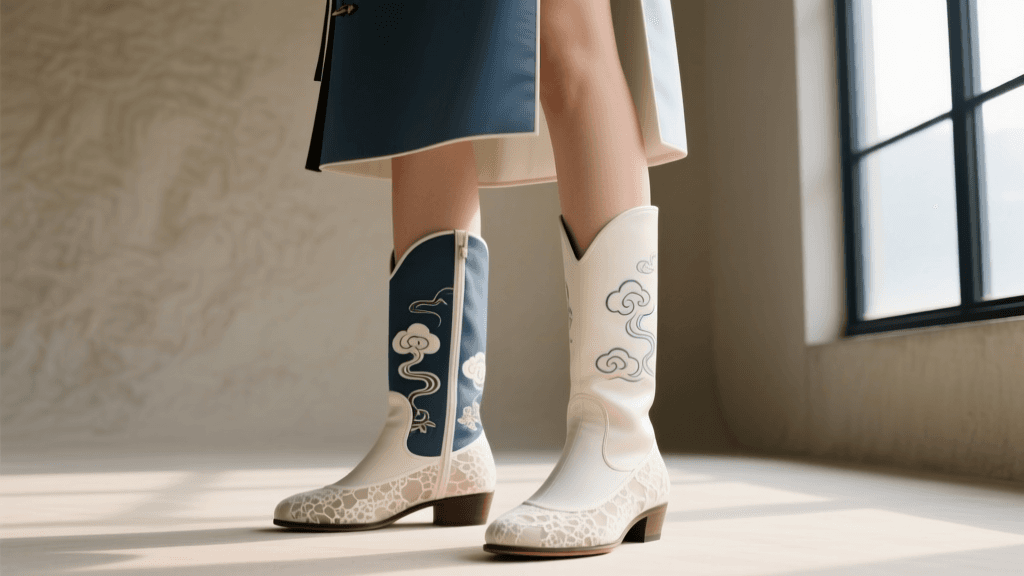
While Cloud Shoes represent the grounded, scholarly side of Chinese heritage, traditional boots (Xuezi) project authority, mobility, and equestrian prowess. Originating from nomadic riding cultures and later formalized during the Manchu-led Qing dynasty, these boots were essential for officials and cavalry. The historical construction, as documented in the extensive textile collections of the Victoria and Albert Museum, often featured thick, rigid soles designed to lock into stirrups, paired with uppers of velvet, leather, or heavy silk brocade.
Modern Adaptations for the Urban Landscape
In 2026, the traditional riding boot has been adapted for the urban environment. The exaggerated thick wooden soles of the Qing-era official boots have been replaced with layered cork and lightweight rubber composites, reducing the overall weight by 40% while maintaining the imposing, structured silhouette. The uppers now frequently feature premium vegan leathers, embossed velvets, and subtle tone-on-tone embroidery that appeals to the minimalist sensibilities of modern luxury consumers. The shaft of the boot, which historically extended to the mid-calf, is now frequently offered in ankle-height and Chelsea-boot variations, making them significantly easier to integrate into daily wear.
2026 Styling Guide: Integrating Heritage Footwear
Styling traditional Chinese footwear in 2026 requires a balance between honoring historical proportions and embracing contemporary silhouettes. Here is how to seamlessly integrate these pieces into a modern wardrobe:
- Cloud Shoes with Wide-Leg Trousers: The slim, low-profile nature of the Cloud Shoe pairs exceptionally well with the flowing, voluminous lines of modern hakama-inspired trousers or wide-leg linen pants. Allow the upturned toe to peek out from beneath the hem, creating a dynamic visual anchor.
- Monastic Minimalism: For a gender-neutral, avant-garde look, pair black cotton Cloud Shoes with oversized, asymmetrical tunics and structured wrap coats. This leans heavily into the 'wabi-sabi' aesthetic that dominates 2026 streetwear.
- Boots and Tailoring: Swap standard leather dress boots for velvet or brocade Xuezi boots when wearing tailored, wide-leg suits. The slight heel and structured shaft of the boot add a commanding posture and a striking textural contrast to fine wool suiting.
- Seasonal Transitions: Utilize Xiangyunsha silk Cloud Shoes during the humid summer months for breathability, and transition to insulated velvet riding boots in late autumn.
2026 Market Comparison: Artisans vs. Contemporary Labels
The market for traditional Chinese footwear has diversified significantly. Buyers must navigate between strict heritage purists and high-fashion interpreters. Below is a breakdown of the 2026 market landscape, including pricing and brand positioning.
| Brand Category | Notable 2026 Labels | Price Range (USD) | Best For |
|---|---|---|---|
| Heritage Artisans | Buyunzhai, Ne Tiger | $250 - $850 | Purists, collectors, formal cultural events, and martial arts practitioners seeking authentic thousand-layer soles. |
| Contemporary Xin Zhongshi | Shiatzy Chen, Feng Chen Wang | $400 - $1,200 | High fashion enthusiasts, runway styling, and avant-garde wardrobe integration featuring luxury materials. |
| Modern Streetwear Hybrids | Li-Ning (China Li-Ning), Roaringwild | $120 - $350 | Daily urban wear, travel, and casual street style prioritizing modern sneaker ergonomics with heritage aesthetics. |
Care, Storage, and Maintenance
Investing in heritage footwear requires a commitment to proper maintenance, particularly when dealing with natural fibers and traditional pastes. To ensure your Cloud Shoes and boots last for decades, follow these 2026 best practices for care:
Cleaning Natural Fibers and Silks
Never submerge authentic thousand-layer soles in water, as the natural wheat paste binding the cotton layers will dissolve. Instead, use a soft-bristled brush to remove dry dirt from the sole edges. For silk or Xiangyunsha uppers, spot clean only using a damp microfiber cloth and a pH-neutral silk detergent. Avoid harsh chemical stain removers, which will strip the natural oils and patina from heritage fabrics.
Proper Storage and Humidity Control
Traditional cloth shoes are highly susceptible to mold in humid environments. When not in use, store your footwear in breathable linen or cotton dust bags—never in sealed plastic boxes. Insert unvarnished cedar shoe trees to maintain the structural integrity of the upturned toe and to absorb excess moisture. If you live in a high-humidity climate, consider storing your heritage footwear in a climate-controlled closet or utilizing reusable silica gel packets within your storage bags.
Reshaping and Sole Maintenance
Over time, the hemp stitching on a Cloud Shoe sole may loosen with heavy use. Many heritage brands in 2026 offer mail-in resoling and restitching services. It is highly recommended to have the soles professionally re-tensioned every two to three years by a master cobbler to preserve the shoe's ergonomic support and historical integrity.
Conclusion
The 2026 revival of traditional Chinese footwear is a testament to the enduring appeal of functional, historically rich design. Whether you are stepping into a pair of hand-stitched Cloud Shoes for a quiet morning of tea, or lacing up modernized Manchu boots for a night out in the city, these garments offer a profound connection to Asian heritage. By understanding their construction, styling them with modern intention, and caring for them with respect, you participate in the ongoing evolution of the Xin Zhongshi movement.