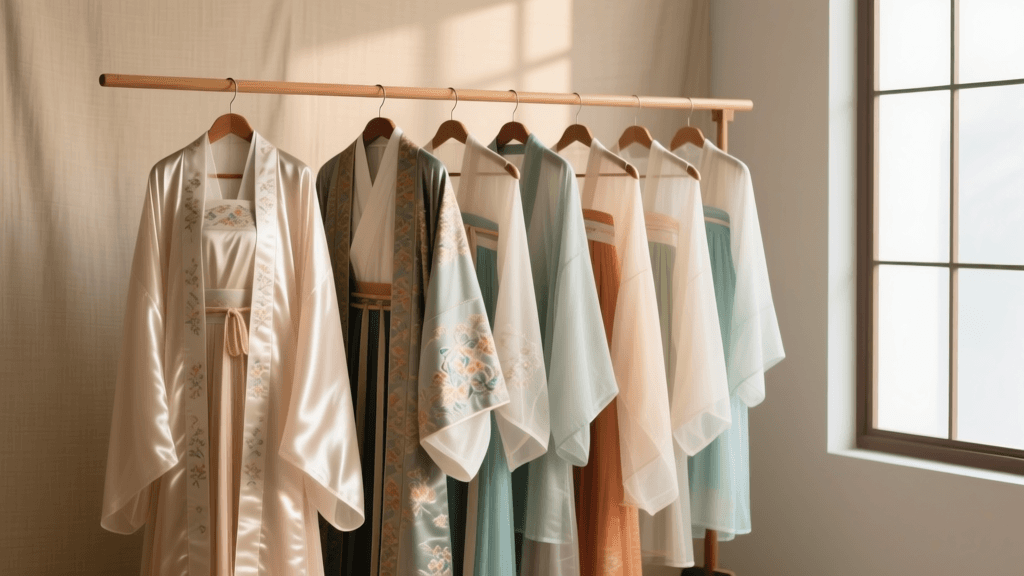
3D Hanfu Drape Analysis: Academic Research Trends for 2026
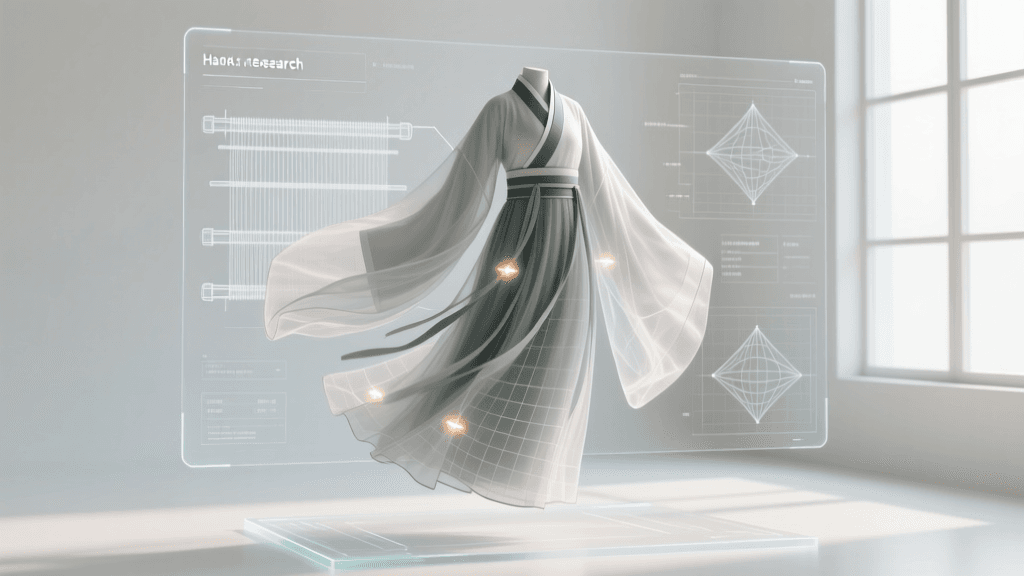
The Intersection of Ancient Weaves and Digital Humanities
The landscape of Chinese fashion history education has undergone a radical transformation in the 2026 academic year. As the Xin Zhongshi (new Chinese style) movement continues to dominate global runways and street fashion, universities and heritage institutions are no longer satisfied with static, two-dimensional archival photography. Today, the frontier of Asian traditional garment research lies in 3D fabric drape analysis and physics-based digital reconstruction. By applying advanced finite element analysis to ancient textiles, academic researchers are unlocking the biomechanical and aerodynamic secrets of historical Hanfu silhouettes.
According to recent pedagogical frameworks published in the International Journal of Fashion Design, Technology and Education, the integration of digital simulation tools into historical fashion curricula has increased by over 40% across major Asian and European universities since the early 2020s. In 2026, this is no longer an elective novelty but a core competency for graduate students specializing in Asian textile heritage. This article explores the methodologies, software ecosystems, and practical applications driving Chinese fashion history research today.
From 2D Pattern Drafting to 3D Physics Simulation
Historically, the academic study of Hanfu relied heavily on flat-pattern drafting, archaeological rubbings, and the physical draping of modern surrogate fabrics on dress forms. While valuable, these methods often failed to capture the dynamic behavior of historical garments in motion. A traditional Ming Dynasty Mamianqun (horse-face skirt) or a flowing Wei-Jin era Daxiushan (large-sleeved robe) relies entirely on the specific gravity, shear stiffness, and bending rigidity of its constituent silk to achieve its iconic silhouette.
In 2026, academic labs utilize a pipeline that begins with physical textile testing and culminates in high-fidelity 3D environments. Researchers use Kawabata Evaluation System (KES-FB) machines to measure the precise mechanical properties of surviving historical fragments or meticulously recreated heritage fabrics. These data points are then fed into specialized 3D garment simulation software, allowing historians to observe how a Tang Dynasty Banbi (half-sleeve jacket) would have draped on a moving human body, accounting for the exact weight and friction of period-accurate silk brocade.
Core Technologies Powering 2026 Research
The software ecosystem for historical textile simulation has matured significantly. While early iterations of 3D fashion software struggled with the complex interlacing of traditional Chinese weaves like Luo (gauze) and Song Jin (Song brocade), 2026's engines feature micro-level yarn rendering and advanced collision detection.
The Role of Specialized Simulation Engines
Leading the charge in Asian academic institutions is Style3D, a platform that has heavily invested in algorithms specifically tuned for traditional Asian textiles. Unlike Western-centric software that often defaults to the physics of wool suiting or cotton denim, modern engines now include native presets for raw silk, Xiangyunsha (gambiered Canton gauze), and hemp ramie. These engines calculate the drape based on warp and weft density, allowing researchers to simulate the distinct 'crispness' of a Song Dynasty robe versus the fluid 'water-like' drape of a Han Dynasty plain gauze gown.
Software Comparison for Historical Textile Research
For graduate students and university labs setting up digital heritage projects in 2026, selecting the right simulation environment is critical. Below is a comparison of the leading platforms used in academic research for Hanfu drape analysis.
| Software Platform | Historical Textile Fidelity | University Licensing (2026) | Best Academic Use Case |
|---|---|---|---|
| Style3D | Exceptional (Native Asian weave presets) | $1,200 / Lab Node | Reconstructing complex Jin and Luo weaves |
| CLO3D | High (Excellent KES-FB integration) | $1,500 / Lab Node | Dynamic motion analysis of layered Ruqun |
| Blender (Cloth Sim) | Moderate (Requires manual node coding) | Free (Open Source) | VR museum exhibitions and rendering |
| Marvelous Designer | High (Strong pattern drafting tools) | $900 / Edu License | 2D-to-3D pattern validation |
Case Study: Reconstructing the Mawangdui Gauze Gown
One of the most celebrated achievements in recent digital heritage research is the virtual reconstruction of the Mawangdui Han Dynasty plain gauze gown (Susha Danyi). The original artifact, unearthed from the tomb of Lady Dai, famously weighs a mere 49 grams despite its large, sweeping dimensions. Understanding how such a gossamer garment behaved in the physical world has been a holy grail for textile historians.
In 2026, research teams utilized 3D drape analysis to solve this mystery. By inputting the mechanical properties of modern 10-momme silk gauze—which closely mimics the ancient weave—into physics engines, researchers discovered that the gown's drape was highly susceptible to micro-air currents. The simulations proved that the garment was likely not worn as a standalone outer layer for warmth, but rather as a ceremonial, aerodynamic overlay that created a 'halo' effect around the wearer's body during slow, processional walking. These findings, championed by organizations like the Textile Society of America, highlight how digital drape analysis can overturn decades of assumptions regarding ancient garment functionality and layering customs.
Practical Guide: Setting Up a Historical Drape Simulation
For academic researchers and students embarking on 3D Hanfu reconstruction, establishing accurate physical parameters is the most critical step. A visually stunning simulation is academically useless if the underlying physics are incorrect. Follow this actionable workflow for your 2026 lab projects:
Step 1: Physical Fabric Testing
Before touching the 3D software, you must test your physical reference fabric. If you are simulating a Ming Dynasty Zhijin (woven gold) brocade, source a modern equivalent and test it using a FAST (Fabric Assurance by Simple Testing) or KES system. Record the following metrics:
- Weight: Measure in grams per square meter (g/m²). A typical heavy Song brocade will range from 180 to 220 g/m².
- Bending Rigidity: Measured in cN·cm. This dictates how sharply the fabric folds. Ramie hemp will have a high rigidity (e.g., 0.8 cN·cm), while silk charmeuse will be extremely low (e.g., 0.12 cN·cm).
- Shear Stiffness: Crucial for bias-cut Hanfu elements, dictating how the fabric distorts when pulled diagonally.
Step 2: Digital Avatar Calibration
Hanfu silhouettes are deeply tied to the posture and proportions of the wearer. In 2026, academic labs use motion-capture data to create avatars that reflect historical postures, which were often influenced by Confucian etiquette and physical restrictions of certain undergarments. Ensure your digital avatar's joint articulation limits are adjusted to reflect a formal, upright historical stance rather than a modern, relaxed posture.
Step 3: Collision and Friction Mapping
Traditional Chinese garments involve extensive layering (e.g., a Zhongyi inner shirt, a Ru top, and a Qun skirt). The friction between these layers determines the final drape. Set the static friction coefficient between silk layers to approximately 0.35, and increase it to 0.55 where silk interacts with cotton or hemp linings. Failure to adjust layer friction will result in digital fabrics 'sliding' through one another, destroying the historical accuracy of the silhouette.
The Future of Chinese Fashion History Education
As we progress through 2026, the boundary between academic research and public education is dissolving. University labs are now exporting their 3D drape analyses into Virtual Reality (VR) environments, allowing museum patrons and students to 'wear' and manipulate historically accurate Hanfu in digital space. Haptic feedback gloves are currently in beta testing at several top-tier Asian design institutes, enabling students to 'feel' the simulated weight and texture of ancient Xiangyunsha silk as it drapes over their virtual arms.
The academic rigor applied to Chinese fashion history has never been higher. By marrying the ancient artistry of the Silk Road weavers with the cutting-edge physics engines of 2026, researchers are ensuring that the true, dynamic beauty of traditional Asian garments is preserved not just as flat images in a textbook, but as living, breathing, and moving digital heritage.