2026 Hanfu Storage Rotation & Seasonal Maintenance Guide
Introduction to Hanfu Preservation in 2026
As the global appreciation for traditional Chinese clothing continues to surge in 2026, maintaining a pristine Hanfu wardrobe requires more than just casual closet organization. Hanfu encompasses a vast array of garments, from the flowing silk Ruqun and lightweight Beizi to the structured, heavy brocade Mamianqun (horse-face skirts) and winter Aoqun of the Ming dynasty. Each fabric type and structural design demands a highly specific approach to storage, rotation, and seasonal maintenance. Improper storage can lead to irreversible damage, including silk shattering, brocade warping, and permanent pleat distortion. This comprehensive 2026 guide provides actionable, museum-grade strategies for rotating and maintaining your Hanfu collection throughout the year, ensuring your garments remain vibrant and structurally sound for generations.
The 2026 Hanfu Seasonal Rotation Calendar
Seasonal rotation is critical for allowing textiles to rest and for aligning your accessible wardrobe with current weather patterns. In 2026, modern wardrobe management emphasizes a bi-annual deep rotation, supplemented by quarterly assessments.
- Spring (March to May): Transition heavy winter brocades into deep storage. Bring out lightweight linen Beizi, cotton-linen blends, and single-layer Ruqun. Focus on humidity control as spring rains begin.
- Summer (June to August): Prioritize breathable fabrics like ramie, gauze (Luo), and lightweight chiffon. Store garments in well-ventilated areas away from direct UV exposure, which rapidly degrades natural dyes.
- Autumn (September to November): Reintroduce layered garments, lined Aoqun, and medium-weight silks. Begin preparing winter storage materials, ensuring archival boxes are clean and pest-free.
- Winter (December to February): Heavy brocade Mamianqun, fur-lined jackets (Pifeng), and thick wool blends take center stage. Focus on preventing dry-heat damage from indoor heating systems, which can make silk fibers brittle.
Seasonal Storage & Fabric Matrix
| Hanfu Garment | Primary Fabric | Storage Method | Ideal Humidity | Active Season |
|---|---|---|---|---|
| Mamianqun | Brocade / Wool | Flat Fold / Padded Hanger | 45-50% | Autumn / Winter |
| Ruqun | Silk / Chiffon | Rolled / Acid-Free Tissue | 50-55% | Spring / Summer |
| Beizi | Linen / Ramie | Hanging (Wooden) | 45-55% | Spring / Autumn |
| Aoqun | Heavy Brocade | Padded Wide Hanger | 40-50% | Winter |
Essential Archival Materials and Smart Technology
To protect delicate historical reproductions and authentic antique textiles, enthusiasts in 2026 are adopting archival standards previously reserved for museums. According to the Canadian Conservation Institute, the chemical stability of storage materials is paramount. Acidic cardboard and standard plastic dry-cleaning bags will off-gas and yellow silk over time.
Must-Have Storage Supplies for 2026
- Acid-Free Tissue Paper: Use unbuffered, acid-free tissue (such as Lineco or University Products brands, approx. $25 for a 500-sheet ream in 2026) to stuff sleeves and cushion folds. Buffered tissue contains alkaline reserves that can damage protein fibers like silk and wool.
- Unbleached Cotton Garment Bags: Avoid plastic entirely. Breathable, unbleached muslin or cotton bags allow air circulation while protecting against dust and light.
- Archival Storage Boxes: Coroplast or acid-free corrugated cardboard boxes (approx. $45 to $65 per unit) are essential for flat-storing heavily pleated Mamianqun.
Integrating IoT Climate Sensors
Modern Hanfu collectors are utilizing smart home technology to monitor micro-climates within their closets. Devices like the 2026 Govee WiFi Thermometer Hygrometer Elite allow you to track real-time temperature and relative humidity via smartphone alerts. Silk and brocade require a stable relative humidity (RH) between 45% and 55%. Fluctuations outside this range cause fibers to expand and contract, leading to structural fatigue.
Step-by-Step Folding and Hanging Techniques
The structural complexity of Hanfu means that standard Western folding methods will destroy the garment's silhouette. The The Metropolitan Museum of Art textile conservation department emphasizes that gravity and fold-lines are the primary enemies of historical garments.
Folding the Mamianqun (Horse-Face Skirt)
The Mamianqun features intricate knife and box pleats that can easily become crushed or misaligned.
- Lay the skirt completely flat on a clean, large surface.
- Align the four trapezoidal panels and ensure the waistband is perfectly straight.
- Follow the existing pleat lines, gently folding them inward. Do not force new creases.
- Place sheets of unbuffered acid-free tissue paper between every third pleat to prevent the metallic threads (often used in 2026 brocade reproductions) from snagging or rubbing against each other.
- Fold the skirt in thirds horizontally, cushioning the final folds with rolled tissue to prevent hard creases.
- Place the folded skirt in an archival box, never stacking heavy items on top.
Hanging the Aoqun and Heavy Brocade Jackets
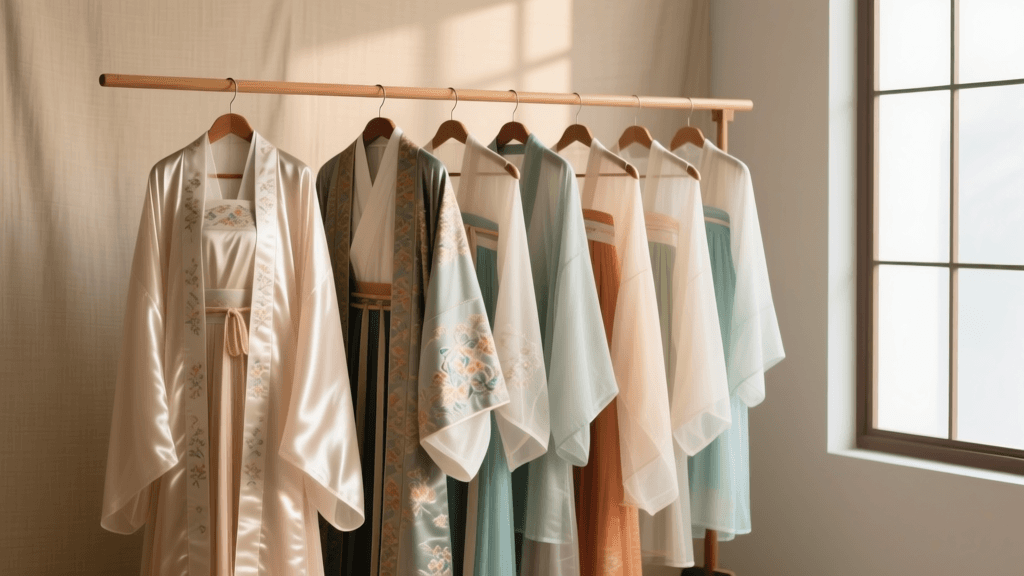
Hanging is suitable for heavy, lined winter garments like the Ao (jacket) and Pifeng (cloak), provided the correct hangers are used. Wire or thin plastic hangers will cause severe shoulder dimples and warp the structural integrity of the heavy fabric. Invest in wide, contoured wooden hangers. Wrap the wooden hanger in washed, unbleached cotton flannel or archival polyester batting to create a soft, padded barrier between the wood and the delicate silk lining of your garment.
Pest Control and Climate Management
Natural fibers like silk, wool, and linen are highly susceptible to pests such as clothes moths and carpet beetles. The Victoria and Albert Museum strongly advises against the use of traditional chemical mothballs (naphthalene or paradichlorobenzene), which are not only toxic to humans but can also cause discoloration and chemical degradation to silk fibers.
Safe Pest Deterrents
- Eastern Red Cedar: Cedar blocks and rings are excellent, natural deterrents. Sand them lightly every six months to refresh the natural oils. Ensure the cedar does not directly touch the Hanfu, as the oils can stain light-colored silks.
- Neem Leaves and Lavender: Dried neem leaves or lavender sachets wrapped in cotton muslin provide a pleasant scent and mild pest deterrence. Replace them annually.
- Deep Freezing Method: If you suspect an active infestation, seal the affected Hanfu in a plastic bag (for the freezing process only) and place it in a standard freezer at -20°C (-4°F) for 72 hours. This safely eradicates all life stages of textile pests without chemical exposure. Allow the garment to thaw slowly at room temperature before removing it from the bag to prevent condensation.
Pre-Storage Cleaning and Preparation
Never store a Hanfu garment that has been worn without cleaning it first. Invisible perspiration, body oils, and environmental pollutants will oxidize over time, resulting in stubborn yellow stains and accelerated fiber degradation.
Cleaning Protocols by Fabric Type
- Silk and Chiffon: Hand wash using a specialized, pH-neutral silk detergent in cool water. Never wring or twist the fabric. Roll the garment in a clean, dry cotton towel to gently press out excess moisture, then lay flat to dry away from sunlight.
- Brocade and Metallic Threads: Dry cleaning is generally recommended for heavy Ming-style brocades, but you must inform the cleaner about the presence of metallic yarns, which can tarnish with harsh chemical solvents. Spot cleaning with distilled water is often safer for minor blemishes.
- Linen and Ramie: These plant-based fibers are more durable and can be machine washed on a gentle, cold cycle in a mesh laundry bag, though hand washing remains the gold standard for longevity.
Before placing any garment into long-term seasonal storage, allow it to air out in a shaded, well-ventilated room for 24 hours. This ensures that all residual moisture from the cleaning process has completely evaporated, preventing the growth of mold and mildew during the months the garment will remain in its storage box.
Conclusion
Maintaining a Hanfu wardrobe in 2026 is a rewarding practice that bridges the gap between historical reverence and modern textile science. By adhering to a strict seasonal rotation calendar, investing in archival-quality storage materials, leveraging smart climate sensors, and employing museum-approved folding techniques, you can protect your investment and preserve the cultural heritage embedded in every thread. Treat your Hanfu not merely as clothing, but as a living archive of Asian traditions that deserves the utmost care and respect.