Best Hanfu Styles for Qigong & Meditation Practice 2026
The Intersection of Hanfu and Qi Cultivation in 2026
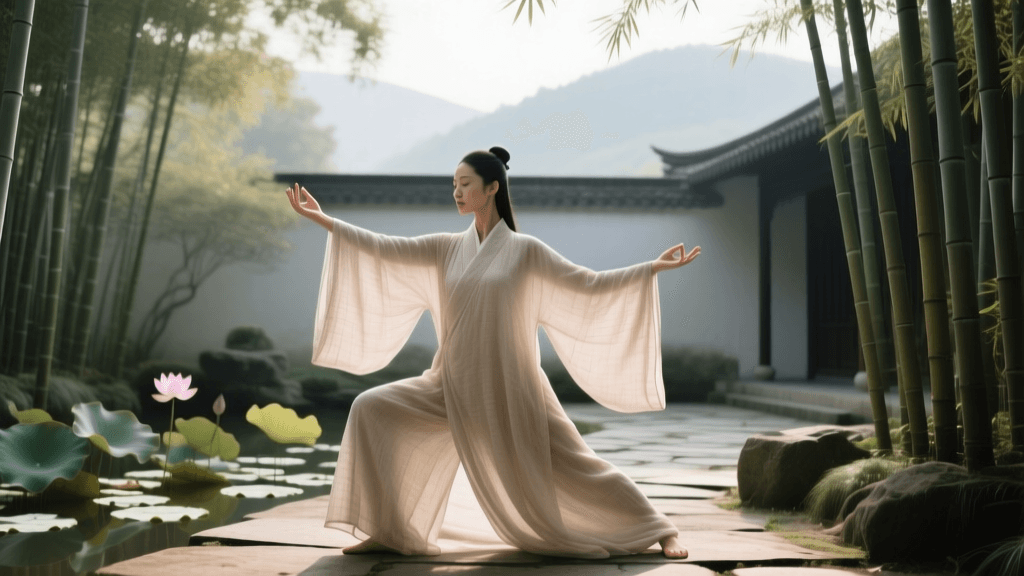
In recent years, the global wellness community has increasingly recognized the profound connection between what we wear and how we move, breathe, and meditate. As we navigate the wellness landscape of 2026, traditional Chinese clothing—specifically Hanfu—has transcended its role as mere ceremonial or festival attire to become a foundational element in serious Qigong and meditation practices. The philosophy of Qigong relies heavily on the concept of Song (active relaxation and loosening of the joints and muscles). Restrictive modern activewear, with its tight synthetic bands and compressive fabrics, can inadvertently create physical tension that blocks the smooth flow of Qi (vital energy) through the body's meridians.
According to the National Center for Complementary and Integrative Health, mindful movement practices like Qigong require a deep mind-body connection, which is significantly enhanced when the practitioner feels physically unencumbered. Hanfu, with its historically flat-cut patterns, wide sleeves, and flowing skirts, naturally accommodates the expansive, grounded postures required for standing meditation (Zhan Zhuang) and the fluid transitions of the Ba Duan Jin (Eight Brocades). In 2026, artisanal Hanfu makers are specifically designing wellness-focused lines that honor historical accuracy while utilizing modern organic textiles optimized for deep breathing and thermal regulation.
Top Natural Fabrics for Mindful Movement
The choice of fabric is paramount when selecting a garment for meditation. Synthetic materials like polyester or nylon trap heat and moisture, leading to distraction and physical discomfort during prolonged stillness. The 2026 market has seen a massive surge in demand for heritage, plant-based fibers that offer superior breathability, antibacterial properties, and a grounding tactile sensation against the skin.
1. Organic Ramie (Xia Bu)
Often referred to as "Chinese linen," Ramie is a bast fiber that has been used in China for thousands of years. High-quality, hand-loomed Ramie (known as Xia Bu) is exceptionally breathable and possesses a natural stiffness that softens beautifully with wear. It holds the body's shape away from the skin, creating a microclimate of circulating air that is ideal for rigorous standing Qigong in warmer climates.
2. Bamboo Silk Blends
For seated meditation, where warmth and softness are prioritized over structural drape, bamboo silk blends are the premier choice in 2026. These fabrics offer the luxurious, frictionless glide of traditional mulberry silk but with the moisture-wicking and thermoregulating properties of bamboo viscose. They are particularly favored for winter meditation retreats when layered over organic cotton undergarments.
3. Washed Heritage Linen
Garment-washed linen provides a lived-in, heavy drape that many practitioners find psychologically grounding. The weight of the fabric offers gentle proprioceptive feedback, helping to anchor the mind during visualization exercises and deep breathing routines.
| Fabric Type | Breathability | Moisture Wicking | Drape & Weight | Best Wellness Application |
|---|---|---|---|---|
| Organic Ramie (Xia Bu) | Excellent | High | Crisp, structured, lightweight | Summer standing meditation, active Qigong |
| Bamboo Silk Blend | Very Good | Moderate | Fluid, heavy, ultra-soft | Seated meditation, Yin Yoga, winter layering |
| Washed Heritage Linen | Good | High | Soft, medium-weight, grounding | Transitional seasons, walking meditation |
| Organic Cotton Gauze | Excellent | Moderate | Airy, lightweight, delicate | Indoor breathwork, gentle restorative practices |
Ideal Hanfu Silhouettes for Meditation and Qigong
Not all Hanfu styles are suited for wellness practices. Highly structured garments like the Mamianqun (horse-face skirt) or stiff, heavily embroidered ceremonial robes are too restrictive and heavy for physical cultivation. Instead, practitioners in 2026 are gravitating toward historically functional, minimalist silhouettes that prioritize freedom of movement.
The Daopao (Daoist Robe)
The Daopao is a cross-collared, wide-sleeved robe that originated among Daoist monks and scholars. It is arguably the ultimate garment for standing Qigong. The continuous, unbroken vertical lines of the robe visually and energetically encourage the alignment of the spine, a critical component of Qi circulation. Modern wellness adaptations of the Daopao feature slightly narrowed cuffs (to prevent the sleeves from dragging on the floor during forward folds) and are typically crafted from mid-weight linen. A standard 2026 artisanal Daopao costs between $120 and $180, representing a worthwhile investment for daily practitioners.
Songku (Wide-Legged Trousers)
For practices that involve deep stances, such as the horse stance (Ma Bu) or the flowing movements of Tai Chi and Qigong, the Songku is essential. These trousers feature a dropped crotch and an exceptionally wide leg opening—often measuring 45cm to 60cm in circumference at the hem. This extreme width ensures that the fabric never binds at the knee or hip, allowing for complete structural relaxation of the lower body. When paired with a simple cross-collared Duanshan (short tunic), the Songku provides a practical, grounded aesthetic perfect for outdoor morning practice.
High-Waisted Ruqun for Seated Practice
For those who prefer seated meditation, a high-waisted Ruqun (specifically the Qixiong Ruqun, where the skirt is tied above the chest) is highly recommended. The high waistband prevents the fabric from bunching uncomfortably around the abdomen when sitting in full lotus or half-lotus positions. This allows the diaphragm to expand fully during deep Dantian breathing, unencumbered by tight waistbands or belts.
2026 Market Trends: Sustainable Dyes and Zero-Waste Patterns
A major trend defining the wellness Hanfu market in 2026 is the integration of traditional, eco-friendly dyeing methods. The World Health Organization's benchmarks on traditional medicine and holistic practices emphasize the importance of environmental harmony in healing arts (WHO Traditional Medicine Benchmarks). Aligning with this, top Hanfu ateliers are now using plant-based dyes such as indigo, tea, pomegranate rind, and mugwort.
Mugwort-dyed Hanfu, in particular, has gained immense popularity among Qigong practitioners. Mugwort (the same herb used in moxibustion therapy) is believed in Traditional Chinese Medicine to possess warming, meridian-clearing properties. Wearing a mugwort-dyed linen tunic during morning practice is thought to synergize with the body's natural Yang energy as it rises with the sun. Furthermore, these artisanal brands are adopting zero-waste pattern cutting, utilizing the full width of the fabric bolt to create the geometric, flat-cut shapes of traditional Hanfu, resulting in virtually no textile waste.
Practical Guide: Building Your 2026 Wellness Wardrobe
If you are looking to incorporate Hanfu into your daily mindfulness routine, here is a practical, actionable approach to building your wardrobe this year:
- Start with the Base Layer: Invest in two sets of organic cotton or bamboo Zhongyi (inner garments). These act as a sweat barrier, protecting your more expensive outer robes from body oils and extending their lifespan. Expect to spend around $40 per set.
- Choose Earth Tones: In color psychology and traditional Five Element theory, colors impact the mind's state. Opt for unbleached whites, soft celadon greens, or deep indigo blues. Avoid bright reds or neon colors, which are visually stimulating and can hinder the inward focus required for deep meditation.
- Footwear Matters: Traditional Hanfu is worn with cloth shoes. For Qigong, practitioners in 2026 favor modern interpretations of the Bu Xie (cloth shoe) featuring a zero-drop, flexible hemp sole. This allows the foot to grip the earth naturally, facilitating the grounding of energy through the Yongquan (Kidney 1) acupressure point on the sole of the foot.
- Layering for Climate Control: Meditation often leads to a drop in core body temperature as the metabolic rate slows. Always keep a lightweight, woven wool or heavy linen Pibo (shawl) nearby to drape over the shoulders during the final Shavasana-like resting phase of your Qigong routine.
Care and Maintenance of Natural Wellness Garments
To maintain the energetic and physical integrity of your natural fiber Hanfu, proper care is essential. Ramie and linen should be hand-washed or machine-washed on a delicate cycle using cold water and a pH-neutral, plant-based detergent. Avoid tumble drying; instead, shake the garment vigorously to align the fibers and hang it to dry in the shade. The natural wrinkles that develop in linen and Ramie are considered part of the fabric's organic character, but a light steaming before practice can help restore the garment's flowing drape.
By thoughtfully selecting breathable, historically grounded, and sustainably crafted Hanfu, practitioners can deeply enhance their Qigong and meditation routines. In 2026, the fusion of ancient sartorial wisdom and modern wellness science offers a profound pathway to physical comfort, energetic flow, and spiritual centering.