2026 Kyoto Wafuku Sewing Workshops: Costs, Curriculum & Prep Guide

The Renaissance of Wafuku: Why Study Kimono Sewing in 2026?
The global appreciation for sustainable, slow fashion has reached a pivotal moment in 2026, driving a massive resurgence in interest toward traditional Asian garment construction. Among the most sought-after skills is Wafuku, the traditional Japanese art of kimono sewing. Unlike Western tailoring, which relies on complex curved patterns and permanent seams, Wafuku is rooted in geometric precision, zero-waste cutting, and modular construction. For textile enthusiasts, fashion historians, and sustainable designers, attending a dedicated Wafuku workshop in Kyoto has become a bucket-list educational experience. This comprehensive guide breaks down everything you need to know about enrolling in a Kyoto Wafuku sewing masterclass in 2026, including updated costs, curriculum expectations, and essential preparation.
Cultural Heritage and Global Recognition
The preservation of these techniques is not merely a matter of fashion; it is a matter of profound cultural heritage. The meticulous craftsmanship involved in creating traditional Japanese garments is recognized globally. According to the UNESCO Intangible Cultural Heritage registry, Japan holds numerous designations for traditional craftsmanship, highlighting the global imperative to keep these artisanal skills alive. In 2026, the Japanese government, alongside private artisanal guilds in Kyoto, has heavily subsidized cultural tourism seminars, making it more accessible than ever for international students to learn from certified Kimono sewing masters, known as Wafuku Shitateya.
Top 2026 Kyoto Wafuku Workshop Formats Compared
Choosing the right seminar depends on your current skill level, time commitment, and budget. Kyoto offers a spectrum of learning environments in 2026, ranging from intensive weekend tasters to rigorous six-month hybrid certifications. Below is a comparison of the three primary workshop formats available this year.
| Workshop Type | Duration | 2026 Cost (USD) | Skill Level | Final Output |
|---|---|---|---|---|
| Weekend Taster Seminar | 2 Days | $350 - $500 | Beginner | Yukata (unlined summer robe) |
| Intensive 1-Week Masterclass | 7 Days | $1,800 - $2,400 | Intermediate | Hitoe (unlined silk kimono) |
| 6-Month Hybrid Certification | 24 Weeks | $4,500 - $6,000 | Advanced | Awase (lined formal kimono) |
Inside the 2026 Curriculum: What You Will Learn
1. Tanmono Fabric Preparation and Zero-Waste Cutting
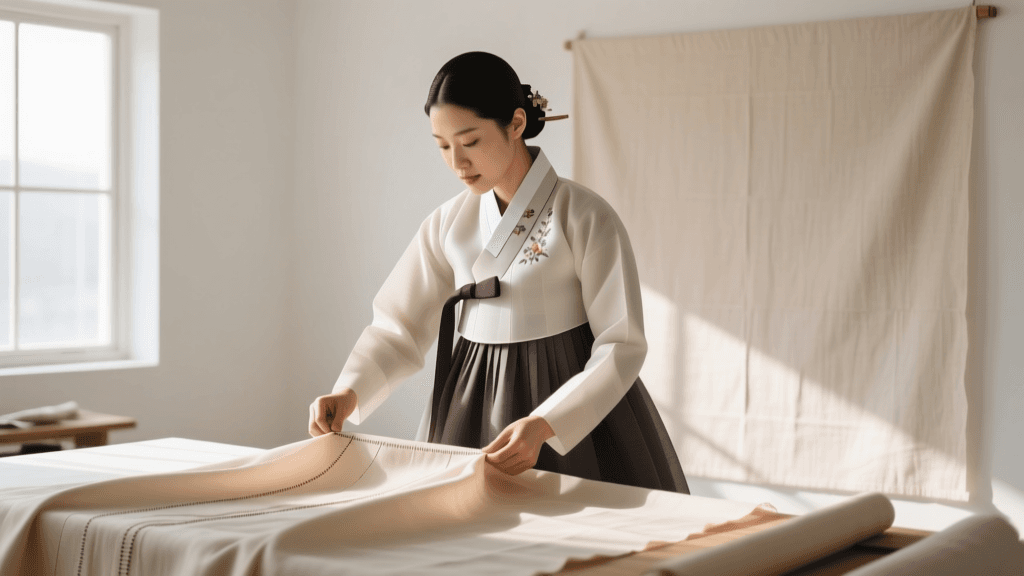
The 2026 curriculum at top-tier Kyoto ateliers begins with the foundational philosophy of the Tanmono. A Tanmono is a standard bolt of fabric, typically measuring about 36 centimeters in width and 12 meters in length. Unlike Western pattern drafting, where fabric is cut into varied shapes and scraps are discarded, Wafuku cutting, or Shitate, utilizes the entire width of the Tanmono. Students learn to fold, mark, and cut the fabric into straight rectangular panels. This zero-waste methodology is a major draw for modern sustainable fashion designers. The Victoria and Albert Museum notes in their extensive archival research on the Kimono that this modular construction allows garments to be completely disassembled, washed, re-dyed, and resewn, giving the textile a multi-generational lifespan.
2. The Art of Shitate: Hand-Stitching Techniques
Following the cutting phase, students move on to the core of Wafuku: hand-stitching. Machine sewing is strictly forbidden in traditional high-end kimono construction. In your 2026 seminar, you will master the Unshin, a specialized running stitch that requires a specific rhythmic movement of the needle and fabric. You will also learn the Chikara-nui, a reinforcement stitch used in high-stress areas like the collar and armholes. Instructors emphasize the concept of hidden stitches, ensuring that the exterior of the kimono remains pristine and unbroken by visible thread lines. The physical endurance required to maintain perfect stitch tension for hours is often the most surprising challenge for Western students accustomed to machine sewing.
3. Modern Sizing and the Wafuku Remake Movement
Traditional kimonos are inherently modular, designed to fit a wide range of body types by adjusting the depth of the folds and the length of the body panels. However, the standard Tanmono width of 36 centimeters can pose fitting challenges for taller or broader international students. In 2026, many progressive Kyoto seminars have introduced a module on Wafuku Remake and custom sizing. Students learn how to mathematically calculate the required fabric extensions and integrate complementary textiles to widen the hip and shoulder panels without disrupting the garment's structural integrity or aesthetic flow. This adaptation ensures that the ancient art of Wafuku remains inclusive and wearable for a global demographic, bridging the gap between historical authenticity and modern ergonomic needs.
Essential Tools for Your 2026 Wafuku Seminar
To succeed in a 2026 Wafuku workshop, you must familiarize yourself with traditional Japanese sewing tools, or Wasai Dogu. While most Kyoto seminars provide tools for use during class, serious students often purchase their own kits. A standard 2026 beginner's tool kit costs approximately 25,000 JPY (around $165 USD). Essential items include:
- Mekudake: A bamboo measuring rod marked with traditional Japanese units (shaku, sun, bu) essential for authentic proportional marking.
- Kote: A specialized traditional iron used for pressing seams without scorching delicate silk. A 2026 model with a digital temperature control base costs around 15,000 JPY ($100 USD).
- Kakehari: A wooden tensioning bar and clamp system used to hold the fabric taut while sewing, crucial for maintaining stitch consistency.
- Wasai Hasami: High-carbon steel specialized sewing shears forged in Sakai, which can cost upwards of 18,000 JPY ($120 USD).
- Hera: A standard wooden spatula used for marking creases, costing a mere 800 JPY ($5 USD).
Purchasing these tools from a heritage shop in Kyoto's Nishijin weaving district is considered a rite of passage for international students.
Enrollment, Language, and Cultural Etiquette
Historically, the language barrier was the most significant hurdle for international students. However, the 2026 seminar landscape has evolved dramatically. Leading Kyoto workshops now offer real-time AI-assisted translation headsets, allowing English-speaking students to follow complex technical instructions seamlessly. Furthermore, the Japan National Tourism Organization has streamlined the cultural visa process, offering specific short-term study endorsements for artisanal workshops lasting under 90 days. When enrolling, it is crucial to communicate your dominant hand, as Wafuku cutting and folding techniques are highly directional, and instructors will tailor their physical demonstrations to your left or right-handedness.
Preparation for a Wafuku seminar extends beyond purchasing tools. Students are expected to observe strict studio etiquette. Shoes are never worn inside the sewing studio, and students must wear clean, white cotton socks to protect the expensive silk textiles from dust and oils. Fingernails must be kept extremely short and smooth to prevent snagging the delicate Tanmono threads. Before arriving in Kyoto, it is highly recommended to practice basic hand-stitching on cotton muslin to build finger calluses and improve your needle-pulling stamina.
“The needle does not pierce the fabric; it negotiates with the threads. When you sew a kimono, you are not just joining two pieces of cloth; you are wrapping the wearer in a continuous, unbroken intention.” — Master Artisan Hiroshi Tanaka, Kyoto Wafuku Guild, 2026 Symposium on Textile Heritage.
Conclusion
Embarking on a Wafuku sewing journey in 2026 is an investment in a profound cultural legacy. Whether you are a fashion student seeking to understand zero-waste patternmaking, or a hobbyist looking to connect with the meditative rhythm of traditional hand-stitching, Kyoto's workshops offer an unparalleled educational experience. By understanding the curriculum, preparing the right tools, and respecting the artisanal traditions, you will leave your seminar not just with a handmade garment, but with a lifelong mastery of one of Asia's most revered textile arts.