Chinese Fashion History Research: 3D Drape Analysis in 2026

The Evolution of Chinese Fashion History Education in 2026
The academic study of Chinese fashion history has undergone a radical transformation by 2026. No longer confined to the static examination of fragile museum textiles or the purely theoretical translation of ancient sartorial texts, modern fashion history education now sits at the intersection of material science, digital engineering, and cultural heritage. Leading institutions across Asia, such as Donghua University in Shanghai and the Beijing Institute of Fashion Technology (BIFT), have completely overhauled their graduate curricula to integrate empirical 3D drape analysis and digital twin technology. This shift ensures that the next generation of scholars and designers can understand not just how traditional garments like the Hanfu or Qipao looked, but exactly how they moved, breathed, and interacted with the human body in motion.
In 2026, the preservation of intangible cultural heritage relies heavily on digital archiving. As noted by UNESCO's recognition of Chinese sericulture and silk craftsmanship, the transmission of these ancient skills requires modern documentation methods. By digitizing the physical properties of historical fabrics, researchers are creating immortal, interactive archives that inform both historical scholarship and contemporary design.
Core Methodologies: 3D Drape Analysis and Digital Archiving
At the heart of 2026's academic research methodology is the integration of the Kawabata Evaluation System (KES) with advanced 3D simulation environments. Historically, understanding the drape of a Ming Dynasty Mamianqun (horse-face skirt) relied on visual estimation and contemporary tailoring intuition. Today, researchers use KES-FB4 automated testing machines to measure the precise bending rigidity, shear stiffness, and tensile properties of surviving antique textiles or historically accurate reproductions.
Once these physical parameters are quantified, they are imported into 3D garment simulation software. According to CLO Virtual Fashion's educational frameworks, mapping real-world textile physics onto digital avatars allows researchers to simulate the anisotropic behavior of traditional Chinese weaves. For example, the complex warp and weft density of Zhuanghua (brocade) behaves entirely differently under kinetic stress compared to the lightweight, breathable structure of Luo (gauze). By running biomechanical simulations—such as a digital avatar performing a traditional tea ceremony or walking up a steep temple staircase—academics can document the exact kinetic drape coefficient of these ancient garments, preserving their dynamic essence for future generations.
Case Study: Reconstructing the Song Dynasty Beizi and Xiangyunsha Silk
A prominent focus in 2026 academic research is the Song Dynasty Beizi (a long, parallel-collar overcoat) and the use of Xiangyunsha (Gambiered Canton Gauze). Xiangyunsha is a highly prized, mud-dyed silk that possesses a unique, slightly stiff, and rustling hand-feel, often described as sounding like wind in the bamboo. Recreating this specific drape in a digital environment has been a major milestone for university labs this year.
Researchers at the China National Silk Museum have utilized spectrophotometry and micro-CT scanning to analyze the residual tannin and iron-rich mud coatings on 19th-century Xiangyunsha fragments. By translating this data into 3D simulation nodes, scholars can now accurately predict how a historically accurate Beizi would drape over the shoulders and cascade down the back without the use of modern interfacing or synthetic stiffeners. This empirical data has debunked several long-held myths in historical costuming, proving that the elegant, structured silhouette of Song dynasty scholar-officials was achieved purely through the chemical manipulation of the silk fibers, rather than through hidden tailoring structures.
Fabric Drape Parameters in Academic Testing
To understand the depth of this research, one must look at the specific metrics tracked in 2026 university labs. The following table illustrates the paradigm shift from traditional archival methods to modern digital twin simulations.
| Parameter | Traditional Archival Method (Pre-2020) | 2026 Digital Twin Simulation | Academic Advantage |
|---|---|---|---|
| Kinetic Drape | Static mannequin display; visual estimation | Biomechanical avatar motion capture at 120fps | Reveals how garments behave during specific historical rituals and daily labor. |
| Shear Stiffness | Destructive testing (rarely permitted on antiques) | Non-destructive micro-CT scanning + AI predictive modeling | Preserves fragile artifacts while yielding exact mathematical stiffness values. |
| Thermal Comfort | Historical text analysis and anecdotal evidence | Virtual thermodynamics mapping within the 3D environment | Proves the functional climate-adaptation of ancient layering systems. |
| Pleat Retention | Manual measurement of surviving garments | Algorithmic stress-testing of digital pleat structures | Determines the exact historical ironing and setting techniques used by ancient artisans. |
The Impact on the Xin Zhongshi (New Chinese Style) Movement
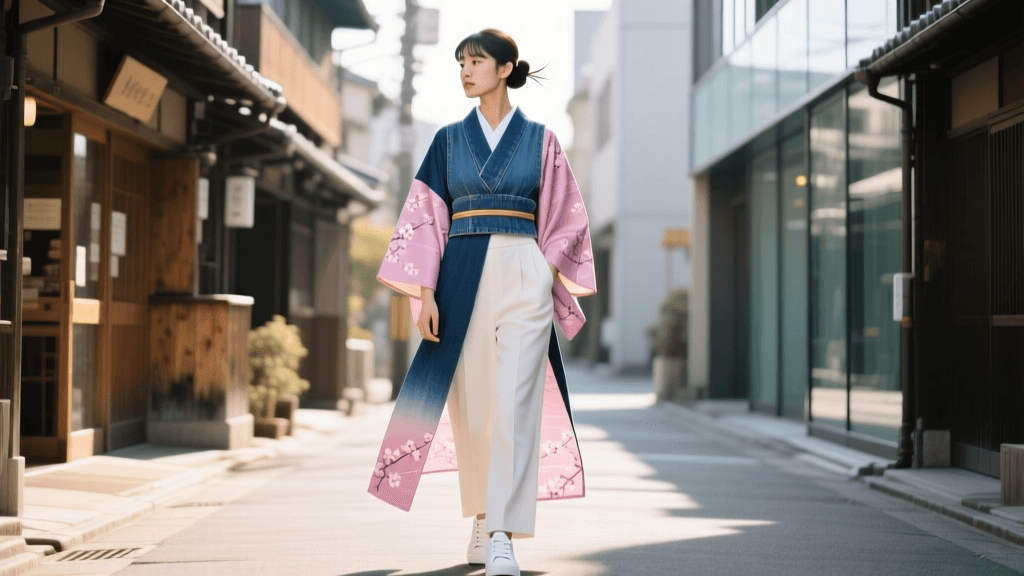
The rigorous academic research conducted in 2026 is not merely locked away in university databases; it is the driving force behind the booming Xin Zhongshi (New Chinese Style) movement. As the global fashion market increasingly embraces traditional Asian aesthetics, modern designers face a critical challenge: how to adapt historical silhouettes for contemporary, fast-paced urban life without losing the cultural 'spirit' (Shenyun) of the garment.
By accessing open-source academic drape databases, Xin Zhongshi designers can engineer modern commuter wear that mimics the fluid, ethereal drape of ancient Ruqun (blouse and skirt ensembles) using sustainable, modern cellulosic fibers. For instance, the 2026 spring collections seen at Shanghai Fashion Week featured Xin Zhongshi jackets that utilized algorithmic pleating derived directly from Ming Dynasty Mamianqun research. These garments offer the structural elegance of historical court dress but are engineered with digital drape data to ensure they do not tangle in subway doors or restrict movement in modern office environments. This seamless pipeline from academic textile archaeology to commercial fashion production represents a golden age for Chinese sartorial heritage.
Essential Tools and Software for 2026 Researchers
For graduate students and independent scholars entering the field of Chinese fashion history in 2026, proficiency in a specific suite of technological tools is now as mandatory as knowing how to read classical Mandarin texts. The standard academic toolkit includes:
- CLO 3D (Enterprise/Education Edition): The industry standard for 3D garment simulation. In 2026, its advanced particle physics engine allows for the simulation of multi-layered silk garments with unprecedented accuracy, accounting for the microscopic friction between different weave types.
- KES-FB4-A Automated Testing System: Costing approximately $85,000 USD for a full university lab setup, this hardware is essential for digitizing the physical hand-feel and mechanical properties of reproduced historical textiles.
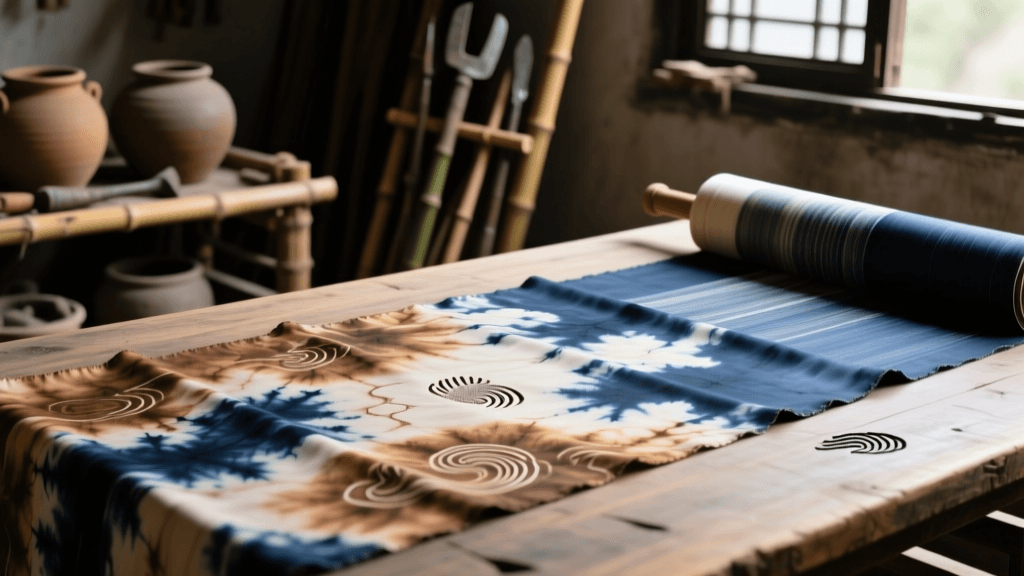
- X-Rite Ci7800 Spectrophotometer: Used to map the exact colorimetric data of historical dyes (such as madder root and indigo) under various lighting conditions, ensuring that digital archives perfectly match the visual reality of the artifacts.
- AI-Assisted Weave Reconstruction Algorithms: Proprietary university software that takes high-resolution macro photography of degraded archaeological textile fragments and predicts the original loom tie-up and treadling sequences required to weave the fabric.
Future Trajectories in Textile Heritage Research
As we look toward the latter half of the decade, the integration of haptic feedback technology into digital archives is the next frontier. Researchers are currently developing haptic gloves that will allow students to 'feel' the simulated shear and bending resistance of a digital Tang Dynasty silk twill. Furthermore, the study of the ancient Silk Road exchanges is being revolutionized by these tools. As detailed in The Metropolitan Museum of Art's Heilbrunn Timeline of Art History, the cross-pollination of weaving techniques between China, Persia, and Central Asia is complex. By running 3D drape simulations on hybrid Sogdian-Chinese textiles, scholars can finally understand how foreign motifs and structural weaves altered the functional drape and cultural utility of Chinese garments along the trade routes.
Ultimately, the 2026 academic landscape proves that honoring Chinese fashion history does not mean freezing it in the past. By applying cutting-edge 3D drape analysis and material science, researchers are ensuring that the profound ingenuity of ancient Asian weavers and tailors continues to inspire, educate, and evolve in the modern era.