Xiangyunsha Silk: China's Intangible Heritage Fabric Guide
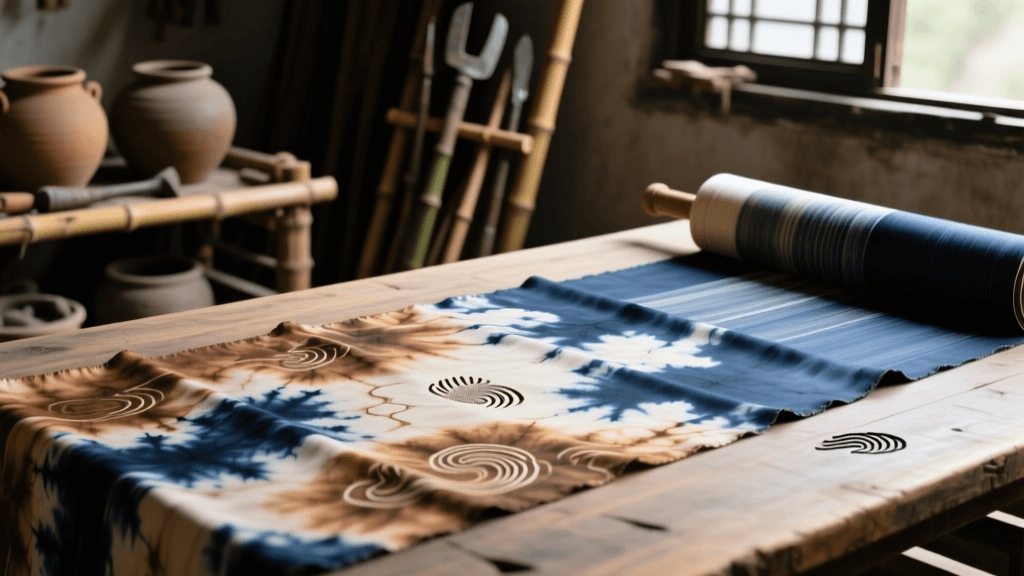
The Living Alchemy of Xiangyunsha Silk
When discussing the pinnacle of Chinese traditional crafts, few textiles command as much reverence as Xiangyunsha (香云纱), historically known as Gambiered Canton Gauze. Originating from the Shunde district in Guangdong province, this extraordinary fabric is not merely woven; it is cultivated through a symbiotic relationship between silk, botanical dyes, river mud, and the subtropical sun. Recognized as a National Intangible Cultural Heritage of China, Xiangyunsha represents a masterclass in sustainable, artisanal textile production that has remained largely unchanged for over six centuries.
Historically, silk has been a cornerstone of Chinese artistic and economic life, as detailed by the Metropolitan Museum of Art's Heilbrunn Timeline of Art History. However, while standard mulberry silk is celebrated for its softness and sheen, Xiangyunsha is prized for its structural integrity, cooling properties, and profound connection to the earth. For modern hanfu enthusiasts, collectors, and sustainable fashion advocates, understanding the nuances of this fabric is essential for appreciating its true value.
The 13-Step Artisan Process: Mud, Sun, and Tannins
The creation of authentic Xiangyunsha is an arduous, weather-dependent process that can only be executed by skilled artisans in the Pearl River Delta. The unique terroir of Shunde provides the specific iron-rich river mud required for the final chemical reaction. The process generally follows these critical phases:
- Botanical Dyeing: The raw silk gauze is repeatedly soaked in the juice of the Dioscorea cirrhosa (Shouliang) tuber, which is rich in tannins. The fabric is dried in the sun between each soaking, sometimes up to 30 times, until it achieves a deep reddish-brown hue.
- Mud Application: In the early morning, artisans spread a specific layer of iron-rich river mud over one side of the silk. The tannins in the silk react with the iron ions in the mud, creating a dark, lustrous black or deep brown coating on the surface.
- Washing and Curing: After the mud has dried and reacted, the fabric is washed in the river to remove excess clay. It is then stretched on bamboo poles to dry and cure in the sun for several more days, allowing the fibers to settle and the characteristic "crackle" texture to form.
This entire procedure requires intense sunlight and high temperatures, meaning production is strictly limited to the months between April and October. As defined by UNESCO's framework for Intangible Cultural Heritage, practices like Xiangyunsha dyeing are vital expressions of cultural identity, passed down through generations and deeply tied to their natural environment.
Comparative Textile Analysis
To understand why Xiangyunsha commands a premium in the traditional garment market, it is helpful to compare it with other common fabrics used in hanfu and Asian traditional wear.
| Feature | Xiangyunsha (Gambiered Gauze) | Standard Mulberry Silk | Traditional Ramie/Linen |
|---|---|---|---|
| Texture & Drape | Crisp, structured, with a subtle "crackle" sound | Fluid, soft, and highly drapeable | Stiff, textured, softens with washing |
| Breathability | Exceptional; ideal for humid climates | High, but can cling when damp | Excellent; highly absorbent |
| Water & Stain Resistance | Naturally water-resistant due to mud/tannin coating | Low; water spots easily | Low; absorbs liquids rapidly |
| Approximate Cost (Per Yard) | $80 – $250+ USD | $25 – $80 USD | $15 – $40 USD |
| Artisan Production Time | 15 to 30 days (weather dependent) | Machine or hand-woven (1-5 days) | Hand-loomed (3-7 days) |
Practical Buyer's Guide: Costs, Timing, and Measurements
Purchasing authentic Xiangyunsha requires an understanding of traditional measurements, seasonal timing, and market pricing. Here is actionable advice for sourcing this luxury textile for your own traditional garments.
Measurements and Yardage
In traditional Chinese markets, silk is often measured in chi (1 chi = 33.3 cm), though modern e-commerce platforms usually list meters or yards. Xiangyunsha typically comes in narrow widths of about 90 cm (35 inches). When planning a hanfu project, account for the narrow width and the fabric's crisp drape:
- Ming Dynasty Mamianqun (Horse-Face Skirt): Requires 4.5 to 6 meters (5 to 6.5 yards) to achieve the proper pleating and structural volume.
- Song Dynasty Beizi (Long Jacket): Requires 3 to 4 meters (3.2 to 4.3 yards), depending on the wearer's height and sleeve length.
- Tang Dynasty Ruqun (Blouse and Skirt): Requires roughly 5 meters (5.4 yards) total. Note that Xiangyunsha's stiffness makes it less ideal for the ultra-flowy, translucent sleeves of high Tang styles, but perfect for structured outer layers.
Timing Your Purchase
Because the sun-drying and mud-dyeing process can only occur during the hot, dry season from April to October, new batches of Xiangyunsha are typically released to the market between late October and December. Purchasing during the winter months ensures you are getting freshly cured fabric from the current year's production cycle. Avoid buying in early spring, as stock may be leftover from the previous year or, worse, artificially dyed imitations produced in factories during the winter.
Cost Expectations
Authentic, hand-dyed Shunde Xiangyunsha is a luxury investment. Expect to pay between $80 and $150 USD per yard for standard jacquard or plain weave gauze. Highly complex patterns, heavier crepe de chine bases, or fabrics dyed by master-level heritage artisans can exceed $250 USD per yard. If you encounter Xiangyunsha selling for $20 a yard, it is almost certainly a synthetic imitation or chemically printed fabric.
Authentication, Sewing, and Care Protocols
The broader context of this craft is rooted in the sericulture and silk craftsmanship of China, inscribed on the Representative List of the Intangible Cultural Heritage of Humanity. To respect and preserve this heritage, buyers must know how to identify the genuine article and care for it properly.
How to Authenticate Genuine Xiangyunsha
- The Two-Tone Effect: Authentic fabric has a distinct dark, lustrous black or deep brown front, and a matte, earthy brown back. Imitations are often uniformly dyed black on both sides.
- The Crackle Pattern: Look closely at the dark side. Genuine Xiangyunsha features a subtle, irregular "turtle-shell" crackle pattern caused by the drying mud. This is a hallmark of the natural process.
- The Scent: Rub the fabric gently and smell it. Real Xiangyunsha carries a faint, earthy scent of dried grass, river clay, and botanical tannins. Fakes often smell of harsh chemical dyes or have no scent at all.
Sewing and Maintenance
When sewing Xiangyunsha, use fine silk pins and a microtex needle (size 60/8 or 70/10) to prevent snagging the tightly woven gauze. Because the fabric is crisp, French seams or bound edges are highly recommended to prevent fraying and to give the garment a clean, historical finish. Avoid using high-heat irons; use a low-heat steam setting with a pressing cloth to protect the mud-dyed coating.
For washing, never use alkaline detergents or standard laundry soaps, as they will strip the tannins and ruin the water-resistant coating. Hand wash gently in cool water using a pH-neutral silk wash or even a mild baby shampoo. Do not wring the fabric; roll it in a towel to absorb excess water and dry it flat in the shade. Over time, the fabric will soften and mold beautifully to the wearer's body, developing a rich patina that only enhances its historical and aesthetic value.
Supporting the Artisans of Lingnan
The survival of Xiangyunsha relies entirely on the continued patronage of consumers who value slow fashion and cultural preservation. The artisans who harvest the Shouliang tubers, haul the river mud, and monitor the sun-drying racks are aging, and the physical toll of the work makes it difficult to attract younger generations. By investing in authentic Xiangyunsha, verifying its origins, and supporting certified heritage workshops in Shunde, global enthusiasts of Asian traditions play a direct role in keeping this magnificent intangible heritage alive for centuries to come.