Ming Court Fashion: Mamianqun Evolution and Modern Buyer Guide
The Zenith of Elegance: Ming Dynasty Court Fashion
The Ming Dynasty (1368–1644) represents a pinnacle of Chinese sartorial elegance, characterized by strict sumptuary laws, intricate weaving techniques, and a profound emphasis on hierarchical symbolism. At the heart of this era's womenswear was the Mamianqun (马面裙), or 'horse-face skirt.' While its origins trace back to earlier dynasties, it was during the Ming era that the Mamianqun evolved from a practical garment into a masterpiece of court fashion and elite status. According to The Metropolitan Museum of Art, Ming court textiles were renowned for their structural complexity and lavish use of gold and silver threads, setting a standard that continues to influence modern Asian fashion revivals.
Today, the Mamianqun is experiencing a massive resurgence. As noted by BBC Travel, the garment has transcended historical reenactment to become a staple in global contemporary wardrobes. For enthusiasts and collectors, understanding the dynastic evolution of the Mamianqun is essential for making informed, authentic purchasing decisions.
Dynastic Evolution: From Song Practicality to Ming Opulence
The structural DNA of the Mamianqun was born out of necessity during the Song Dynasty (960–1279). Originally designed for women who needed to ride horses or navigate rugged terrain, the skirt featured overlapping flat panels that allowed for a wide stride while maintaining modesty. However, when the Ming Dynasty restored Han Chinese rule, the garment was elevated to courtly status.
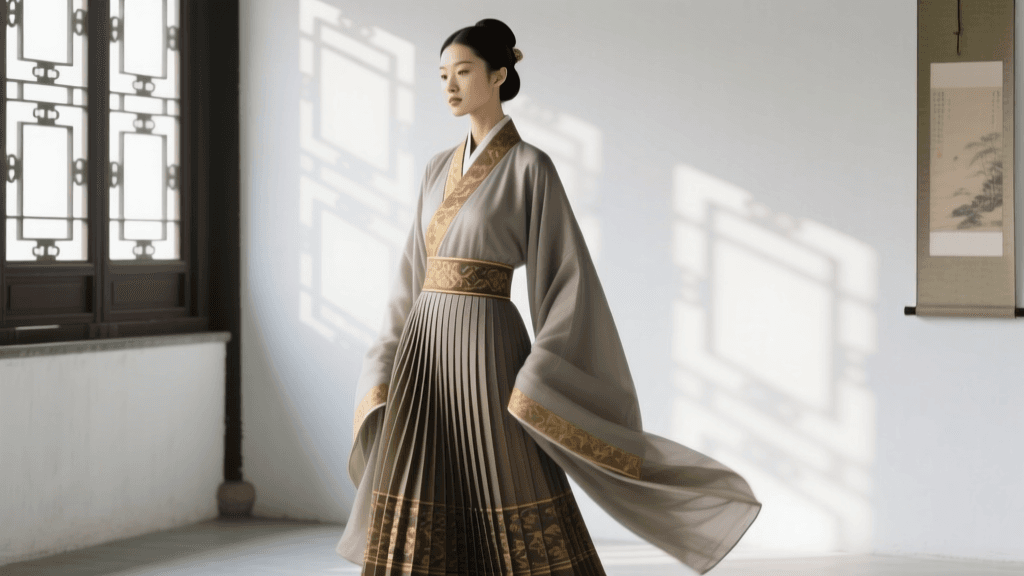
Ming emperors instituted rigorous dress codes. The Mamianqun became a canvas for displaying wealth and rank through zhuanghua (brocade) and kesi (silk tapestry) weaving. Court women paired these skirts with fitted, high-collared jackets (ao), creating a silhouette that was both imposing and deeply elegant. The flat panels, or 'horse faces,' were heavily embroidered with auspicious motifs, while the hidden pleats allowed for fluid movement without disrupting the intricate front-facing designs.
Evolutionary Comparison Chart
| Era | Primary Function | Fabric & Weight | Pleat Structure | Court Motifs |
|---|---|---|---|---|
| Song Dynasty | Practical riding, daily labor | Lightweight hemp, plain silk (80-120 GSM) | 4 to 6 wide, shallow pleats | Minimalist, floral, geometric |
| Ming Dynasty | Court ceremonies, elite status | Heavy brocade, kesi silk (200-300 GSM) | 12 to 24 deep, knife-sharp pleats | Mang (python), flying fish, qilin |
| Modern Revival | Daily wear, formal events | Polyester blends, jacquard, tencel (150-250 GSM) | 12 to 20 heat-set pleats | Traditional replicas, modern florals |
Anatomy and Motif Symbolism in the Ming Court
To appreciate the Mamianqun, one must understand its unique anatomy and the strict symbolism governing Ming court fashion. The skirt is constructed from two identical pieces of fabric that overlap at the sides. The key components include:
- Guangmian (Light Panel) / Mamian (Horse Face): The flat, unpleated front and back panels. In Ming court fashion, this was the primary area for elaborate embroidery and brocade weaving.
- Zhe (Pleats): The side panels featuring deep, structured pleats. Ming court skirts often utilized 'broken pleats' or intricate pleating patterns that only revealed hidden patterns when the wearer walked.
- Yaotou (Waistband): Typically made of white or contrasting cotton/silk, designed to be tied securely with long sashes.
- Lan (Decorative Borders): Woven bands applied to the hem and knees. Ming sumptuary laws dictated the width and complexity of these borders based on the wearer's husband's or father's official rank.
'The Ming court utilized textile motifs not merely for decoration, but as a visual language of power. The Mang (four-clawed dragon) and the Feiyu (flying fish) were strictly regulated, ensuring that a woman's skirt instantly communicated her family's proximity to the imperial throne.' — Historical Textile Analysis of the Ming Era
Actionable Guide: Sizing, Measuring, and Buying Your Mamianqun
As the Hanfu movement grows, the market has been flooded with varying qualities of Mamianqun. According to Vogue Business, the Hanfu market has exploded into a multi-billion dollar industry, making it crucial for buyers to know exactly what to look for regarding measurements, fabric weights, and pricing tiers.
1. Crucial Measurements
Unlike Western skirts that rely on zippers, the Mamianqun is a wrap skirt. Proper sizing is critical to prevent the 'horse face' panels from shifting or exposing the legs.
- Waist Measurement: Measure exactly where you intend to wear the skirt (usually the natural waist). The skirt's total flat width must be at least 1.5 to 2 times your waist circumference to ensure proper overlap and modesty.
- Skirt Length: For a historically accurate Ming court look, the skirt should graze the top of your footwear. Formula: Measure from your waist to the floor, then subtract 3 to 5 cm to account for the waistband and prevent tripping.
- Hip Consideration: While wrap skirts are forgiving, ensure the flat panel width (usually 30-40 cm per panel) covers your front profile completely without pulling the side pleats taut.
2. Fabric Weight and Drape (GSM Guide)
The 'drape' of a Mamianqun is dictated by its fabric weight, measured in Grams per Square Meter (GSM).
- 120 - 150 GSM (Summer/Indoor): Lightweight chiffons, thin silks, or Tencel. Provides a flowing, ethereal drape but may lack the structural stiffness required to keep the 'horse face' perfectly flat in windy conditions.
- 180 - 220 GSM (All-Season/Versatile): Jacquard weaves, medium-weight polyester blends, and cotton-silk mixes. This is the ideal weight for modern buyers, offering a crisp pleat and a heavy enough hem to swing beautifully without flying up.
- 250+ GSM (Winter/Court Replica): Heavy brocades, wool blends, and authentic zhuanghua. Mimics the imposing, structured silhouette of actual Ming court garments. Requires robust waist ties to stay up due to the garment's weight.
3. Pricing Tiers and What to Expect
- Budget ($30 - $60 USD): Mass-produced polyester jacquards. Pleats are often heat-set but may loosen after washing. The 'horse face' motifs are usually printed or digitally woven. Good for casual daily wear.
- Mid-Tier ($80 - $150 USD): High-quality woven jacquards with metallic threads. Features reinforced waistbands, proper cotton linings, and 16+ knife-sharp pleats. The best entry point for serious Hanfu enthusiasts.
- High-End / Museum Replicas ($250 - $800+ USD): Hand-woven silk, authentic kesi tapestry, or genuine zhuanghua brocade. These pieces use traditional loom techniques and natural dyes. Pleats are hand-pressed and basted. These are investment pieces meant for formal ceremonies or collection.
How to Wear and Style the Mamianqun Today
Styling a Mamianqun bridges the gap between historical accuracy and modern practicality. For a traditional Ming Dynasty silhouette, pair the skirt with a Pipa-sleeved Ao (a cross-collared or standing-collared jacket with curved sleeves) that ends exactly at the hip bone. This proportion highlights the intricate waistband and the top pleats of the skirt.
For modern, fusion styling, the Mamianqun is incredibly versatile. It can be paired with a fitted turtleneck, a tailored blazer, or a simple silk camisole. When wrapping the skirt, always ensure the right side overlaps the left (a traditional Han Chinese custom for the living), and tie the waistband in a secure square knot at the side or back, tucking the excess ribbon neatly into the waistband to mimic a clean, belt-less finish.
Care and Maintenance
To maintain the sharp, knife-like pleats characteristic of the Ming style:
- Never wring the skirt after washing. Hand wash in cold water with a mild silk detergent.
- Hang to dry while the fabric is damp, using clips on the waistband. The weight of the wet hem will naturally pull the pleats straight.
- If pleats begin to loosen, use a steam iron and pleating clips to re-set the folds. Always iron from the inside out to protect metallic brocade threads from scorching.
Conclusion
The Mamianqun is far more than a beautiful skirt; it is a wearable archive of Chinese history, engineering, and courtly aesthetics. From its utilitarian Song Dynasty roots to its opulent Ming Dynasty zenith, the garment showcases the brilliance of traditional Asian textile craftsmanship. By understanding the historical context, precise measurements, and fabric mechanics, modern wearers can confidently invest in pieces that honor the legacy of Ming court fashion while seamlessly integrating this timeless silhouette into the contemporary wardrobe.