Best Kimono Photoshoot Locations and Photography Tips
The Art of Capturing Traditional Japanese Elegance
The intersection of traditional Japanese garments and modern photography has created a booming cultural tourism sector. For both amateur enthusiasts and professional portrait photographers, capturing the intricate details of a silk kimono against the backdrop of Japan's historic architecture and natural landscapes is a deeply rewarding pursuit. However, a successful kimono photoshoot requires more than just a beautiful garment; it demands a thorough understanding of lighting, location logistics, cultural etiquette, and camera settings. Whether you are documenting a destination wedding, a coming-of-age ceremony, or a personal travel diary, mastering the nuances of kimono photography will elevate your portfolio. This comprehensive guide explores the most photogenic locations in Japan, seasonal timing, rental logistics, and technical photography tips to ensure your images are both visually stunning and culturally respectful.
Top Kimono Photoshoot Locations in Japan
Japan offers a diverse array of backdrops, from dense bamboo forests to meticulously maintained Edo-period gardens. Selecting the right location depends heavily on the type of kimono you are wearing and the mood you wish to convey.
Kyoto: Arashiyama Bamboo Grove and Saga-Toriimoto
Arashiyama is arguably the most iconic photoshoot location in Kyoto. The towering bamboo stalks of the Arashiyama Bamboo Grove create a natural vignette and filter sunlight into beautiful, diffused rays. To capture images without the overwhelming presence of tourist crowds, you must arrive between 6:30 AM and 7:00 AM. The soft, cool morning light perfectly complements the cool green tones of the bamboo. For a more rustic and traditional aesthetic, walk a few minutes further north to the Saga-Toriimoto Preserved Street. This area features historic thatched-roof farmhouses and wooden machiya, providing an authentic rural backdrop that pairs exceptionally well with subdued, earth-toned komon or tsumugi silk kimono. For detailed navigation and local insights, refer to Japan Guide's Arashiyama profile.
Kyoto: Kiyomizu-dera and the Higashiyama District
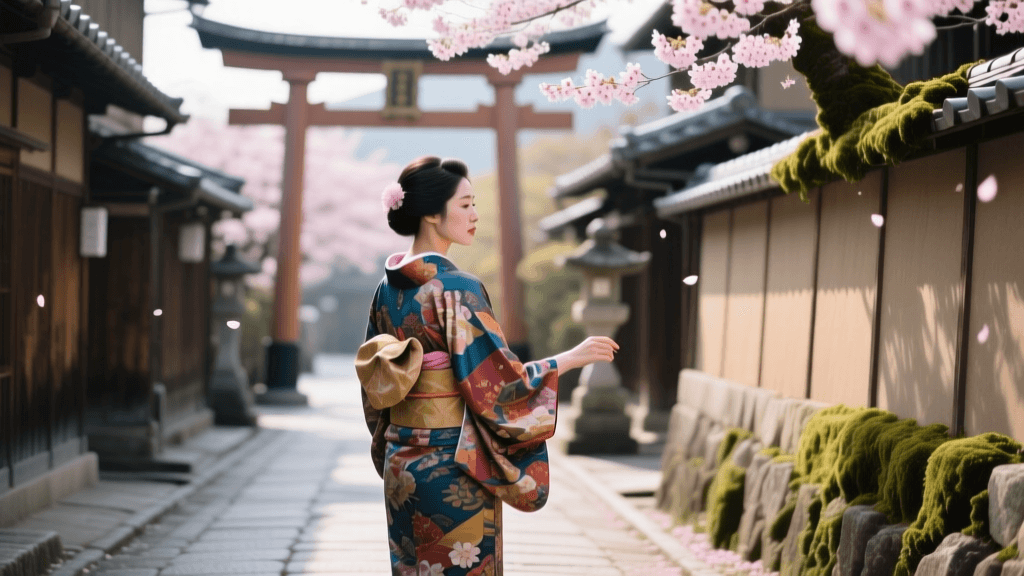
The cobblestone slopes of Ninenzaka and Sannenzaka, leading up to the majestic Kiyomizu-dera temple, offer a quintessential Kyoto atmosphere. The wooden facades, hanging lanterns, and traditional storefronts create a rich, textured environment. This location is best photographed during the golden hour, roughly 45 minutes before sunset, when the warm directional light highlights the architectural details and the vibrant colors of a furisode. Photographers should use a telephoto lens to compress the narrow streets, making the historic buildings appear closer to the subject and eliminating distracting modern elements like power lines.
Tokyo: Rikugien Garden and Nezu Shrine
While Kyoto is the traditional heart of Japan, Tokyo offers stunning, highly accessible locations. Rikugien is one of Tokyo's finest landscape gardens, featuring a central pond, weeping cherry blossoms, and vibrant maple trees. The garden's winding paths allow for intimate, nature-focused portraits. During spring, the massive weeping cherry blossom tree near the entrance provides a breathtaking canopy of pale pink. In autumn, the illuminated maple leaves create a fiery, dramatic backdrop for evening shoots. Nezu Shrine, with its iconic tunnel of vermilion torii gates and azalea bushes, offers a striking color contrast, especially when the subject is wearing a kimono with cool blue, green, or white tones. You can explore more about this historic garden via Japan Guide's Rikugien overview.
Seasonal Timing and Garment Selection
In Japanese culture, the kimono is deeply tied to the seasons. Wearing the correct garment and photographing it in the appropriate environment is crucial for cultural accuracy and visual harmony. Below is a structured guide to help you plan your shoot.
| Season | Best Months | Recommended Garment | Lighting & Environment | Crowd Levels |
|---|---|---|---|---|
| Spring | March - May | Furisode (long sleeves) or Silk Komon | Soft overcast light; Cherry blossoms (Sakura) | Extremely High |
| Summer | June - August | Yukata (cotton) or Ro/Sham (sheer silk) | Harsh midday sun (seek shade); Evening festivals | High |
| Autumn | September - November | Tomesode or Iromuji with warm-toned Obi | Directional golden light; Red maple leaves (Momiji) | Very High |
| Winter | December - February | Wool Kimono, Haori jackets, Faux-fur shawls | Crisp, clear light; Snowscapes and plum blossoms | Low to Moderate |
Practical Logistics: Rentals, Costs, and Etiquette
Unless you own a personal collection, renting is the most practical option for travelers. Major tourist hubs like Asakusa in Tokyo and the Higashiyama district in Kyoto are lined with rental shops. A standard silk kimono rental package typically costs between 5,000 and 8,000 JPY (approximately $35 to $55 USD). This usually includes the kimono, obi, zori (sandals), tabi (split-toe socks), and basic hair styling. Premium options, such as authentic vintage silk or elaborate furisode for coming-of-age ceremonies, can range from 12,000 to 30,000 JPY.
When booking, look for reputable shops like Okamoto in Kyoto or Yae Kimono in Tokyo, which offer English-speaking staff and high-quality, well-maintained garments. It is vital to understand the rules regarding photography in public spaces. Many shrines and gardens in Kyoto strictly prohibit the use of tripods, reflectors, and professional lighting equipment without a prior commercial permit. If you are hiring a professional photographer for a paid gig, you must contact the location's administration office weeks in advance to secure a photography permit, which may incur a fee of 2,000 to 5,000 JPY. For broader regional guidelines and tourism updates, the Japan National Tourism Organization's Kyoto page is an excellent resource.
Camera Settings and Gear Recommendations
Capturing the intricate patterns of Yuzen dyeing and the luxurious texture of silk requires the right optical equipment and camera settings. The primary goal is to isolate the subject from busy backgrounds while retaining sharp detail on the garment's focal points, such as the obi knot and the collar.
Lens Choice and Aperture
An 85mm prime lens (such as an f/1.4 or f/1.8) is the gold standard for kimono portraiture. The focal length provides flattering facial compression, while the wide aperture melts away distracting backgrounds into a smooth bokeh, allowing the vibrant colors of the kimono to pop. For environmental portraits that capture the subject interacting with the architecture of a shrine or garden, a 35mm or 50mm lens stopped down to f/4 or f/5.6 is ideal to maintain depth of field across both the subject and the background.
Exposure and White Balance
Silk kimono, particularly those dyed with traditional botanical pigments, can be highly reflective. Avoid using direct, on-camera flash, which will flatten the image and create harsh hotspots on the silk. Instead, rely on natural light. Set your camera to Aperture Priority mode. Keep your ISO as low as possible (ISO 100-400) to minimize noise, which can muddy the fine details of the fabric patterns. Crucially, avoid using Auto White Balance, as it often misinterprets the rich reds and golds of a kimono, shifting them toward unnatural magenta or orange tones. Use a Custom White Balance based on a gray card, or lock your White Balance to the 'Daylight' or 'Shade' preset depending on your environment.
Posing Techniques and Cultural Accuracy
A beautiful photograph can be ruined by a cultural faux pas. The most critical rule of kimono dressing is the collar placement: the left side of the collar must always cross over the right side. The reverse (right over left) is strictly reserved for dressing the deceased for funerals. Photographers must double-check this detail before pressing the shutter.
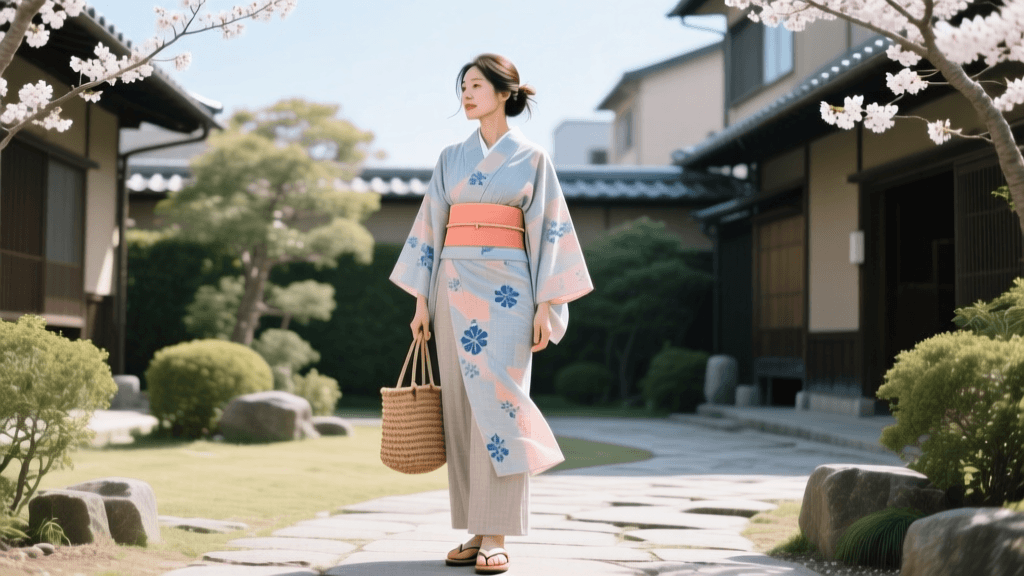
Posing in a kimono requires a different approach than Western fashion photography. The garment restricts movement, so poses should emphasize grace, stillness, and subtle elegance. Encourage the subject to keep their posture straight, with shoulders relaxed and slightly pulled back to ensure the collar sits neatly against the nape of the neck—a feature considered highly elegant in Japanese aesthetics. Hands should be kept close to the body, gently resting on the obi, holding a traditional wagasa (paper umbrella), or lightly touching a sleeve. Avoid wide stances or dramatic, angular limb placements, as these disrupt the cylindrical silhouette that the kimono is designed to create. When walking, the subject should take small, deliberate steps, keeping their toes pointed slightly inward, which naturally creates a demure and traditional posture.
Conclusion
Photographing traditional Japanese garments is a delicate balance of technical skill and cultural appreciation. By selecting the right location, respecting seasonal traditions, and employing thoughtful camera settings, you can create timeless images that honor the artistry of the kimono. Whether you are wandering the bamboo-lined paths of Arashiyama at dawn or capturing the vibrant autumn reflections at Rikugien, preparation and respect for the garment's heritage will always yield the most breathtaking results.