Chinese Fashion Blogs Reviving Heritage Textiles 2026
The New Wave of Chinese Fashion Journalism
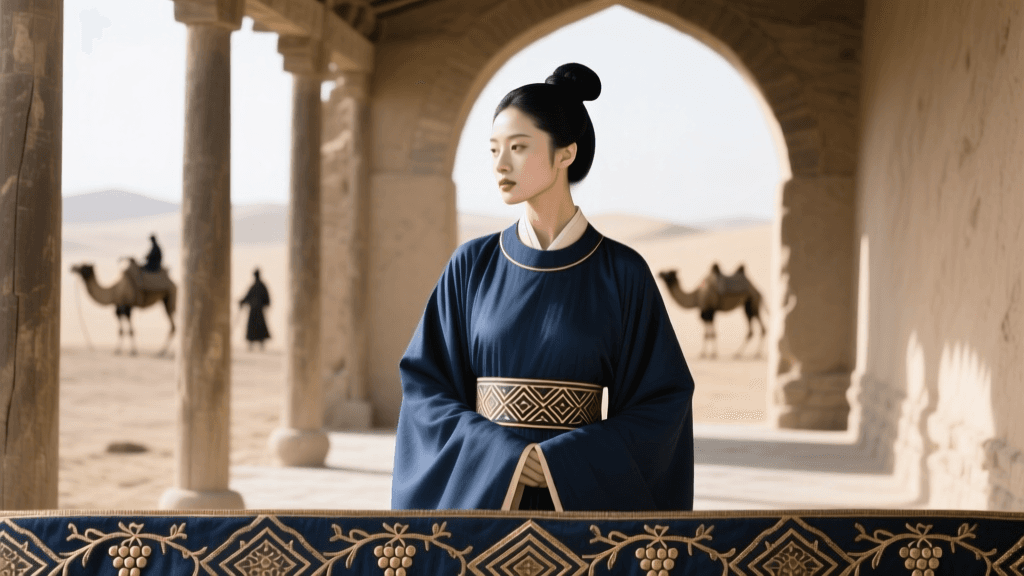
In 2026, the landscape of Asian fashion media has undergone a radical transformation. The era of superficial outfit-of-the-day posts has given way to a rigorous, academic approach to digital fashion journalism, spearheaded by independent Chinese content creators. Platforms like Xiaohongshu (RED) and Bilibili are no longer just social networks; they are living, breathing archives of traditional Chinese garments. Today’s top Chinese fashion bloggers operate as investigative journalists, textile historians, and cultural preservationists, documenting everything from the intricate pleat engineering of the Ming Dynasty Mamianqun (horse-face skirt) to the eco-friendly, natural dyeing methods of Xiangyunsha silk.
According to industry analyses featured in Vogue, the Hanfu movement has evolved from a niche subculture into a multi-billion-dollar mainstream industry. However, as the market has expanded, so has the proliferation of fast-fashion knockoffs and historically inaccurate garments. This has created a massive demand for authoritative, well-researched fashion journalism. In 2026, the most successful Chinese fashion blogs are those that bridge the gap between ancient textile techniques and modern digital storytelling, offering readers deep dives into the provenance, construction, and cultural significance of heritage clothing.
Platform Dynamics: Xiaohongshu vs. Bilibili in 2026
For aspiring heritage fashion journalists and brands looking to collaborate with creators, understanding the distinct editorial styles of China’s top platforms is crucial. The way traditional garments are documented varies wildly depending on the medium.
| Platform | Primary Content Format | Audience Demographic | Best For (Journalism Angle) |
|---|---|---|---|
| Xiaohongshu (RED) | High-res photo carousels, infographics, short-form styling vlogs | Urban women 18-35, high purchasing power, trend-conscious | Textile macro-photography, styling guides, secondhand vintage market reviews |
| Bilibili | Long-form video essays, 3D structural modeling, historical documentaries | Gen Z and Millennials, highly educated, detail-oriented | Pattern drafting tutorials, historical accuracy debunking, supply chain investigations |
| Douyin | Fast-paced transitions, behind-the-scenes artisan visits, live commerce | Mass market, broad age range, entertainment-driven | Artisan interviews, eco-dyeing process demonstrations, rapid trend dissemination |
Deep Dive 1: Documenting Xiangyunsha and Eco-Friendly Dyeing
One of the most prominent subgenres of Chinese fashion blogging in 2026 is the documentation of natural, eco-friendly dyeing methods. Xiangyunsha, often referred to as 'soft gold,' is a traditional silk dyeing technique from Guangdong province that uses the juice of the gambier plant and iron-rich river mud. Top investigative fashion bloggers on Xiaohongshu have taken it upon themselves to expose the supply chain, differentiating between authentic, sun-cured Xiangyunsha and chemically treated imitations.
Creators like 'SilkRouteArchivist' use macro photography to show the microscopic cracking patterns that naturally occur in authentic gambiered silk after months of wear—a hallmark of quality that fast-fashion replicas cannot mimic. These bloggers frequently travel to Foshan to interview master dyers, documenting the grueling, weather-dependent process of spreading silk on grassy fields to bake in the sun. In 2026, authentic Xiangyunsha fabric commands a premium price, often ranging from 3,500 to 8,000 RMB per meter. Fashion journalists play a vital role in educating consumers on why this price point is justified, emphasizing the sustainable, zero-waste nature of the natural dyeing process compared to modern synthetic alternatives.
Deep Dive 2: The Structural Engineering of the Mamianqun
The Mamianqun, or horse-face skirt, has become a global runway staple, but its structural complexity is often lost in translation. On Bilibili, long-form video essayists have adopted a highly technical approach to fashion journalism, treating the Mamianqun not just as a garment, but as a feat of ancient engineering. These creators use 3D modeling software like CLO 3D to deconstruct the skirt’s pleating systems.
A standard Ming Dynasty-style Mamianqun features a specific arrangement of flat panels (the 'horse faces') and intricate, stacked pleats that allow for maximum mobility while maintaining a rigid, architectural silhouette. Bilibili creators frequently publish 'teardown' videos, purchasing both museum-grade replicas and cheap e-commerce knockoffs, and physically cutting them open to analyze the internal waistband structures and pleat anchoring techniques. This level of investigative journalism has forced many mainstream brands to improve their manufacturing standards, as consumers are now armed with the knowledge to spot poor pattern drafting and incorrect pleat ratios.
Deep Dive 3: Vintage Qipao and the Secondhand Market
Beyond newly manufactured Hanfu, there is a booming niche in Chinese fashion journalism dedicated to the secondhand and vintage market, specifically focusing on Republic-era (1920s-1940s) Qipao. As reported by the South China Morning Post, the appetite for authenticated vintage Chinese fashion has surged among collectors and sustainable fashion advocates alike.
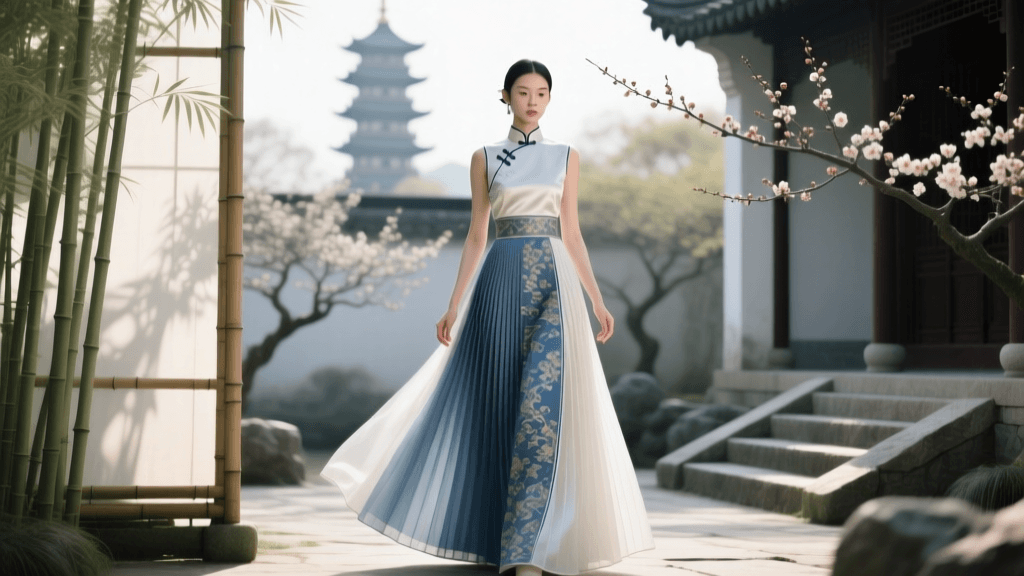
Top Xiaohongshu curators specialize in 'provenance journalism.' They source 1930s silk Qipao from estate sales in Shanghai and Beijing, documenting the restoration process. These blogs detail the specific characteristics of vintage garments, such as the use of traditional Pan Kou (knotted buttons), the bias-cut techniques introduced in the late 1920s, and the identification of period-accurate Song brocade patterns. In 2026, a fully authenticated, well-preserved 1930s silk Qipao can fetch anywhere from 15,000 to 45,000 RMB in the curated secondhand market. Bloggers provide crucial guides on how to properly store these fragile textiles, recommending specific humidity controls and acid-free archival tissue papers to prevent the silk from shattering.
The Economics of Heritage Fashion Content in 2026
The monetization strategies for Chinese fashion journalists focusing on traditional garments have matured significantly. While standard influencer revenue relies on affiliate links and sponsored posts, heritage fashion bloggers in 2026 generate income through highly specialized channels:
- Consulting for Heritage Brands: Top creators are hired by established brands in Suzhou and Hangzhou to ensure historical accuracy in new collections, acting as cultural liaisons between master weavers and modern design teams.
- Premium Digital Archives: Many Bilibili creators offer paid memberships, providing subscribers with access to high-resolution, downloadable historical pattern drafts and translated excerpts from ancient textile manuals.
- Curated Group Buys (Tuan Gou): Bloggers leverage their audience to fund small-batch production runs with traditional artisans, ensuring fair wages for the weavers while offering followers museum-quality garments at a slight discount compared to retail.
As noted by market analysts at Jing Daily, the intersection of cultural heritage and digital commerce is one of the most resilient sectors in the Chinese luxury and fashion market, driven by a Gen Z demographic that views traditional dress as a form of cultural confidence and sustainable expression.
Actionable Advice for Aspiring Heritage Fashion Bloggers
If you are looking to enter the space of Asian traditional fashion journalism, whether as a creator or a researcher, the barrier to entry requires a commitment to academic rigor and technical excellence. Here is how the top creators operate in 2026:
1. Invest in Textile-Specific Photography Gear
Documenting the weave of a Song Brocade or the slub texture of raw hemp requires specialized equipment. Top Xiaohongshu creators utilize the Sony A7R V paired with a 90mm f/2.8 Macro G OSS lens. Crucially, they employ cross-polarization lighting techniques—using polarizing gels on studio strobes and a polarizing filter on the lens—to eliminate the harsh glare that naturally occurs when photographing silk, allowing the true depth of the weave to be captured.
2. Master the Historical Terminology
Audiences in 2026 are highly educated on the subject. You must fluently use and explain correct terminology. For example, knowing the difference between Jiaoling Youren (crossed collar, right lapel) and Yuanling (round collar), or understanding the distinction between Pingjin (plain weave with gold thread) and Zhuanghua (brocaded patterns). Misusing these terms will immediately discredit your journalism.
3. Build a Primary Source Library
Do not rely solely on other bloggers for your research. Build a library of primary historical texts, museum catalogs, and archaeological reports. Referencing the textile findings from the Mawangdui Han Dynasty tombs or the garment inventories of the Ming Dynasty imperial court adds a layer of authority that separates true journalists from casual enthusiasts.
4. Practice Ethical Sourcing and Reporting
When covering indigenous dyeing techniques or minority group textiles (such as Miao embroidery or Dong batik), ethical journalism is paramount. Ensure you are crediting specific artisans and villages, avoiding the homogenization of diverse ethnic traditions under a generic 'Chinese' label, and advocating for fair compensation in the supply chain.
Conclusion
The year 2026 marks a golden age for Chinese fashion journalism. The creators leading this charge on platforms like Xiaohongshu and Bilibili are doing far more than styling beautiful outfits; they are actively preserving intangible cultural heritage, holding the fashion industry accountable for historical accuracy, and championing sustainable, eco-friendly textile practices. By treating traditional garments with the editorial respect and investigative rigor they deserve, these digital journalists are ensuring that the rich legacy of Asian fashion traditions will not only survive but thrive in the modern global wardrobe.