Hanfu Travel Photography: Styling Tips & Locations
The Rise of Hanfu Tourism in China
Over the past five years, traditional Chinese clothing has evolved from a niche historical hobby into a mainstream cultural phenomenon. The 'Guochao' (national trend) movement has inspired millions of young travelers to don historical garments while visiting China's most iconic landmarks. According to a cultural report by Sixth Tone, the Hanfu tourism industry has fundamentally transformed historic districts, with cities like Xi'an and Luoyang actively encouraging visitors to wear traditional dress through discounted entry tickets, immersive night markets, and dedicated photography zones. For travel photographers and cultural enthusiasts, capturing these flowing garments against the backdrop of ancient architecture offers a unique blend of historical reverence and modern aesthetic expression. As noted by Vogue Business, the market value of Hanfu has skyrocketed, driven largely by social media platforms like Douyin and Xiaohongshu, where travel vloggers showcase cinematic styling and location guides.
Choosing the Right Hanfu for Your Trip
Selecting the appropriate historical silhouette is crucial for travel photography. Different dynasties offer vastly different aesthetics, fabrics, and levels of mobility. When packing for a trip or renting on-site, consider the climate, the architectural backdrop, and the amount of walking you will be doing.
- Tang Dynasty (618–907): Characterized by the 'Qixiong Ruqun' (chest-high skirt) and wide, draped sleeves. This style is vibrant, romantic, and heavily influenced by Silk Road cosmopolitanism. It is best suited for grand, colorful locations but can be heavy and hot in the summer.
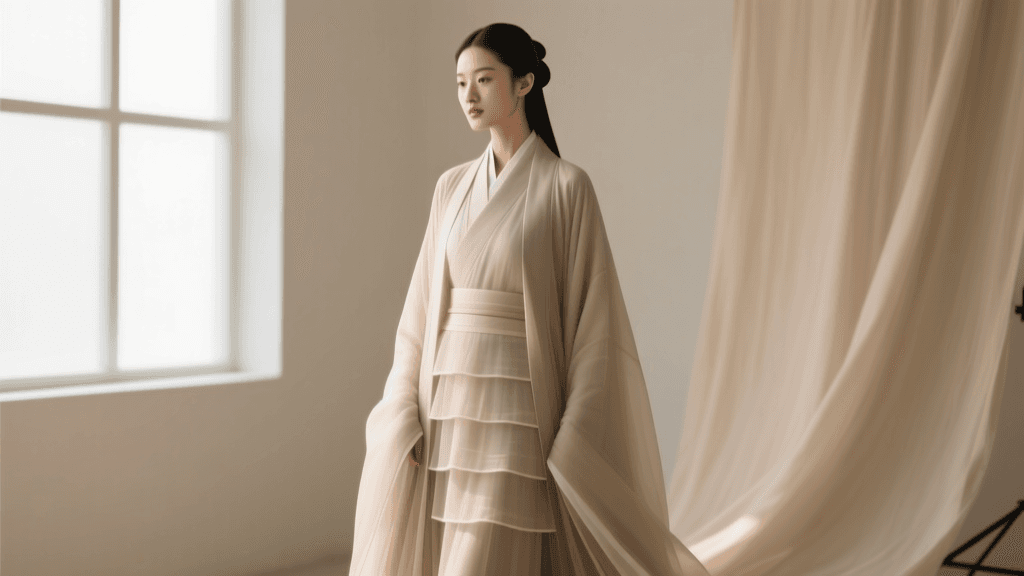
- Song Dynasty (960–1279): Known for the 'Beizi' (long outer coat) and slender, pleated skirts. The color palette is typically muted, elegant, and minimalist. This style offers high mobility and is perfect for scholarly, serene environments like bamboo forests or classical gardens.
- Ming Dynasty (1368–1644): Famous for the 'Mamianqun' (horse-face skirt) and structured 'Aoqun' (jacket and skirt). The garments are heavily layered, featuring intricate embroidery and metallic threads. This regal silhouette is ideal for autumn and winter travel, providing both warmth and a majestic photographic presence.
Hanfu Style Comparison Chart for Travelers
| Dynasty | Garment Style | Best Season | Mobility | Photography Vibe |
|---|---|---|---|---|
| Tang | Qixiong Ruqun (Chest-high skirt) | Spring / Summer | Moderate (Long hems) | Romantic, ethereal, vibrant |
| Song | Beizi (Outer coat) & Baidiequn | Spring / Autumn | High (Slender fit) | Elegant, minimalist, scholarly |
| Ming | Aoqun & Mamianqun (Horse-face) | Autumn / Winter | High (Structured waist) | Majestic, regal, structured |
Top Locations for Hanfu Photography
To capture the most breathtaking images, timing and location selection are everything. Here are three premier destinations in China that have fully embraced Hanfu tourism, complete with practical details for your shoot.
1. Xi'an: Datang Everbright City
Xi'an, the ancient capital of the Tang Dynasty, is arguably the Hanfu capital of the world. Datang Everbright City is a massive pedestrian zone designed to replicate the cosmopolitan glory of Chang'an. Best Time to Shoot: 8:00 PM to 11:00 PM. The area is illuminated by thousands of warm, traditional lanterns that contrast beautifully with the night sky. Rental Costs: Expect to pay between 199 and 399 RMB for a full package, which typically includes a premium Ming or Tang garment, professional historical makeup, and hair styling. Tip: Bring a fast prime lens (like a 35mm f/1.4 or 50mm f/1.2) to handle the low-light conditions without relying on harsh flash photography.
2. Hangzhou: West Lake and Guo's Villa
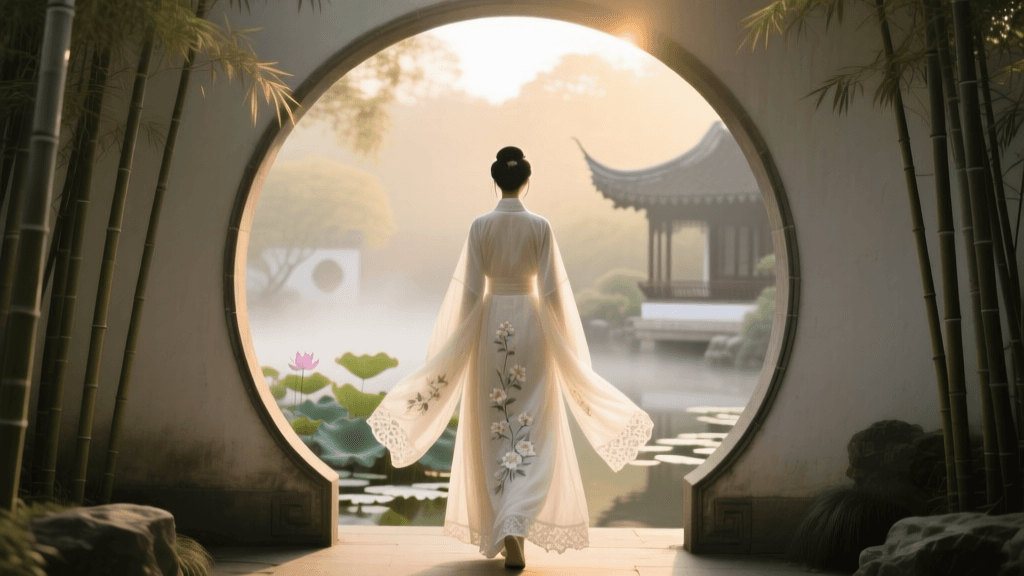
For Song Dynasty elegance, Hangzhou's West Lake offers unparalleled natural beauty. While the main causeways are crowded, renting a private boat or visiting the secluded Guo's Villa provides a serene backdrop of weeping willows and lotus ponds. Best Time to Shoot: 6:00 AM to 8:00 AM. Early morning guarantees a soft, diffused mist rolling off the lake and zero tourist crowds. Costs: Entrance to Guo's Villa is a mere 20 RMB, making it an incredibly cost-effective alternative to pricier private gardens. Tip: Use an oil-paper umbrella ('Youzhisan') as a prop to frame your subject and add a touch of Jiangnan romance.
3. Luoyang: Luoyi Ancient City
Luoyang has recently exploded in popularity, boasting over 400 dedicated Hanfu rental shops within the Luoyi Ancient City district alone. The architecture here features imposing wooden structures and sweeping eaves that perfectly complement the structured, regal lines of Ming Dynasty clothing. Best Time to Shoot: Late afternoon during the golden hour (around 4:30 PM in autumn) to catch the sunlight raking across the intricate wooden lattice windows. Rental Costs: Highly competitive, with full styling packages starting as low as 129 RMB.
Essential Styling, Hair, and Props
A beautiful garment is only half the equation; historical accuracy in styling elevates a travel photo from a simple snapshot to a cinematic masterpiece.
Hair and Accessories
Modern travelers rarely have the time or skill to style complex historical updos from scratch. Most rental shops provide 'Jiapian' (pre-styled wig pieces and hair pads) that can be pinned directly onto your natural hair. If you are bringing your own Hanfu, invest in a high-quality human-hair wig piece on Taobao (costing around 150 to 300 RMB). Accessorize with dynasty-appropriate hairpins: Tang styles favor large, floral 'buyao' (dangling pins) made of gold and enamel, while Song styles prefer delicate pearl and jade combs.
Makeup Considerations
Travel photography requires makeup that withstands both harsh sunlight and evening flash. For Tang Dynasty looks, emphasize the 'Huadian' (floral forehead decals) and use a vibrant red lip. For Song and Ming looks, opt for a softer, matte complexion with elongated, willow-leaf eyebrows. Always carry a translucent setting powder and blotting papers, as heavy historical layers can cause you to sweat, even in cooler weather.
Must-Have Props
- Tuan Shan (Round Silk Fan): Essential for Tang and Song styles. It provides a natural place to rest your hands and can be used to partially obscure the face for a coy, traditional aesthetic.
- Bamboo Flute or Guqin: Perfect for adding a scholarly, martial, or musical element to your portrait, especially in bamboo forests or mountain pavilions.
- Lanterns: For night shoots in Xi'an or Luoyang, a warm LED-lit traditional paper lantern acts as both a prop and a portable, flattering fill light for your face.
Photography Techniques for Flowing Garments
Hanfu is designed in motion. The wide sleeves ('Guangxiu') and pleated skirts are meant to catch the wind and create dynamic, sweeping lines. To capture this effectively, photographers must adjust their technical approach.
Mastering Shutter Speed
When photographing a subject spinning in a Mamianqun or tossing their sleeves, a slow shutter speed will result in muddy, blurred fabric. Set your camera to a minimum of 1/500th of a second to freeze the intricate embroidery and pleats mid-air. If you are shooting in low light and cannot achieve this shutter speed, instruct your subject to move slowly and deliberately, holding the pose for a full second before transitioning.
Utilizing Wind and Environment
Carry a small, portable reflector that can double as a wind-blocker, or conversely, use a small battery-operated fan for indoor or courtyard shoots where the air is stagnant. When posing, instruct the subject to step into the wind so the fabric blows back naturally, rather than wrapping around their legs. For environmental portraits, use a telephoto lens (70-200mm) to compress the background, making distant pagodas or mountain ranges appear larger and more imposing behind the subject.
Posing for Historical Accuracy
Modern, fashion-editorial poses often clash with the modest, grounded nature of traditional Chinese garments. Avoid sharp, angular limb placements. Instead, encourage soft, curved hand gestures (often referred to as 'orchid fingers' in classical dance). Keep the spine straight but relaxed, and utilize the environment by having the subject lean gently against wooden pillars, gaze out over lotus ponds, or walk slowly up stone staircases, allowing the heavy hems of the skirt to cascade elegantly over the steps.