Miao Silver Jewelry and Embroidery: Authentic Buyer Guide
The Wearable Archives of the Miao People
For centuries, the Miao people (widely known internationally as the Hmong) of China’s Guizhou, Yunnan, and Hunan provinces have used their traditional garments as a form of historical record. Lacking a widely used written script until recent centuries, the Miao encoded their mythology, migration routes, and clan identities into the intricate embroidery and heavy silver jewelry that adorn their festival attire. Today, these textiles and metalworks are not just museum pieces; they are a living, breathing cottage industry. For collectors, fashion historians, and cultural enthusiasts, sourcing authentic Miao garments requires an understanding of regional techniques, material authenticity, and fair-trade pricing.
According to the Metropolitan Museum of Art, Miao textiles are distinguished by their remarkable structural complexity, often utilizing supplementary weft techniques and intricate pleating that rival the most advanced contemporary textile engineering. This guide provides actionable advice on how to identify, purchase, and care for genuine Miao embroidery and silverwork.
Decoding Miao Embroidery: Techniques and Motifs
Miao embroidery (Miao xiu) is not a single technique but a diverse umbrella of over a dozen regional stitching methods. The most prized among collectors include:
- Tin-Thread Embroidery (Xi xiu): Artisans wrap fine silk thread around thin ribbons of tin or silver alloy, couching the metallic threads onto indigo-dyed cotton to create a shimmering, armor-like effect.
- Double-Needle Stitching (Shuang zhen xiu): Using two needles simultaneously, the embroiderer creates a raised, braided ridge that is highly durable and visually striking.
- Pleated Skirts (Bai zhe qun): A single ceremonial skirt can require 15 to 20 meters of hand-woven indigo cotton, compressed into 500 to 1,000 micro-pleats. The pleating process involves spraying the fabric with water, folding it meticulously on a wooden pleating board, and binding it tightly with hemp string for several weeks to set the memory of the fabric.
The motifs are deeply symbolic. The "Butterfly Mother" (Ma Ma Bang) is a ubiquitous design representing the Miao creation myth, while stylized buffalo horns and dragons symbolize agricultural prosperity and protection.
Actionable Guide: Sourcing Authentic Miao Embroidery
When shopping in markets like Kaili or Xijiang Miao Village, distinguishing between vintage, authentic handmade pieces and mass-produced tourist replicas is crucial.
- The Smell Test: Authentic indigo-dyed fabric has a distinct, earthy, slightly fermented scent derived from the Strobilanthes cusia plant and wood ash lye. Chemical dyes smell sharply of ammonia or synthetic petroleum.
- The Backing Check: Turn the embroidery over. Hand-stitched pieces will show slight irregularities, and the thread carriers will be visible. Machine embroidery will have a uniform, interlocking bobbin thread on the back, often backed with a synthetic stabilizer.
- Wear Patterns: Vintage jackets (pre-1980s) will show natural fading and wear on the cuffs and collar from decades of use and natural body oils, which synthetic distressing cannot accurately replicate.
The Weight of Heritage: Miao Silver Jewelry
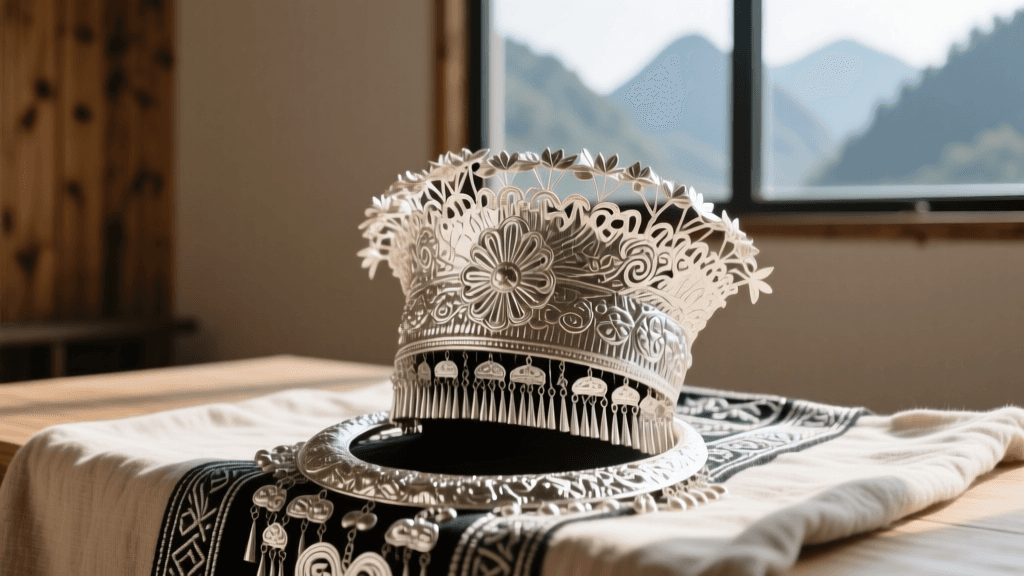
Silver is the spiritual armor of the Miao people. It is believed to ward off evil spirits and illuminate the path to the afterlife. A full set of festival silver jewelry—including the iconic silver horn crown (yin jiao), neck rings, chest locks, and bracelets—can weigh between 5 to 10 kilograms. Encyclopedia Britannica notes that the accumulation and display of silver is historically tied to a family's wealth, social standing, and the dowry prepared for daughters.
Miao silversmithing relies on techniques such as filigree (hua si), where silver is drawn into threads as thin as a human hair, and chasing (zan hua), which involves hammering relief patterns from the reverse side of a silver sheet.
Buyer’s Checklist: Real Silver vs. Tourist Alloys
Many street vendors sell "Miao Silver" that is actually cupronickel (a copper-nickel alloy) or brass plated with a silver wash. To ensure you are buying genuine silver:
- The Magnet Test: Pure silver is non-magnetic. If a vendor's "silver" hairpin snaps to a neodymium magnet, it contains iron or steel.
- The Sound Test: Strike a silver bangle gently with a coin. Pure 990 or 999 silver emits a dull, low-pitched "thud" or short ring. High-copper alloys will produce a high-pitched, prolonged "ping."
- Hallmarks and Pricing: Authentic artisan silver is usually stamped with "990" or "999". Furthermore, understand the pricing structure: raw silver trades at roughly 6 to 8 RMB per gram. However, authentic Miao handcrafted silver is priced between 18 to 35 RMB per gram to account for the intense labor of filigree work. If a vendor is selling a 500-gram intricate crown for 1,000 RMB (2 RMB/gram), it is definitively a base metal alloy.
Cost, Sizing, and Care: Practical Data Table
Below is a practical reference guide for collectors and buyers looking to invest in authentic Miao garments and accessories.
| Item | Material / Technique | Average Weight | Price Range (RMB) | Care Instructions |
|---|---|---|---|---|
| Vintage Pleated Skirt | Indigo Cotton, Hand-pleated | 1.5 - 3.0 kg | 3,000 - 8,000 | Never wash. Store flat or rolled to maintain pleats. Keep away from direct sunlight. |
| Silver Horn Crown | 990 Pure Silver, Filigree | 1.2 - 2.5 kg | 15,000 - 40,000 | Polish with a microfiber silver cloth. Store in anti-tarnish bags with silica gel. |
| Tin-Thread Jacket | Silk, Tin/Alloy Wire Couching | 0.8 - 1.2 kg | 2,500 - 6,000 | Spot clean only. Do not iron directly; use a pressing cloth on low heat. |
| Baby Carrier (Bei dai) | Cotton base, Silk floss embroidery | 0.5 - 0.8 kg | 1,500 - 4,500 | Hand wash in cold water with pH-neutral detergent. Air dry flat. |
| Neck Torque (Xiang quan) | 999 Silver, Solid forged | 0.4 - 0.8 kg | 4,000 - 12,000 | Wear often; natural skin oils prevent tarnishing. Remove before swimming. |
Measuring and Wearing the Pleated Skirt
Miao pleated skirts are wrap-around garments. When purchasing, waist measurement is secondary to the total length of the skirt. A standard ceremonial skirt measures between 6 to 8 meters in circumference when fully unfolded. To wear it correctly, you must wrap it around the waist with a 10 to 15 cm overlap at the front, securing it with a woven silk sash. Ensure the hem falls exactly at the mid-calf to allow the intricate cross-stitch borders to be visible above the woven leg wraps.
When and Where to Buy: Festivals and Markets
Timing your visit to Guizhou province is critical for witnessing these garments in their intended context and for finding the best selection of authentic crafts.
- The Sisters' Meal Festival (Zimei Fan Jie): Held annually in April (usually corresponding to the lunar calendar in Taijiang County), this is the premier event for viewing elaborate silver and embroidery. Young women wear their full dowry sets. Artisans set up temporary markets on the periphery of the festival grounds, offering fresh, high-quality silverwork.
- The Lusheng Festival: Occurring in November across various Miao and Dong villages, this harvest festival features heavy use of indigo-dyed pleated skirts and silver horn crowns. It is an excellent time to source vintage textiles, as elders often bring older family heirlooms out for appraisal and occasional sale.
- Kaili Ethnic Minority Museum Market: For year-round shopping, the weekend markets surrounding the Kaili museum offer a concentrated hub of textile dealers. Always negotiate; the initial asking price for vintage textiles is typically marked up by 40% to 60% for foreign buyers and tourists.
Preserving a Living Tradition
Purchasing authentic Miao embroidery and silver is more than an act of collecting; it is a direct investment in the economic survival of rural artisan communities. As modernization pulls younger generations toward urban centers, the financial incentive provided by ethical collectors helps ensure that the complex knowledge of indigo fermentation, micro-pleating, and silver filigree is passed down to the next generation. By understanding the metrics of authenticity, weight, and fair pricing, buyers can respectfully engage with and help preserve one of Asia's most spectacular sartorial heritages, a mission championed by global bodies like the UNESCO Intangible Cultural Heritage list, which continually highlights the necessity of protecting traditional craftsmanship.