The Ultimate Guide to Tai Chi Practice Wear and Martial Arts Uniforms
The Intersection of Movement and Attire in Taijiquan
Tai Chi, or Taijiquan, is a centuries-old Chinese martial art that has evolved into a globally recognized practice for health, meditation, and physical conditioning. Often described by medical professionals as 'meditation in motion,' the practice requires a unique synergy between the mind, the body, and the environment. According to Harvard Health Publishing, Tai Chi is highly effective for improving balance, reducing stress, and enhancing overall cardiovascular health. However, to fully immerse oneself in the flowing, continuous movements of the art, practitioners must consider an often-overlooked element: their clothing.
Traditional Tai Chi practice wear is not merely a uniform; it is a functional tool designed to facilitate the unhindered flow of 'Qi' (vital energy) and allow for deep, expansive postures. Unlike restrictive modern athletic wear, traditional Chinese martial arts clothing prioritizes drape, breathability, and structural ease. The Mayo Clinic highlights that the gentle, flowing movements of Tai Chi require a deeply relaxed state of mind and body, a state that is significantly hindered by tight waistbands, restrictive shoulder seams, or non-breathable synthetic fabrics. This comprehensive guide will explore the anatomy, fabric choices, and precise sizing required for the perfect Tai Chi uniform.
The Anatomy of Traditional Tai Chi Practice Wear
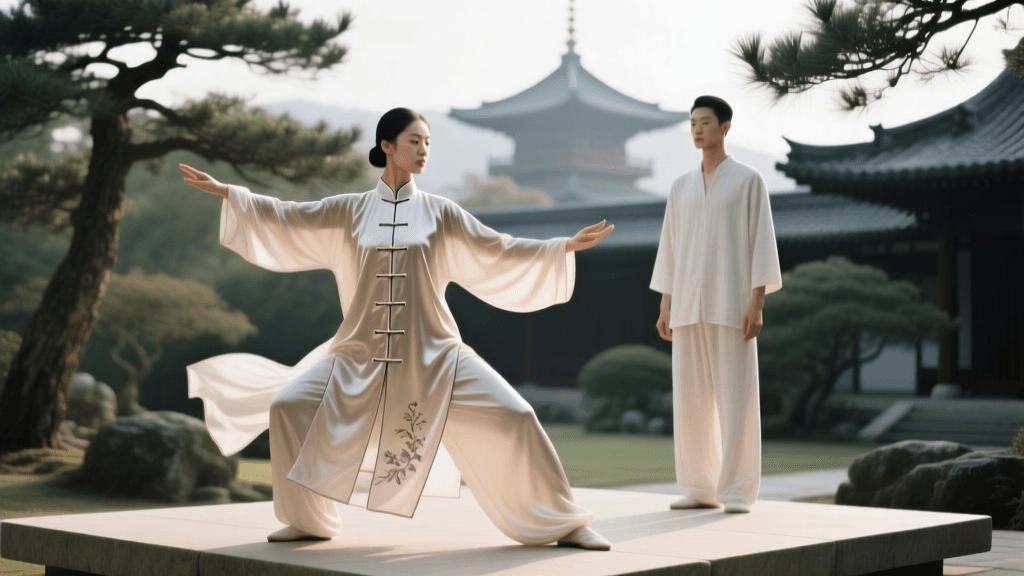
A standard Tai Chi uniform, often referred to as a 'Taijiquan fu,' consists of two primary components: the jacket (shangyi) and the trousers (kuzi). While modern variations exist, the traditional silhouette remains the gold standard for both daily practice and formal performances.
The Jacket (Shangyi)
The traditional Tai Chi jacket is characterized by its loose fit and distinctive collar. The most common styles include the Mandarin collar (a short, unfolded stand-up collar) and the crossed V-neck (often seen in Wudang style garments). The jacket typically fastens with 'frog buttons' (pankou), which are traditional Chinese knotted closures made from fabric or silk. These buttons are not just decorative; they lie flat against the body, preventing the digging and discomfort that hard plastic buttons or zippers might cause during deep breathing exercises or ground-level movements. The sleeves are usually cut with a slight taper or feature a straight, wide drop, allowing the wrists to remain visible and the arms to move freely during forms like 'Wave Hands Like Clouds.'
The Trousers (Kuzi)
Tai Chi trousers are engineered for extreme mobility. The defining feature is the 'drop-crotch' or gusseted crotch, which provides extra fabric in the seat and inner thigh. This design is crucial for executing deep stances, such as the 'Horse Stance' (Ma Bu) or the 'Snake Creeps Down' posture, without the risk of tearing the seams or restricting blood flow. The waistband is traditionally a wide, elasticated band with an internal drawstring, ensuring the garment stays securely in place without compressing the diaphragm, which is essential for deep abdominal breathing (Dantian breathing).
Fabric Selection: A Comparative Guide
Choosing the right fabric is arguably the most critical decision when purchasing Tai Chi wear. The material dictates the garment's drape, thermal regulation, and aesthetic appeal. Historically, the use of silk in Chinese garments is deeply rooted in the culture, as noted in Encyclopædia Britannica's comprehensive history of silk production, which highlights silk's unique ability to combine luxury with surprising durability and temperature regulation. Today, practitioners have several options, each suited to different environments and practice intensities.
| Fabric Type | Breathability | Drape & Flow | Average Cost (USD) | Best Use Case |
|---|---|---|---|---|
| Mulberry Silk | High | Exceptional | $120 - $250+ | Performances, competitions, indoor practice |
| 100% Cotton | Very High | Moderate | $30 - $60 | Daily outdoor practice, summer months, beginners |
| Linen / Cotton-Linen | Exceptional | Structured | $50 - $90 | Hot climates, casual practice, Wudang styles |
| Bamboo Viscose | High | Good | $45 - $80 | Sensitive skin, eco-conscious practitioners |
| Ice Silk (Synthetic Blend) | Moderate | High | $25 - $50 | Budget-friendly performances, quick-drying needs |
Actionable Fabric Advice
- For Beginners: Start with a mid-weight 100% cotton set. It is forgiving, easy to wash, and costs under $50, allowing you to focus on your forms rather than worrying about damaging an expensive silk garment.
- For Competitors: Invest in heavy-weight Mulberry silk (19 momme or higher). The superior drape of silk accentuates the fluidity of your movements, catching the light and impressing judges during Wushu or Tai Chi tournaments.
- For Hot Weather: Opt for a linen-cotton blend. Pure linen wrinkles easily and can feel abrasive, but a blend offers the cooling properties of linen with the softness of cotton.
Sizing, Fit, and the 'Horse Stance' Test
Proper sizing in Tai Chi wear is vastly different from Western athletic sizing. The goal is 'structured looseness.' The garment should never cling to the body, but it also should not be so oversized that it tangles around your limbs during complex transitions.
Actionable Measurement Guide
- Chest and Shoulders: When measuring your chest, add 2 to 3 inches of ease to your actual measurement. The jacket should allow you to cross your arms fully in front of your chest without the fabric pulling across the upper back.
- Sleeve Length: Measure from the base of your neck, over the shoulder, and down to the wrist bone. For Tai Chi, sleeves should end exactly at the wrist joint. If they extend over the hands, they will obscure your hand forms (Shou Xing) and look sloppy.
- Trouser Inseam and Rise: The rise (distance from the crotch seam to the waistband) should be at least 2 inches longer than your standard casual trousers to accommodate the drop-crotch. The inseam should be measured so that the pant leg ends 1 to 1.5 inches above the ankle bone. This clearance is vital to prevent stepping on your own hems during sweeping, low-stance movements.
The true test of a Tai Chi uniform is the 'Horse Stance' test. Put on the trousers, drop into your deepest Ma Bu, and hold for 30 seconds. If you feel any tension in the knees, groin, or waistband, the garment is improperly sized or lacks a sufficient gusset.
Footwear: Grounding Your Practice
Your connection to the ground is the foundation of all martial arts. Traditional Tai Chi practice requires footwear that allows you to feel the earth while providing a modicum of protection. Modern running shoes, with their thick, cushioned heels and aggressive arch support, are entirely unsuitable for Tai Chi. They elevate the heel, disrupt your natural center of gravity, and inhibit the micro-adjustments your toes need to make for balance.
The traditional choice is the 'Kung Fu shoe' or 'Tai Chi slipper.' These are typically made of a canvas or cotton upper with a very thin, flat rubber or cloth sole. They cost between $15 and $30 and provide zero heel lift, ensuring your weight is distributed evenly across the entire foot (the 'Yongquan' point). For practitioners who train exclusively indoors on smooth wooden floors, traditional cloth-soled shoes offer the perfect amount of slip-and-grip, allowing for the pivoting motions required in forms like 'Lotus Kick.' If you practice outdoors on concrete or asphalt, opt for a thin rubber-soled variant to protect your joints from impact shock without sacrificing ground-feel.
Care and Maintenance of Traditional Garments
To ensure your Tai Chi wear lasts for years, proper care is essential, particularly when dealing with natural fibers like silk and linen.
- Silk Uniforms: Never machine wash or wring out silk. Hand wash in cold water (maximum 30°C or 86°F) using a pH-neutral detergent specifically formulated for delicates. Do not soak for more than 5 minutes. Roll the garment in a clean, dry towel to press out excess water, then lay it flat in the shade to dry. Direct sunlight will degrade the silk proteins and cause fading.
- Cotton and Linen Sets: These can generally be machine washed on a gentle cycle with cold water. However, to prevent the frog buttons from catching on other garments, always place the jacket in a mesh laundry bag. Tumble dry on low heat or air dry, and use a warm iron to press the collar and placket for a crisp, respectful appearance before practice.
- Storage: Store your uniforms folded rather than hung. Hanging heavy silk or wet cotton can cause the shoulders to stretch out of shape over time. Keep them in a breathable cotton storage bag to protect against dust and moths.
Conclusion
Selecting the right Tai Chi practice wear is an exercise in mindfulness, mirroring the art itself. By understanding the functional anatomy of the garments, respecting the properties of traditional fabrics, and ensuring precise, movement-friendly measurements, you elevate your practice from a simple physical routine to a holistic cultural experience. Whether you are stepping into a local park for morning forms in breathable cotton, or taking the stage at an international competition in flowing Mulberry silk, your attire should serve as an extension of your intent—unrestricted, balanced, and deeply rooted in Asian tradition.