A Guide to Japanese Kimono Color and Motif Symbolism
The Canvas of Culture: Understanding Kimono Symbolism
The traditional Japanese kimono is far more than a simple garment; it is a wearable canvas that communicates the wearer's age, marital status, social standing, and the precise season of the year. According to the Metropolitan Museum of Art, the evolution of the kimono from the utilitarian kosode of the Muromachi period to the highly stylized outer garment of the Edo period transformed it into a complex medium of visual communication. Every dye, weave, color, and motif is steeped in centuries of cultural philosophy, poetic allusion, and auspicious meaning.
For collectors, cultural enthusiasts, and those looking to wear traditional Japanese clothing authentically, understanding the language of pattern color and motif symbolism is essential. This guide decodes these visual cues and provides actionable advice on how to select, measure, and style these magnificent garments for contemporary wear.
The Language of Color in Japanese Garments
Color in Japanese textiles is deeply tied to nature, the five elements (gogyo), and social hierarchy. Historically, sumptuary laws dictated which classes could wear specific hues, but today, colors are chosen primarily for their seasonal appropriateness and symbolic resonance. The Victoria and Albert Museum notes that the mastery of natural dyes, such as indigo (ai) and safflower (benibana), allowed artisans to create a spectrum of colors that carried profound emotional and spiritual weight.
| Color | Japanese Name | Symbolism & Meaning | Best Occasion & Season |
|---|---|---|---|
| Red | Aka | Passion, vitality, protection from evil spirits, and youthful energy. | Coming of Age Day, Weddings, Autumn. |
| White | Shiro | Purity, sacredness, new beginnings, and mourning (in specific contexts). | Traditional Shinto Weddings (Shiromuku), Summer. |
| Black | Kuro | Formality, elegance, maturity, and solemn respect. | Funerals, highly formal ceremonies, Winter. |
| Purple | Murasaki | Nobility, spiritual awareness, and high social rank. | Formal tea ceremonies, mature women, Spring/Autumn. |
| Yellow/Gold | Ki / Kin | Prosperity, courage, and (historically) imperial authority. | Festivals, Ryukyuan Bingata, Late Summer. |
Seasonal Motifs: Wearing the Time of Year
In Japanese aesthetics, wearing a motif out of season is considered a significant faux pas. The concept of shiki (the four seasons) dictates that motifs should anticipate the season by about a month, allowing the wearer to welcome the changing environment before it fully arrives.
Spring (Haru)
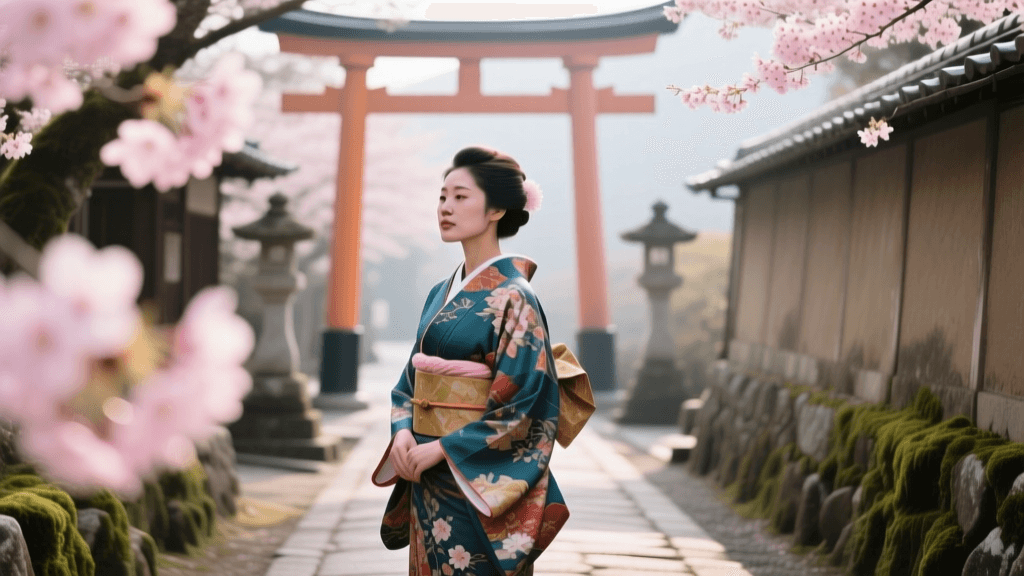
Spring motifs celebrate renewal and fleeting beauty. The cherry blossom (sakura) is the most iconic, symbolizing the ephemeral nature of life. Other popular motifs include wisteria (fuji), plum blossoms (ume), and butterflies. These are typically rendered in soft pinks, pale greens, and whites.
Summer (Natsu)
Summer designs aim to evoke a sense of coolness and water. Motifs include flowing rivers, splashing waves, morning glories (asagao), and fireflies. Cooling colors like deep indigo, aqua, and crisp white are favored, especially on lightweight, unlined cotton yukata or sheer silk ro and sha garments.
Autumn (Aki)
Autumn motifs reflect the harvest and the changing landscape. Maple leaves (momiji), chrysanthemums (kiku), and the susuki (pampas grass) are ubiquitous. The color palette shifts to rich crimsons, burnt oranges, golds, and deep browns, reflecting the turning foliage.
Winter (Fuyu)
Winter garments feature motifs of resilience and purity. Pine trees (matsu), bamboo, camellias (tsubaki), and snowflakes or snow-laden branches are common. Darker, warmer colors like deep purples, blacks, and forest greens provide a backdrop for these stark, elegant designs.
Auspicious Motifs for Celebrations
For joyous occasions like weddings and the Seijin Shiki (Coming of Age Day), garments are adorned with kicho (auspicious) motifs designed to bestow luck, longevity, and prosperity upon the wearer.
- Shochikubai (Pine, Bamboo, and Plum): The ultimate trio of auspicious symbols. Pine represents longevity and endurance; bamboo signifies resilience and flexibility; plum blossoms denote perseverance and hope, as they bloom in the late winter snow.
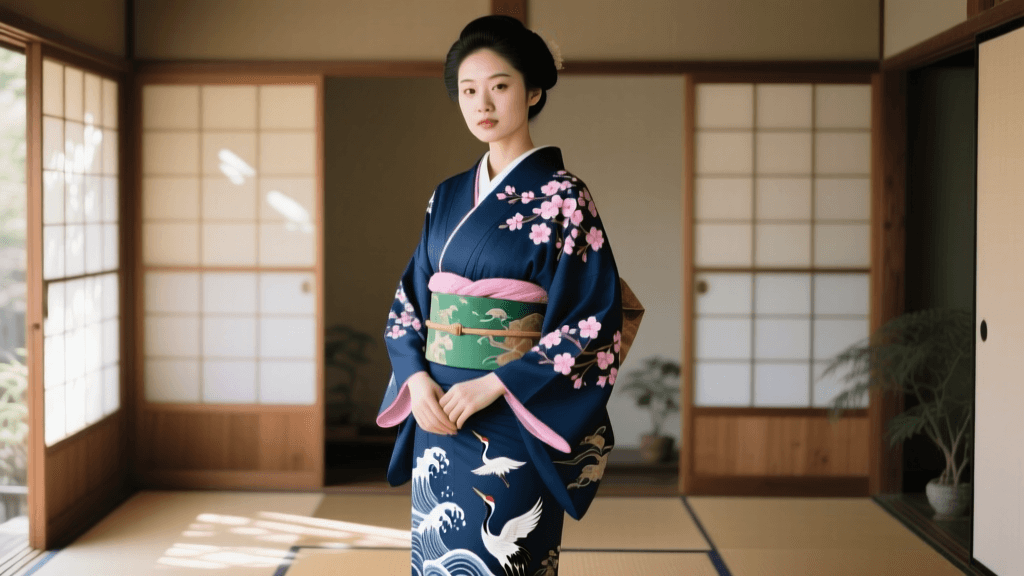
- Tsuru (Crane): Believed to live for a thousand years, the crane is a powerful symbol of longevity, fidelity, and good fortune, making it a staple on bridal uchikake and formal furisode.
- Botan (Peony): Known as the 'King of Flowers,' the peony symbolizes wealth, prosperity, and honor. It is frequently used on garments worn by young, unmarried women.
- Seigaiha (Blue Sea Waves): A geometric pattern of overlapping concentric circles representing waves. It signifies peaceful seas and surging good luck, suitable for all ages and genders.
Regional Diversity: Ryukyuan Bingata and Ainu Attus
While the mainland kimono dominates global perceptions of Japanese dress, the archipelago's ethnic minorities possess rich, distinct textile traditions that utilize color and motif in entirely different ways.
In Okinawa, the traditional Ryukyuan Bingata is a resist-dyed fabric characterized by explosive, vibrant colors and bold floral motifs. According to the Smithsonian National Museum of Asian Art, historical sumptuary laws in the Ryukyu Kingdom reserved brilliant yellow dyes exclusively for royalty, while commoners wore reds and blues. Bingata motifs often feature peonies, phoenixes, and local tropical flora, reflecting the island's historical trade links with China and Southeast Asia.
Conversely, the indigenous Ainu people of Hokkaido traditionally wore attus, a durable cloth woven from the inner bark of the elm tree. Rather than vibrant dyes, Ainu symbolism relies on texture and appliqué. Geometric patterns resembling thorns, brambles, and animal eyes were embroidered or appliquéd using traded dark blue or red cotton at the hems, collars, and cuffs. These motifs were not merely decorative; they served a spiritual purpose, acting as protective talismans to ward off malevolent spirits from entering the body through the garment's openings.
Practical Guide: Selecting, Measuring, and Styling
Acquiring and wearing a kimono requires practical knowledge of measurements, costs, and timing. Whether you are renting for a special event or purchasing a vintage piece, follow these actionable guidelines.
Measurements and Fit (Kitsuke)
Unlike Western clothing, kimonos are not tailored to exact body curves; they are wrapped and padded. However, the length is critical.
- Mitake (Body Length): The ideal kimono length should be your exact height plus 10 to 15 centimeters. This extra fabric is necessary to create the ohashori (the horizontal fold tucked at the waist), which allows for movement and signifies a proper fit.
- Obi Dimensions: A standard formal Fukuro obi measures approximately 68 cm in width and 450 cm in length, requiring intricate folding techniques like the taiko musubi (drum knot). For casual wear, a Nagoya obi (approx. 30 cm wide and 360 cm long) is pre-folded and much easier to tie.
- Padding: Modern kitsuke (dressing) requires padding (hadajuban and waist pads) to create a cylindrical silhouette, which prevents the obi from slipping and ensures the fabric drapes smoothly.
Costs and Purchasing Strategies
- Rentals: For a high-quality furisode (long-sleeved kimono for unmarried women) or a wedding ensemble, expect to pay between ¥15,000 and ¥35,000 ($100–$230 USD) for a full-day rental, which usually includes dressing services and hair styling.
- Second-Hand Markets: Tokyo's 'recycle shops' (like Chicago or Okura in Harajuku) are goldmines for vintage silk kimonos. You can find authentic, hand-painted yuzen silk garments for as little as ¥3,000 to ¥10,000 ($20–$65 USD).
- Custom Commission: A brand-new, custom-woven silk kimono with hand-applied gold leaf and embroidery from a Kyoto atelier will cost anywhere from ¥500,000 to over ¥2,000,000 ($3,300–$13,000+ USD).
Timing for Major Events
If you are planning to wear a kimono for Seijin Shiki (Coming of Age Day, held on the second Monday of January), you must act early. Popular rental shops in major cities book out their premium furisode collections 6 to 8 months in advance. Secure your booking and undergo your first fitting by July or August of the preceding year to ensure your preferred colors and motifs are available.
'To wear a kimono is to wrap oneself in the poetry of the seasons and the prayers of one's ancestors. It is an exercise in mindfulness, where every fold and color choice reflects a deep harmony with the natural world.'
Conclusion
The symbolism embedded in Japanese traditional garments offers a fascinating window into the cultural soul of the archipelago. From the auspicious cranes of a bridal uchikake to the protective thorn patterns of an Ainu attus, these textiles are masterclasses in visual storytelling. By understanding the rules of color, respecting the cadence of the seasons, and mastering the practicalities of fit and acquisition, you can participate in this living tradition with authenticity, respect, and profound appreciation.